

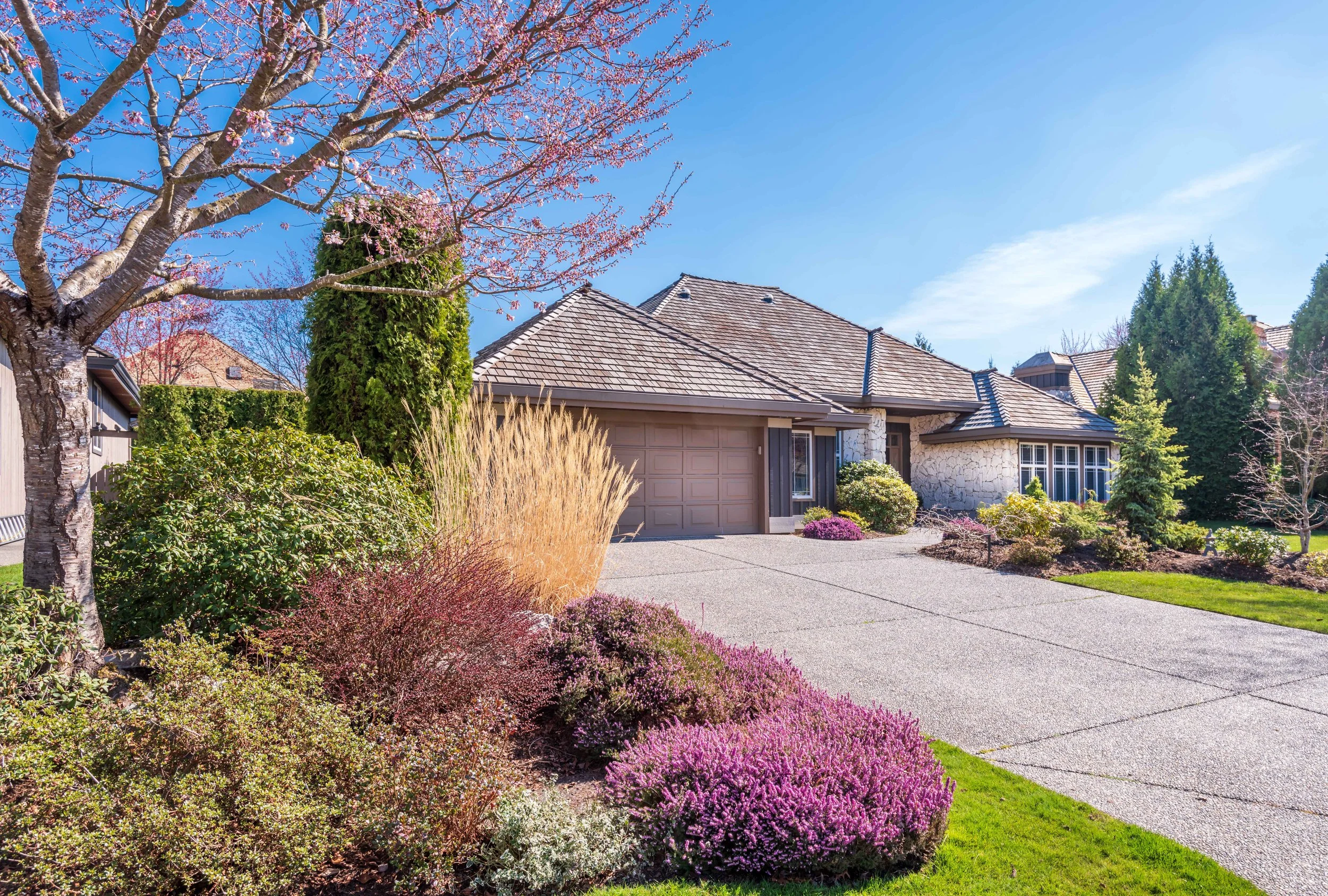
Drive Down Any Winnipeg Street and You Can See Design Thinking — or the Absence of It
There's a particular kind of house in every Winnipeg neighbourhood that you notice before you even register why. The yard feels settled and intentional. The plants look like they belong where they are. The patio or walkway connects to the house rather than sitting awkwardly beside it. The whole picture holds together in a way that's hard to articulate but immediately apparent. That quality almost never happens by accident. It's the result of design thinking applied before a single plant went in the ground or a single paver was set.
Why landscape design is important is most visible in the contrast: the property next door that accumulated features over the years without a unifying plan, where each improvement was made in isolation, where the result is a yard that works in pieces but doesn't work as a whole. Both properties may have spent similar money on their outdoor spaces. One looks finished. One looks assembled.
Key Takeaways
Landscape design creates the cohesive visual quality that separates a finished-looking property from one that looks accumulated
In Winnipeg's climate, design decisions about drainage, base preparation, and plant hardiness have direct structural and financial consequences
Professional design translates into measurably stronger buyer response, faster sales, and higher offers in Winnipeg's real estate market
Design is the step that ensures hardscape investments perform correctly through Manitoba's freeze-thaw cycling rather than failing within a few seasons
The investment in design is modest relative to installation costs and prevents corrections that almost always exceed the design fee itself
Bulger Brothers Landscape provides landscape design rooted in Winnipeg-specific knowledge, backed by full installation capability
Overview: The Multiple Reasons Why Landscape Design Is Important
This guide approaches why landscape design is important from several connected angles: the visual coherence that design creates on a property, the structural protection it provides for investments in a demanding climate, the financial return it generates at sale time, and the specific ways design prevents the most common and most expensive landscaping mistakes Winnipeg homeowners make.
Bulger Brothers Landscape integrates design into every significant outdoor project it undertakes, and the insight throughout this guide reflects what that design-first approach consistently produces on Winnipeg properties.
The Street Effect: How Design Creates Visual Coherence
Walk down a street in River Heights or Tuxedo and the properties that catch your eye positively share something in common. Features feel proportioned to the property they're on. Plants look intentional rather than random. Hard surfaces connect to each other and to the home in a way that feels logical. The whole picture has a quality that's immediately recognizable even if it's hard to name.
This is the street effect of landscape design, and it's why design is important even before any functional or financial consideration is raised. A property that looks cohesive and finished reads differently to everyone who sees it, from neighbours to real estate agents to buyers, than one where good individual components don't add up to a satisfying whole.
Design creates this coherence by establishing the relationships between elements before any of them exist. The proportional size of the patio relative to the backyard. The height and density of plantings relative to the fence line behind them. The width of a walkway relative to the entry door it leads to. These relationships are either resolved in a design process or left to chance during installation, and the difference between resolved and unresolved proportional relationships is exactly what the street effect reflects.
Why Landscape Design Is Important for Structural Performance in Winnipeg
The aesthetic case for why landscape design is important applies in any climate. The structural case is amplified specifically in Winnipeg, where every outdoor feature gets tested by freeze-thaw cycling in ways that simply don't occur in milder markets.
A design plan for a Winnipeg hardscape project specifies frost-depth base requirements explicitly. Patios need 8 to 12 inches of compacted gravel base. Fence posts need 48 to 60 inches of depth. Retaining walls need drainage layers built in from the start. These specifications belong in design documentation rather than being left to informal field judgment during construction, because they determine whether a structure holds up for decades or begins failing within the first few winters.
The drainage decisions made during design directly affect how well every hardscape feature performs over time. A patio designed with correct drainage slope sheds water effectively and dries quickly after rain. One designed without drainage consideration pools water that accelerates frost damage to the base below. A retaining wall designed with proper drainage detailing behind it resists the hydrostatic pressure that freeze-thaw cycling amplifies. One designed without that detailing faces increasing pressure each winter until something gives.
These aren't hypothetical risks. They're the consistent failure patterns that emerge on projects that proceeded without proper design documentation, and they're far more common in Winnipeg's demanding climate than in markets where the structural stakes of outdoor installation are lower. For a detailed look at how hardscape installation costs connect to the structural standards that design should specify, that guide covers what proper construction adds to the budget and why it's worth it.
Why Landscape Design Is Important for Plant Survival in Winnipeg
Zone 3 plant hardiness is not a minor regional qualification. It eliminates a meaningful portion of the plant catalogue that works beautifully in milder Canadian markets, and designing within it requires specific local knowledge rather than general horticultural awareness.
A landscape designer working in Winnipeg verifies Zone 3 hardiness for every plant before specifying it. This verification step is part of the design process. It catches species that look appropriate in a catalogue, perform reliably in Ontario, and fail in their first Manitoba winter. Without this verification built into a formal design process, plant selection happens informally, often based on what looks appealing at the garden centre on a given Saturday, without the hardiness check that protects the investment.
Design also produces a planting plan that provides interest across Winnipeg's full growing season rather than a burst of colour in one month followed by visual flatness for the remaining four or five. Staggering bloom times, foliage interest, and structural form across a planting plan requires thinking about the full seasonal arc before any plants are specified. This kind of seasonal succession planning is exactly what a design process provides and exactly what informal, visit-by-visit plant selection misses. For guidance on which plants perform reliably in Winnipeg's conditions and how they're used in combination, what flowers work best in Winnipeg's Zone 3 climate covers the strongest local performers.
Why Landscape Design Is Important for Property Value
The financial case for why landscape design is important is consistent and well-documented. Multiple studies from real estate and landscape organizations show that quality landscaping adds 5 to 15 percent to home value, with stronger returns tied specifically to professional execution and design coherence rather than simply the presence of outdoor features.
Design contributes to this return in two specific ways. First, a designed landscape looks more intentional and finished to buyers and appraisers, which translates directly into perceived value that exceeds what an equivalent investment in informal improvement would produce. Second, design decisions that ensure features are correctly proportioned, structurally sound, and properly maintained prevent the value erosion that comes from visibly failing hardscape, struggling plantings, or drainage problems that buyers and inspectors flag as deferred maintenance.
In Winnipeg's real estate market, where buyers actively evaluate outdoor spaces for their usability during a short but intensely valued summer season, a yard that looks designed and functional receives a meaningfully different buyer response than one that looks accumulated and inconsistent. For a complete analysis of how landscaping affects home value in Winnipeg's specific market, that guide covers the return on investment across different project types and price points.
Why Landscape Design Is Important for Budget Protection
The most counterintuitive dimension of why landscape design is important is that it typically reduces total project cost despite adding a design fee to the budget. This happens because design catches the problems that become expensive mid-construction or post-construction corrections.
A drainage problem identified during site analysis costs a few hours of design time to resolve on paper. The same problem discovered after a patio is installed costs thousands in removal, drainage correction, and reinstallation.
A plant selection verified for Zone 3 hardiness during design prevents the replacement cost of species that fail after the first winter. On a significant garden installation, that replacement cost can approach the original planting investment.
A layout proportion resolved in a design drawing prevents the outcome where a finished patio or bed arrangement feels wrong relative to its context, a problem that has no satisfying low-cost solution once the installation is complete.
For any project where installation budget exceeds $15,000, design investment at 5 to 10 percent of that total is financially sound in a straightforward mathematical sense. The corrections it prevents almost always cost more than the design fee itself, meaning the design pays for itself before the first shovel enters the ground.
Why Landscape Design Is Important for Sequencing Multi-Phase Projects
Many Winnipeg homeowners improve their yards in phases over multiple seasons, adding a patio one year, a fence another, a garden the next. Without a design framework, these phases often conflict with each other: a bed established in year one that needs to be disturbed for the retaining wall added in year three, a walkway width set in year one that turns out to be too narrow for the patio connection added in year two, a fence placement in year one that conflicts with the patio layout considered in year two.
Design creates a framework that allows phased implementation without the conflicts that occur when each phase is planned in isolation. A homeowner who begins with a complete design plan can implement it over several seasons with full confidence that each phase will connect correctly to the ones that precede and follow it. The first-season patio is sized and positioned with the year-three fence and garden in mind. The year-two walkway is widened correctly for the connection the year-three gate will need.
This sequencing benefit of design is particularly valuable in Winnipeg where the compressed outdoor season creates urgency around getting each phase right the first time. A phase that needs to be partially undone and redone because it conflicts with a subsequent phase wastes a meaningful portion of a season's limited installation window.
The Cost of Skipping Design: What Winnipeg Homeowners Most Commonly Regret
Why landscape design is important is perhaps most clearly illustrated by the specific regrets that consistently emerge from projects that proceeded without it.
"The patio is in the wrong spot." It gets afternoon shade instead of sun. It's too close to the neighbour's fence. The door from the house opens into it awkwardly. Any of these problems is invisible until the patio is built and completely visible every day afterward. Design resolves sun orientation, traffic flow, and spatial relationship to adjacent features before installation locks them in.
"The plants I chose didn't come back." A winter and several hundred dollars later, the beds need replanting with species that will actually survive here. Design's hardiness verification step prevents this entirely.
"The patio heaved within two winters." An inadequate base preparation visible only to someone with the right knowledge, caught in design documentation but missed in a project that had no formal design. Now the question is repair or rebuild. Design prevents this.
"Everything looks fine separately but the yard doesn't feel finished." Individual features that weren't planned in relationship to each other. A patio that's slightly too small. A bed that's too narrow for its location. A fence that doesn't align with anything. The assembled-rather-than-designed quality that the street effect reveals. Design prevents this too.
For a complete look at how landscape design connects to the installation process in Winnipeg, that guide covers what a designer actually does from site visit through construction document.
Understanding how much landscape design and installation costs together in the current Winnipeg market gives homeowners the full picture before planning begins.
When you're ready to start an outdoor project the right way, Bulger Brothers Landscape provides design services rooted in Winnipeg-specific plant and construction knowledge, backed by the installation expertise to build exactly what the design specifies. Located at 7 Leeward Pl, Winnipeg, MB R3X 1M6, the team brings both the design thinking and the local climate knowledge that Winnipeg outdoor projects require. Call (204) 782-0313 to schedule your design consultation before the season fills.
Frequently Asked Questions About Why Landscape Design Is Important
Q: Why is landscape design important for a Winnipeg property?
A: Landscape design creates visual coherence, specifies frost-depth structural requirements that determine long-term hardscape performance, verifies Zone 3 plant hardiness, produces drainage solutions that protect foundations, and establishes the sequencing framework for multi-phase improvements. In Winnipeg's demanding climate, design decisions have more direct structural and financial consequences than in milder markets.
Q: Does landscape design really improve property value?
A: Yes, measurably. Research consistently shows quality landscaping adds 5 to 15 percent to home value. Design contributes specifically by making the finished result look intentional and coherent to buyers, and by preventing the failing hardscape and struggling plantings that reduce perceived value and create buyer negotiation leverage.
Q: What problems does landscape design prevent?
A: Drainage issues discovered mid-construction, plant selections that fail through Zone 3 winters, patio and walkway heaving from inadequate base specifications, layout and proportion problems visible once features are built, and sequencing conflicts between phases of a multi-year project.
Q: Is landscape design worth the cost for a mid-sized Winnipeg project?
A: For projects where installation budget exceeds $15,000, design at 5 to 10 percent of total cost almost always pays for itself through corrections prevented. For simpler projects on flat, unconstrained sites, the design requirement is lighter and can sometimes be met through contractor guidance rather than formal design documentation.
Q: How does landscape design specifically help in Winnipeg's climate?
A: Design documentation specifies the frost-depth base requirements for patios, the post depth requirements for fencing, and the drainage layer requirements for retaining walls that determine performance through Manitoba's freeze-thaw cycling. Without these specifications in the design, field decisions during construction sometimes miss the standards that Winnipeg's climate demands.
Q: Can a good contractor replace the need for landscape design?
A: Experienced contractors bring real judgment, but there's a meaningful difference between field decisions made under construction time pressure and a design process that includes full site analysis, drainage assessment, plant hardiness verification, and documented specifications. For significant projects, these aren't equivalent.
Q: Why does landscape design create better results in multi-phase projects?
A: Design establishes a framework that allows each phase to connect correctly to what came before and what will follow. Without that framework, each phase is planned in isolation and conflicts between phases, bed placements that conflict with subsequent walls, walkway widths that don't accommodate future connections, are only discovered when they're expensive to address.
Q: What is the street effect in landscape design?
A: The street effect is the quality of a property that reads as intentional and finished from the street, as opposed to assembled and inconsistent. It results from design thinking that establishes the proportional relationships between features before they're installed, producing a yard where everything belongs where it is rather than a yard where good individual features don't quite work together.
Conclusion
Why landscape design is important is visible on every Winnipeg street in the contrast between properties that look finished and those that look accumulated. Design creates the visual coherence of the first type, protects hardscape investments through Manitoba's freeze-thaw demands, verifies plant survival through Zone 3 winters, manages water away from foundations, and sequences improvements so each phase connects correctly to the ones that follow. The investment is modest relative to installation costs. The problems it prevents are real and consistently more expensive than the design fee itself. The street effect it produces is immediately apparent to everyone who drives past. Bulger Brothers Landscape applies that design thinking to Winnipeg properties before the first shovel goes in the ground, so the finished result holds together the way a well-planned outdoor space always does.