

The Expert Guide to Hiring Retaining Wall Contractors in Winnipeg
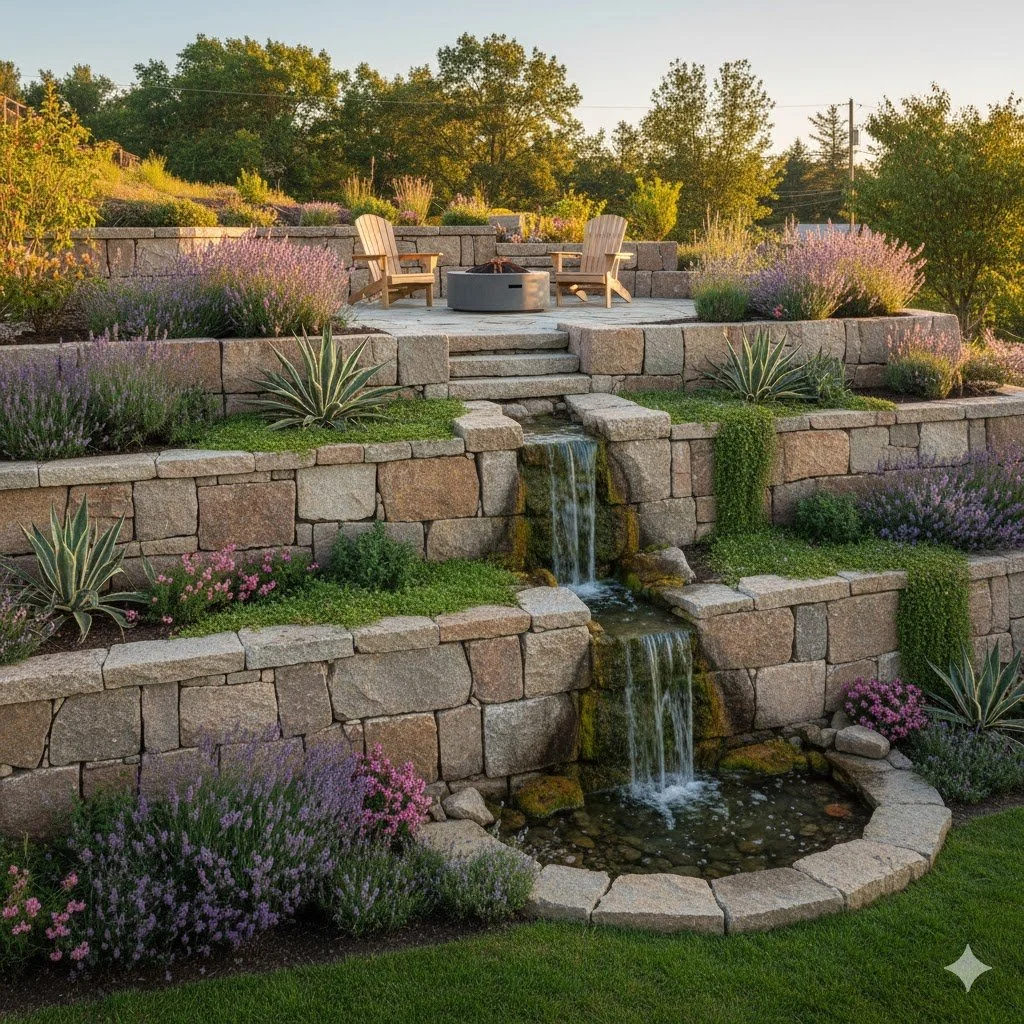
A beautifully constructed retaining wall is much more than a decorative border for a garden; it is a critical piece of engineering used to hold back thousands of pounds of earth and water. For homeowners in the Winnipeg area, the stakes are high due to a unique geography and extreme climate. When you look for retaining wall contractors, you are not just looking for someone to stack stones. You need a specialist who understands the lateral pressure of heavy clay and the relentless force of local freeze-thaw cycles. A wall built incorrectly can lean, crack, or even collapse within just a few seasons, leading to expensive repairs and safety hazards.
This guide helps you manage the process of selecting the right professionals for your hardscaping project. We explore the technical requirements of building in this region, the average costs you might expect, and the specific materials that stand up best to the prairie environment. Whether you want to create a terraced garden, reclaim a sloped backyard, or protect your foundation from erosion, understanding the expertise required for this task is essential. By the end of this article, you will have the knowledge needed to vet professionals effectively and ensure your investment lasts for decades.
Key Takeaways
Structural Integrity: Retaining walls must resist significant lateral earth pressure, requiring precise engineering and high-quality materials.
Soil Management: The heavy clay in our region expands when wet, requiring specialized drainage systems like gravel backfill and weeping tile.
Permit Regulations: Local rules usually require a building permit and engineered drawings for any wall exceeding 4 feet in height.
Investment Value: Professionally installed walls increase property value by creating usable land and preventing soil erosion.
Professional Advantage: Expert installation prevents common failures like bowing, sliding, and foundation damage that occur with amateur work.
Overview
This comprehensive look at hiring retaining wall contractors breaks down the entire lifecycle of a wall project. We start by explaining the fundamental mechanics of how these structures work and why professional oversight is necessary for walls of any significant size. You will learn about the different types of walls—from gravity and cantilever to anchored systems—and which one fits your specific landscape.
We also look at the practicalities of the local market, including permitting laws and the true costs of site preparation and drainage. We compare various materials like limestone, granite, and interlocking concrete blocks, providing a clear picture of their longevity and aesthetic appeal. Finally, we provide a checklist for vetting experts and a detailed FAQ section to address common homeowner concerns. Working with a dedicated team like Bulger Brothers Landscape ensures your wall is built to withstand the unique pressures of our local environment.
The Science of Structural Soil Retention
While many landscaping projects can be approached as a weekend project, a retaining wall is a high-stakes structure. The primary reason to hire retaining wall contractors is their understanding of structural engineering. A wall that looks sturdy on a dry summer day can easily fail when the soil behind it becomes saturated with water. This saturation increases the weight of the earth by a massive percentage, creating a force that can push over poorly built structures.
Every retaining wall supports what is known as a soil wedge. This is the mass of earth that wants to slide forward due to gravity. Professionals use mathematical formulas to calculate the amount of force this wedge exerts against the wall face. Without these calculations, a wall might be built too thin or without a sufficient base, leading to "bowing" or a complete blowout. Experts also account for surcharge loads, which are additional weights on top of the soil, such as a parked car or a nearby shed.
Managing the heavy clay found in the prairies is another specialty of experienced retaining wall contractors. Clay is highly plastic, meaning it expands significantly when it absorbs water and shrinks as it dries. This constant movement can shift even the heaviest stones. Experts prevent this by excavating deeper than necessary and replacing the clay directly behind the wall with non-expansive granular material, like crushed stone. This creates a buffer zone that allows the soil to move without putting direct pressure on the structure.
Drainage Systems and Water Management
If you ask any experienced retaining wall contractors why walls fail, the answer is almost always water. When water builds up behind a wall, it creates hydrostatic pressure. This pressure is powerful enough to push over even a massive concrete structure. A professional wall must include a three-part drainage system to ensure longevity.
First, a layer of clean, crushed stone is placed directly behind the wall. This allows water to drop straight down to the base instead of pushing against the wall face. Second, a filter fabric is used to prevent fine silt and clay from washing into the gravel and clogging the drainage system. Finally, a perforated drain pipe, or weeping tile, sits at the base of the gravel to carry the collected water out to a safe discharge point away from the wall. Proper water management is essential for emergency drainage services to prevent property flooding during heavy rains.
In our cold climate, drainage is even more important to prevent ice damming. If water is trapped behind the wall and freezes, it expands with incredible force. This can pop cap stones off or push the entire wall out of alignment. Integrating the wall into a total winter landscaping preparation plan ensures that meltwater has a clear path to follow in the spring, protecting the structural integrity of the stone or block.
Material Selection for Cold Climates
Selecting the right material is a functional decision that dictates how long your wall will last. In a climate where temperatures swing from extreme heat to deep freezes, your material must be frost-resistant. Retaining wall contractors typically recommend engineered concrete block systems for their predictability and strength. These blocks are manufactured with a hollow center that is filled with gravel, creating a heavy unit that can flex slightly with the ground’s movement.
Natural stone, such as local limestone or granite, is another popular choice for those wanting a timeless look. Limestone is readily available and naturally resistant to the cycles of the local climate. Granite is even more durable and has virtually zero water absorption, making it a nearly permanent solution. While the labor for natural stone is higher due to the custom fitting of each piece, the result is a unique structure that increases property value. You can see how these materials look in various landscaping ideas Winnipeg projects throughout the city.
Timber and pressure-treated wood are the most affordable options but have the shortest lifespan. Even treated wood will eventually rot when in constant contact with wet clay. If you choose wood, ensure your contractor uses a waterproof membrane between the soil and the timber. However, for a structural wall that needs to hold up a driveway or a large slope, stone or concrete is always the superior choice. Consulting a patio material guide can also help you match your wall stones with your floor surfaces for a unified design.
The Risks of DIY Retaining Wall Construction
It is tempting to try and build a small wall yourself, but the risks of failure are significant. Many homeowners spend thousands of dollars on materials only to have the wall lean or collapse within two years. The physical labor involved is also intense; moving tons of gravel and heavy blocks requires specialized equipment like skid steers and mini-excavators. Without these tools, the base compaction—the most important part of the wall—is rarely achieved.
Furthermore, an incorrectly built wall can create massive liability. If your wall fails and causes a landslide that damages a neighbor's property or blocks a public drainage swale, you could face legal action and heavy fines. Professional retaining wall contractors carry liability insurance and understand local bylaws, protecting you from these risks. They also know how to integrate features like backyard lighting tips by running wires safely through the structure during the build phase.
Hiring a professional team like Bulger Brothers Landscape ensures that the job is done right the first time. We use industrial-grade plate compactors to ensure the base is rock-hard and won't settle. We also use laser levels to ensure every row of stone is perfectly aligned. This precision is impossible to achieve with a hand shovel and a standard level. Investing in professional labor saves you money in the long run by avoiding a total teardown and rebuild.
Local Permitting and Regulations
In the local region, the rules for retaining walls are strictly enforced to prevent drainage issues and ensure safety. Generally, any wall that is 4 feet or taller from the bottom of the base to the top requires a building permit. This process requires a detailed site plan and, in many cases, a design stamped by a professional structural engineer. Even if the wall is shorter, you may still need a permit if the wall alters the grade of your land.
Professional retaining wall contractors handle these details for you. They understand the local lot grading bylaws and ensure that your wall does not direct water onto a neighbor’s property. Failure to follow these rules can lead to orders from the city to remove the structure at your own expense. When you work with an expert, they manage the paperwork and inspections, giving you peace of mind that your project is fully compliant with all safety standards.
Bulger Brothers Landscape is a local leader in structural hardscaping. We provide high-quality services that stand up to the specific challenges of the Manitoba environment. Our team focuses on engineering and durability, ensuring that every stone we place contributes to a stable and beautiful landscape. For professional guidance on how much snow removal costs per season for your specific property, contact Bulger Brothers Landscape at 7 Leeward Pl, Winnipeg, MB R3X 1M6 or call (204) 782-0313.
If you are ready to reclaim your sloped yard or protect your property from erosion, we are here to help. Our experts can evaluate your site and provide a professional estimate for your project. Contact us today to see why we are the preferred retaining wall contractors in the region.
Conclusion
Hiring the right retaining wall contractors is a decision that protects the safety and value of your home for decades. In a region where the soil and weather are constantly working against human-made structures, high-quality engineering is a necessity. A professional wall is a balance of beauty and strength—a structure that provides a level space for your outdoor living while silently holding back tons of earth.
By prioritizing proper drainage, choosing climate-appropriate materials, and adhering to local building codes, you ensure your landscape remains stable and beautiful through every season. Are you ready to transform your sloped yard into a functional and safe retreat? Contact Bulger Brothers Landscape today to discuss your vision and find out how our retaining wall contractors can bring your project to life with expert care.
FAQs
Q: How much do professional retaining wall contractors charge per square foot?
A: Pricing for a professional installation typically ranges from $25 to $55 per square foot. This price includes the excavation, base material, drainage pipe, backfill gravel, and the wall units themselves. The final cost depends on the material chosen and the difficulty of accessing your backyard with heavy machinery.
Q: How long should a professionally built retaining wall last?
A: A wall built with concrete blocks or natural stone should last 30 to 50 years or more. The key to this longevity is the drainage system and the base preparation. While the stones themselves are durable, the structure only stays straight if the foundation remains stable and water pressure is managed.
Q: Do I need an engineer for a small garden wall?
A: Usually, an engineer is only required if the wall is 4 feet or higher. For small decorative garden borders, a standard installation by experienced retaining wall contractors is sufficient. However, if the wall is supporting a heavy load like a driveway, an engineered plan is a smart investment regardless of the height.
Q: Can I build a retaining wall in the winter?
A: We do not recommend building retaining walls on frozen ground. The base must be compacted on thawed, stable soil to prevent settling once the spring arrive. Most professionals schedule their projects between May and October to ensure the highest quality results and proper soil compaction.
Q: What is the best material for a wall in a wet area?
A: Engineered concrete blocks are excellent for wet areas because they allow for consistent drainage. Because these blocks have a uniform shape, they create a very stable structure that is easy to backfill with gravel. Natural stone is also a great choice if the contractor uses a high-quality drainage pipe at the base.
Q: How do I know if my retaining wall is failing?
A: Signs of failure include leaning, bowing, or large cracks in the stone. You might also see soil washing through the front of the wall or sinkholes forming behind it. If you notice these issues, you should contact retaining wall contractors immediately to assess the damage before the structure collapses.
Q: Will a retaining wall help with my yard’s drainage issues?
A: Yes, a wall is a powerful tool for reshaping the slope of your land. By creating a level terrace, you can control where the water flows. When combined with a professional drainage system, a wall can help direct water away from your home’s foundation and into a safe drainage zone.
Q: How deep should the base of a retaining wall be?
A: A standard base should be at least 6 inches of compacted gravel, with the first row of blocks buried. For taller walls, the burial depth increases to ensure the bottom of the wall doesn't "kick out" under the weight of the soil. A professional will determine the exact depth based on your soil type and wall height.