

Backyard Patio & Walkway Installation in Winnipeg: Materials That Survive Winter
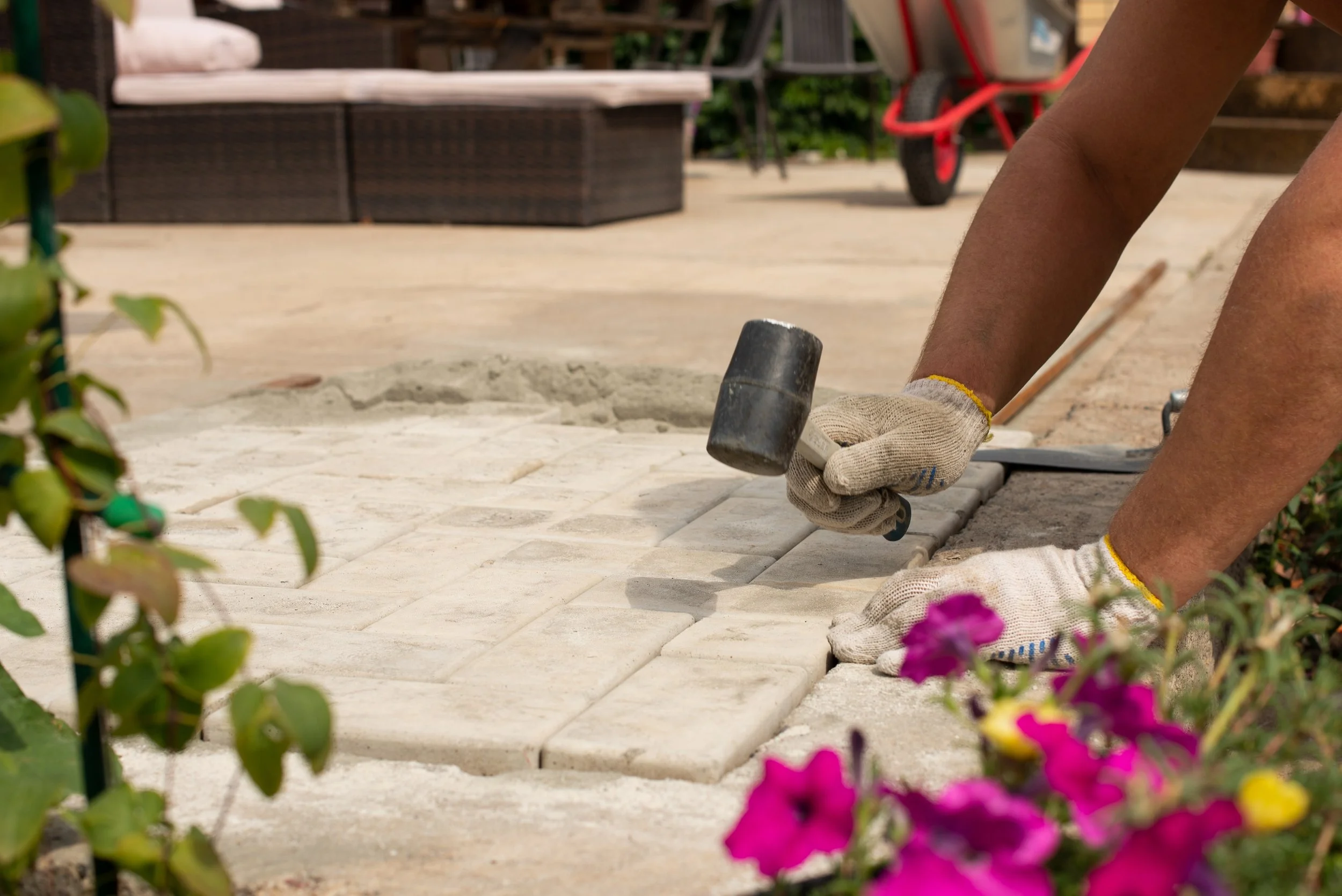
A backyard patio in Winnipeg is one of the most rewarding outdoor investments a homeowner can make — and one of the most consequential decisions in how that investment performs over time is what it's made of and how it's built. The materials that look beautiful at installation tell only part of the story. The more important question for any Winnipeg homeowner is which of those materials will still look beautiful in year ten, year fifteen, year twenty — after decades of Manitoba freeze-thaw cycling, spring thaw runoff, and the -40°C temperatures that test outdoor structures every winter.
Homeowners across Charleswood and St. Vital who've watched a patio installed without proper material specification or base preparation deteriorate within a few seasons understand this distinction firsthand. Patio installation Winnipeg properties require is not simply construction — it's climate-specific engineering that matches materials, base systems, and drainage design to the specific demands of Manitoba's outdoor environment.
This guide covers everything Winnipeg homeowners need to know before investing in a patio or walkway — from the materials that genuinely perform in Zone 3 conditions through base preparation requirements, drainage considerations, professional versus DIY installation realities, and the cost ranges that reflect what quality work actually costs in this market.
Key Takeaways
Winnipeg's freeze-thaw cycling is the primary stress factor for outdoor hardscape — material selection and base preparation must account for it from the design stage
Concrete pavers consistently outperform poured concrete slabs for Winnipeg residential patios due to their freeze-thaw flexibility and repairability
Base preparation — excavation depth, granular fill quality, and compaction — determines long-term performance as much as surface material selection
Drainage design is not optional in Winnipeg's clay soil environment — water trapped beneath hardscape accelerates freeze-thaw damage regardless of surface material quality
Professional installation with appropriate Manitoba climate specifications significantly outperforms DIY approaches in long-term performance
Patio installation costs in Winnipeg range from $8,000 to $25,000+ for most residential projects depending on size, material, and site conditions
Overview: Why Patio Installation in Winnipeg Is Different
Every patio installation decision — material choice, base depth, drainage design, edge treatment — carries different weight in Winnipeg's climate than in cities with more temperate winters. The freeze-thaw cycles that characterize Manitoba's spring and fall shoulder seasons, the frost depth that exceeds 1.5 metres at the peak of winter, and the clay soil that holds water at the base of excavations all create conditions that expose shortcuts in material specification and installation method within a few seasons.
Bulger Brothers Landscape has installed patios and walkways across Winnipeg for years — learning through direct experience what performs and what fails in Manitoba's specific outdoor conditions. This guide draws on that experience to help homeowners make the design and material decisions that produce patios built to last rather than patios that require remediation within a decade.
Understanding What Winnipeg's Climate Does to Outdoor Hardscape
Before discussing specific materials, it's worth understanding exactly what Manitoba's climate demands of any outdoor surface installation — because this understanding shapes every subsequent decision in the design process.
Freeze-Thaw Cycling: The Primary Stress Factor
Winnipeg doesn't experience a single sustained deep freeze followed by a clean thaw in spring. The city regularly cycles above and below freezing dozens of times through the shoulder seasons — November through December and again February through April — subjecting outdoor surfaces to repeated expansion and contraction stress that accumulates as damage over time.
Every time moisture in the ground or within a material freezes, it expands by approximately 9 percent. Every thaw contracts it back. Repeat that cycle fifty to sixty times in a single season, and the cumulative mechanical stress on rigid or poorly installed hardscape is enormous. Cracks that begin as hairline failures widen progressively with each cycle. Joints that allow minimal movement in year one open to visible gaps by year five. Surface scaling that starts as minor spalling advances to structural deterioration over successive seasons.
This is the primary reason poured concrete slabs — despite being the most economical hardscape surface material — perform poorly as residential patios in Winnipeg without specific mix design provisions, reinforcement, and regular resealing. Concrete is rigid and cannot absorb freeze-thaw movement — instead, it cracks.
Frost Depth and Its Implications
Winnipeg's frost line — the depth to which the ground freezes in a typical winter — sits at approximately 1.5 to 2 metres below grade. This frost depth directly affects hardscape base design because any hardscape installation whose base doesn't extend below the frost line, or that doesn't account for frost movement in its design, will heave seasonally as the frost front advances and retreats through the base materials.
Properly designed patio installation Winnipeg projects don't attempt to excavate to frost depth for a residential patio — that would require 1.5 metres of base material, which is neither practical nor necessary for surface hardscape. Instead, they use compacted, free-draining granular base materials that allow frost movement without the differential heaving that causes surface damage.
The principle is that non-frost-susceptible granular materials — crushed limestone, Granular A — don't hold water and therefore don't expand significantly when they freeze. A patio base built with properly compacted, free-draining granular fill moves uniformly with the frost front rather than heaving differentially — and uniform movement produces far less surface damage than the differential heaving that water-retaining materials create.
Clay Soil and Drainage
Winnipeg's clay soil adds a specific layer of complexity to patio installation because clay holds water. Water that infiltrates the base of a patio excavation in clay soil has nowhere to go — it sits at the base of the granular fill, saturating the lower layers and creating exactly the wet conditions that freeze-thaw cycling converts into movement and heaving.
Proper base design for patio installation Winnipeg projects in clay soil includes drainage provisions — either positive drainage slope in the base layers that moves water to an outlet, or geotextile fabric that separates the granular base from the native clay below and prevents clay migration into the granular fill that would reduce its drainage capacity over time.
Patios installed without these provisions in Winnipeg's clay soil environment begin showing movement and heaving within a few seasons — not because the materials failed but because the base design didn't account for the water behaviour of the native soil beneath it.
Patio and Walkway Materials: What Works in Winnipeg
Concrete Pavers: The Most Reliable Choice for Most Properties
Concrete pavers are the most widely used and consistently reliable patio surface material for Winnipeg residential installations — and the reasons are directly tied to the freeze-thaw performance characteristics discussed above.
Unlike poured concrete slabs, concrete pavers are individual units installed with joint sand between them. This jointed system allows individual units to move slightly with freeze-thaw cycling without transferring stress to adjacent units or developing the continuous cracks that propagate across poured slabs. When a paver shifts or a section settles, the repair is a localized intervention — lift the affected pavers, correct the base, and relay them — without disturbing the surrounding installation.
Key performance specifications for Winnipeg patio pavers:
Concrete density and absorption rate: Not all concrete pavers are equivalent. Pavers manufactured for Canadian climate conditions — rated to CSA A231.2 for heavy vehicular traffic in severe exposure conditions — use higher-density concrete with lower water absorption rates than standard residential pavers. Lower absorption means less water infiltration into the paver itself, less internal freeze-thaw stress, and significantly longer service life in Manitoba's conditions.
The absorption rate specification matters in practice. Pavers with absorption rates above 5 percent absorb more water, experience more internal freeze-thaw stress, and scale at the surface more quickly — the white surface deterioration that homeowners observe on cheaper pavers within a few Winnipeg winters. Pavers meeting the severe exposure specification have absorption rates below 5 percent and maintain their surface appearance through decade after decade of Manitoba freeze-thaw cycling.
Paver thickness: Residential patios typically use 60mm thick pavers — the standard thickness for pedestrian applications. Driveway applications require 80mm pavers rated for vehicular loading. Using the correct thickness for the application ensures the paver can handle the load it will experience without cracking or settlement.
Colour and texture selection: Concrete paver manufacturers offer extensive colour palettes, textures, and format sizes that allow significant design variety within the material category. Tumbled textures create a more aged, informal appearance; smooth-faced pavers with clean lines suit contemporary designs; large-format pavers approach the appearance of cut stone at lower cost. Colour choices range from neutral greys and tans through warmer earth tones and mixed blends that create visual depth in the installed surface.
Paver pattern selection: Running bond, herringbone, basketweave, and random patterns each create different visual effects and have slightly different structural characteristics. Herringbone patterns — with units at 45 or 90 degrees to the direction of travel — provide excellent interlock and are often specified for driveways and heavy-use areas. Running bond and random patterns suit patio applications and provide visual interest that single-format grid patterns lack.
Natural Stone: The Premium Performance Option
Natural stone — granite, quartzite, and select limestone — delivers the aesthetic that no manufactured product fully replicates, and in the appropriate density and absorption specifications, it performs exceptionally in Winnipeg's climate.
Granite: Extremely dense, very low absorption rate, frost-resistant, and essentially indestructible under normal residential patio conditions. Granite's surface — whether honed, flamed, or natural cleft — maintains its appearance indefinitely in Manitoba's climate. It's the most expensive natural stone option but the one with the longest service life and the most consistent performance in freeze-thaw conditions.
Quartzite: Similar performance characteristics to granite — high density, low absorption, excellent frost resistance. Quartzite's distinctive layered appearance and colour variation from silver-grey through warm buff and russet tones provide visual character that granite's more uniform appearance doesn't offer. A strong choice for homeowners who want natural stone's performance with more visual variation.
Limestone: More variable performance than granite or quartzite because limestone's density and absorption rate vary significantly between sources. High-density limestone from appropriate sources performs well in Winnipeg; softer, more porous limestone deteriorates quickly under freeze-thaw stress. Natural stone selection for Winnipeg applications should specify absorption rate limits rather than simply material type — not all limestone is equivalent.
Installation of natural stone for Winnipeg patios:
Natural stone requires the same base preparation principles as concrete pavers — adequate excavation depth, properly compacted granular fill with drainage provisions, and edge restraint to prevent lateral movement. The joints between natural stone units require polymeric sand or similar joint stabilizer — open joints that allow water infiltration beneath stone units accelerate the freeze-thaw damage to the base below.
For steps, copings, and feature accents where the visual premium of natural stone is most impactful, granite and quartzite deliver unmatched long-term appearance and performance in Winnipeg's climate.
Exposed Aggregate and Decorative Concrete
Exposed aggregate — concrete poured with decorative stone aggregate at the surface, then washed to reveal the aggregate before the concrete sets — provides a decorative finish that bridges the cost gap between plain concrete and pavers or natural stone.
Performance of exposed aggregate in Winnipeg's climate depends primarily on concrete mix design and surface sealing maintenance:
Air-entrained concrete mix: The non-negotiable specification for any outdoor concrete flatwork in Manitoba. Air entrainment introduces microscopic air bubbles into the concrete mix that provide space for expansion stress during freeze-thaw cycling — preventing the surface scaling that non-air-entrained concrete develops rapidly in Winnipeg's conditions. Any concrete specified for exterior flatwork in Manitoba should specify air-entrained mix design.
Reinforcement: Steel rebar or fibre reinforcement in the concrete slab provides tensile resistance that unreinforced concrete lacks — reducing crack development and maintaining slab integrity over successive freeze-thaw seasons.
Sealing requirement: Exposed aggregate and all decorative concrete requires regular sealing — typically every two to three years in Manitoba's climate — to maintain the surface protection that limits moisture infiltration. This is not optional maintenance in Winnipeg's conditions; sealing is the difference between exposed aggregate that looks as good at year fifteen as it did at installation and one that has developed progressive surface deterioration.
Exposed aggregate works well in Winnipeg when these specifications are maintained. It's a reasonable choice for homeowners who prefer the visual warmth of natural aggregate over the more uniform appearance of concrete pavers, provided they're committed to the sealing maintenance schedule the material requires.
Stamped Concrete: Performance Caveats for Winnipeg
Stamped concrete — poured concrete with textures and patterns pressed into the surface before setting — is popular for its ability to mimic natural materials at lower cost. In Winnipeg's climate, stamped concrete requires honest assessment of its performance limitations before specifying it for a patio application.
Stamped concrete is thinner at the pattern depths than the surrounding concrete — the stamps create texture by displacing concrete during pressing, thinning the surface layer at pattern recesses. These thinned areas are more vulnerable to freeze-thaw scaling than the thicker surrounding concrete, creating the surface deterioration pattern that characterizes aging stamped concrete in cold climates.
The colour sealers used on stamped concrete require more frequent reapplication than basic concrete sealers — typically every one to two years in Winnipeg's climate — to maintain both the colour and the freeze-thaw protection they provide. Deferred sealing maintenance on stamped concrete in Manitoba's conditions accelerates surface deterioration significantly.
For homeowners who choose stamped concrete for a Winnipeg patio, commitment to the maintenance schedule is not optional — it's the difference between a surface that ages gracefully and one that deteriorates within a decade. The sealing and resealing costs over the life of the installation are a realistic component of total project cost that should be considered in the initial material choice.
Poured Concrete: When It Makes Sense
Standard poured concrete — brushed finish or broom-finished — performs adequately in Winnipeg's climate when specified and installed correctly. The appropriate applications are practical hardscape surfaces — garage floors, utilitarian walkways, utility pads — where appearance is secondary to function and the sealing maintenance schedule can be maintained.
For primary patio applications where appearance and long-term performance matter, the cracking and surface deterioration that poured concrete develops in Winnipeg's freeze-thaw conditions makes concrete pavers or natural stone the more appropriate choice for most homeowners. The higher installation cost of pavers relative to poured concrete is recovered several times over in avoided repair and replacement costs over a twenty-five to thirty year period.
Concrete landscaping services for Winnipeg properties specify the air-entrained mix design, reinforcement, and sealing requirements that concrete applications in Manitoba's climate demand — ensuring that concrete flatwork performs as intended rather than deteriorating within a few seasons of installation.
Base Preparation: The Invisible Foundation That Determines Everything
The most important determinant of long-term patio performance in Winnipeg isn't what you see — it's what's underneath. Base preparation quality is the single factor that most consistently separates patios that perform for decades from patios that require remediation within five to ten years.
Excavation Depth
Adequate excavation depth provides room for the base material layers that support the surface, manage drainage, and resist frost movement. Standard residential patio base depths in Winnipeg:
Concrete pavers: Minimum 8 to 10 inches (200 to 250mm) of compacted granular base below the bedding sand and paver. In areas with consistently poor drainage or high clay content, 12 inches (300mm) provides additional buffer.
Natural stone: Similar base depth requirements to concrete pavers — the base serves the same function regardless of the surface material above it.
Concrete flatwork: Minimum 4 to 6 inches (100 to 150mm) of compacted granular base below the concrete slab, with drainage provisions to prevent water accumulation at the base of the excavation.
Insufficient excavation depth — the most common base preparation shortcut in budget patio installations — produces patios that begin heaving within the first few seasons as the thin base layer proves insufficient to manage frost movement.
Granular Base Material and Compaction
The granular fill that occupies most of the base depth must be non-frost-susceptible — it must not hold water that would freeze and expand during winter. Crushed limestone (Granular A) and clean crushed gravel are the standard base materials for patio installation Winnipeg projects — angular particles that compact to high density and allow water to drain through the base rather than being retained.
Compaction is as important as material selection. Granular fill that isn't compacted adequately will continue settling under the weight of the surface material and normal use — producing the uneven settling and lip development that characterizes poorly installed patios within a few years of completion. Professional compaction uses plate tampers or jumping jack compactors to achieve the density that manually tamped fill cannot reach — compacting in lifts of 3 to 4 inches to ensure consistent density through the full base depth.
Geotextile Fabric
In Winnipeg's clay soil environment, geotextile fabric placed between the native clay subgrade and the granular fill serves a critical function — it prevents clay fines from migrating upward into the granular base over time through the pumping action of water movement. Clay migration into the granular base reduces its drainage capacity, increasing the water retention that drives freeze-thaw movement.
This layer costs little to include and significantly extends the functional life of the base system — one of the most cost-effective specifications in a Winnipeg patio installation.
Bedding Sand
For concrete paver and natural stone installations, a thin layer of coarse bedding sand — typically 1 inch (25mm) — between the compacted granular base and the surface material provides the final level surface and allows minor adjustments during installation. Bedding sand thickness should be consistent across the installation — variable depth produces inconsistent surface level and settlement.
Bedding sand that is too thick acts as an unstable foundation — the excess sand compresses unevenly under load and over time, producing settlement patterns that weren't present at installation.
Edge Restraints
Edge restraints — plastic or aluminum edging spiked through the granular base into the subgrade — prevent lateral creep of the surface material. Concrete pavers without edge restraint gradually spread outward at the perimeter, opening joints and creating the unstable edges that are the most common maintenance issue on improperly detailed patio installations.
Edge restraints installed during the initial installation are invisible in the finished patio and add modest cost — their absence produces the perimeter creep and joint opening that requires remediation within a few years on installations where they were omitted.
Walkway Design and Installation
Walkways serve both functional and aesthetic roles in the residential landscape — they guide circulation, connect outdoor spaces, and contribute to the overall design language of the property. In Winnipeg's climate, they also face the same freeze-thaw stress as patios, with the additional consideration that walkways are more susceptible to frost-heave patterning because of their narrower width relative to the surrounding ground.
Walkway Width and Layout
Functional walkway widths depend on use:
Primary entrance walkways: 1.2 to 1.5 metres minimum — wide enough for two people to walk comfortably side by side and for furniture and equipment to be moved through
Secondary access paths: 0.9 to 1.2 metres — adequate for single-file movement and equipment access
Garden paths: 0.6 to 0.9 metres — appropriate for occasional foot traffic through planting areas
Layout should follow natural movement patterns — the paths people actually want to take between destinations rather than the designer's preferred route. Walkways that follow indirect routes when direct routes are available will be abandoned for shortcuts through garden beds and lawn areas within one season.
Curves in walkways should be gradual and purposeful — tight turns that require awkward body position changes during normal walking are obstacles rather than design features. Flowing curves that follow natural terrain or garden shapes create movement that feels comfortable and looks organic.
Steps and Grade Changes
Walkways that cross grade changes require steps or ramps — and in Winnipeg's climate, steps must be designed and built with specific attention to the freeze-thaw performance that exposed horizontal surfaces face.
Stair proportions: The classic stair proportion — riser height plus tread depth equals 65 to 70 centimetres — produces comfortable climbing geometry for most people. Outdoor steps in residential settings typically use risers of 15 to 18 centimetres with treads of 45 to 50 centimetres — shallower risers and deeper treads than interior stairs for comfortable outdoor movement.
Step material for Winnipeg conditions: Dense natural stone — granite or quartzite — and high-quality concrete products rated for Canadian climate exposure perform best for outdoor steps in Winnipeg. Step nosings (the front edge of the tread) are the most exposed element — freeze-thaw cycling at nosings causes the spalling and deterioration that makes steps unsafe. Materials with low absorption rates at the nosing edge maintain their integrity; porous materials deteriorate rapidly.
Step drainage: Each step tread should slope slightly forward — 1 to 2 percent — to drain water toward the front of the step rather than allowing it to pond at the back of the tread where it would freeze against the riser. This subtle slope, built into the installation, prevents the ice accumulation at the riser-tread junction that creates hazardous step conditions in Winnipeg winters.
Integration With Landscape Features
The patio and walkway system of a residential landscape works best when designed in coordination with surrounding landscape features rather than as isolated surfaces surrounded by unplanned lawn and garden.
Garden Bed Integration
Garden beds adjacent to patios create the enclosed, intimate atmosphere that makes patios feel like outdoor rooms rather than surfaces in the middle of a lawn. The planting that borders a patio should be designed to complement the patio's scale and material — soft, mounded perennial plantings that spill gently toward the patio edge for informal designs; clipped shrubs and structured plantings for more formal layouts.
Mulched planting beds adjacent to patios also provide the practical benefit of reducing the lawn maintenance immediately adjacent to the hardscape edge — one of the areas where lawn care is most difficult and where grass tends to encroach into paver joints over time.
Professional garden design coordinated with patio installation creates the integration between hardscape and softscape that distinguishes a professionally designed outdoor space from a patio dropped into an unplanned landscape.
Retaining Walls and Grade Management
Properties with grade changes adjacent to the patio area benefit from retaining walls that manage the slope, create level planting terraces, and provide the visual structure that anchors the patio within the broader landscape. Retaining walls and patios designed together — with matching or complementary materials and coordinated heights — produce the cohesive outdoor room quality that separate installations rarely achieve.
Retaining wall installation coordinated with patio design ensures that wall footings, drainage provisions, and visual integration are all addressed in the design phase rather than retrofitted after the patio is complete.
Landscape Lighting
Patio lighting extends usability into the evenings that represent a significant portion of available outdoor time in Winnipeg's summer season. Lighting designed and installed concurrently with the patio — with conduit run in the base during construction — eliminates the disruption of cutting into finished work to add lighting after the fact.
Water features and landscape lighting integrated with patio design create the layered evening environment — illuminated pathways, lit garden features, ambient patio lighting — that makes the outdoor space genuinely compelling after dark.
Fire Pit Integration
A fire pit within or adjacent to the patio creates a natural gathering point that extends outdoor use into cooler Winnipeg evenings and makes the patio a destination through the shoulder seasons of spring and fall. Fire pit placement should be designed with the patio — considering clearance from structures and plantings, relationship to seating layout, and the visual coherence of the combined hardscape assembly.
For detailed guidance on fire pit integration with patio design, the fire pit installation Winnipeg guide covers material selection, gas versus wood options, and the installation specifications that Manitoba's climate demands.
Drainage Design for Winnipeg Patios
Drainage design is not an afterthought in patio installation Winnipeg projects — it's a foundational design requirement that shapes excavation, base design, surface slope, and edge conditions.
Surface Drainage Slope
All patio surfaces must slope away from the house and away from any structures at a minimum gradient that moves water off the surface efficiently. The standard specification for patio drainage slope is 2 percent away from the building — approximately 2 centimetres of fall per metre of patio width. This slope is subtle enough that it's imperceptible in normal use but sufficient to drain surface water effectively during rain events and snowmelt.
Patios that are level or that slope toward the house concentrate water against the foundation — the primary contributor to basement moisture infiltration in properties where the patio is immediately adjacent to the structure. This slope requirement must be established in the base preparation stage — correcting an installed patio's drainage slope requires lifting and relaying the entire installation.
Managing Patio Runoff
The water that drains off a patio must go somewhere — and directing it to appropriate locations is part of the drainage design. Options include:
Positive grade to lawn or garden: The simplest solution where yard grading allows — patio runoff disperses across the adjacent lawn or garden area and infiltrates gradually.
Catch basin at low point: For patios surrounded by hardscape or structures that prevent natural dispersal, a catch basin connected to an underground drainage outlet collects patio runoff at the low point and carries it away.
Permeable edge detail: A strip of permeable material — gravel, permeable pavers, or planted ground cover — at the patio perimeter allows runoff to infiltrate through the edge rather than sheeting off onto adjacent surfaces.
Properties with existing drainage challenges should address those challenges before patio installation — a patio that concentrates runoff in an area that already drains poorly will make the drainage problem significantly worse. Professional drainage services address underlying drainage issues before they become problems compounded by new hardscape installation.
Professional vs DIY Patio Installation in Winnipeg
The gap between professional and DIY patio installation is wider in Winnipeg's climate than in more temperate regions — because the specific technical requirements of Manitoba patio installation are precisely the ones that DIY approaches most commonly get wrong.
Where DIY patio installations most commonly fail in Winnipeg:
Insufficient excavation and base depth: The most frequent cause of early heaving and settlement. Homeowners who excavate 4 to 5 inches — enough to accommodate the surface material with minimal base — produce patios that begin showing movement within the first two seasons. Professional installations excavate to the full depth that Manitoba's frost conditions require.
Inadequate compaction: Rented plate tampers are appropriate equipment for compacting granular fill in layers — but achieving the compaction density required in Winnipeg's clay soil environment requires equipment run at appropriate speed, in appropriate lift depths, with the number of passes that each lift requires to reach density. Shortcuts in compaction produce gradual settlement that develops as visible surface unevenness within two to three seasons.
Missing geotextile fabric: Homeowners who skip the geotextile fabric layer between native clay and granular fill observe base contamination — the clay fines that migrate into granular material over the first several years — as progressive reduction in drainage capacity and increasing heave over successive freeze-thaw seasons.
Incorrect surface slope: A patio that doesn't drain away from the house concentrates water at the foundation — a problem that develops gradually but creates serious moisture management issues over time.
Wrong material specifications: Purchasing pavers or concrete mix at the lower end of the available price range without understanding the absorption rate and density specifications that Winnipeg's climate demands produces surfaces that deteriorate faster than the homeowner expects.
A professionally installed concrete paver patio in Winnipeg, built to appropriate material and base specifications, should last 25 to 30 years or more with minimal maintenance. A DIY installation with base shortcuts may require significant remediation within five to ten years — often costing more to correct than the original professional installation would have cost.
Patio Installation Winnipeg Cost Ranges
Understanding realistic cost expectations helps homeowners plan accurately and evaluate quotes with appropriate context.
Typical patio installation Winnipeg cost ranges:
Concrete paver patio (small, 200-300 sq ft): $7,000 – $12,000
Concrete paver patio (mid-size, 300-500 sq ft): $12,000 – $20,000
Natural stone patio (mid-size, 300-500 sq ft): $18,000 – $30,000+
Exposed aggregate or decorative concrete (mid-size): $8,000 – $16,000
Concrete paver walkway (per linear foot): $80 – $150
Natural stone walkway (per linear foot): $120 – $200+
Combined patio and walkway project: $15,000 – $35,000+ depending on scope
These ranges reflect Winnipeg labour rates, quality material costs, and the base preparation requirements that Manitoba's climate demands. Quotes significantly below these ranges typically indicate insufficient base depth, lower-grade materials not rated for severe Canadian climate exposure, or installation methods that shortcut the details that determine long-term performance.
For specific project cost guidance, the patio installation costs guide for Winnipeg provides detailed breakdowns by material and project size that help homeowners compare quotes on a consistent basis.
Seasonal Timing for Patio Installation in Winnipeg
The installation window for patios and walkways in Winnipeg runs from approximately late April through mid-October — the period when ground conditions are workable, base materials can be properly compacted, and concrete products can cure at appropriate temperatures.
Optimal installation timing:
May through July is the ideal installation window — ground conditions are stable, temperatures support concrete curing where applicable, and completed work has the full summer season to settle before the first fall freeze. This timing also allows landscaping integration — adjacent planting, lighting installation, and lawn establishment — to proceed within the same season as the hardscape.
August through September is still excellent timing, with completed patios having adequate time before freeze-up for base settlement and joint sand stabilization.
October installations are possible but require careful timing. Concrete and mortar products need minimum temperatures to cure properly — below +5°C, curing is compromised. Granular base materials placed and compacted in cold, wet fall conditions may not achieve the density that dry summer conditions allow. Most experienced Winnipeg contractors complete their last hardscape installations in September or early October.
Planning and booking in winter or early spring — when contractors are less busy and can give design discussions their full attention — positions projects for the optimal early-season installation window. Quality contractors fill their schedules quickly once the season opens in May.
Spring Startup and Maintenance for Winnipeg Patios
A properly installed patio requires minimal maintenance — but the maintenance it does require should happen consistently to preserve the installation's performance and appearance.
Annual spring inspection: Walk the patio after the final spring thaw and inspect for any pavers that have shifted or settled, joint sand that has washed out, edge restraint that has moved, or surface damage that occurred through the winter. Addressing minor issues promptly — resetting shifted pavers, replenishing joint sand, reseating edge restraint — prevents small problems from becoming larger ones through the next freeze-thaw season.
Joint sand maintenance: Polymeric joint sand — sand mixed with polymer binders that stabilize and harden when wetted — should be maintained at the level of the paver chamfer. Joint sand that has washed below the paver surface allows water infiltration that accelerates base damage. Replenishing joint sand every two to three years is a simple maintenance task that significantly extends patio performance.
Sealing: Concrete pavers and natural stone can be sealed to enhance colour, provide stain resistance, and reduce moisture absorption. Sealing is optional on high-quality pavers installed for Manitoba's climate — the pavers perform adequately without sealing — but provides a premium finish that many homeowners prefer. Sealers require reapplication every three to five years to maintain their protective function.
De-icing product selection: Avoid rock salt on concrete pavers and natural stone — chloride-based de-icers accelerate surface scaling on concrete products and stain natural stone. Use sand for winter traction and calcium chloride sparingly where chemical de-icing is needed, or potassium chloride as a less damaging alternative.
For guidance on coordinating patio maintenance with broader spring property preparation, spring cleanup services from professional landscape contractors include patio and walkway inspection as part of comprehensive spring property assessment.
Ready to Build Your Winnipeg Patio?
A professionally designed and built patio is one of the highest-return investments a Winnipeg homeowner can make — extending usable outdoor living space, adding property value, and creating the outdoor experience that Manitoba's beautiful summers deserve. Bulger Brothers Landscape brings the material knowledge, base preparation expertise, and Manitoba climate experience to every patio installation Winnipeg project — ensuring your investment performs the way it should for decades. Visit the team at 7 Leeward Pl, Winnipeg, MB R3X 1M6 or call (204) 782-0313 to discuss your project and get a professional assessment of what your specific property and goals require.
Common Questions About Patio Installation Winnipeg
Q: What is the best patio material for Winnipeg's climate?
A: High-density concrete pavers rated for Canadian severe exposure conditions consistently deliver the best combination of freeze-thaw performance, repairability, and aesthetic variety for most Winnipeg residential patios. Dense natural stone — granite and quartzite — offers superior aesthetics and equivalent performance at higher cost. The key for any material is specifying products with low moisture absorption rates that limit the internal freeze-thaw stress that causes surface deterioration in Manitoba's climate.
Q: How much does patio installation cost in Winnipeg?
A: Concrete paver patios in the 300 to 500 square foot range typically cost $12,000 to $20,000 installed in Winnipeg. Natural stone patios in the same size range run $18,000 to $30,000 or more depending on stone selection. Exposed aggregate and decorative concrete patios in that size range cost $8,000 to $16,000. These ranges include proper base preparation to Manitoba climate specifications — quotes significantly below these figures typically reflect base preparation shortcuts that compromise long-term performance.
Q: Why does poured concrete crack on Winnipeg patios?
A: Poured concrete is rigid — it cannot flex with the repeated freeze-thaw cycling that Winnipeg experiences dozens of times each season. Moisture infiltrates hairline cracks, freezes, expands the crack, and successive cycles progressively widen it. Without air-entrained mix design and regular sealing, outdoor concrete in Manitoba deteriorates faster than homeowners expect. Concrete pavers avoid this failure mode because individual units can move slightly with freeze-thaw cycling without cracking or transferring stress to adjacent units.
Q: How long does patio installation take in Winnipeg?
A: A standard residential patio of 300 to 400 square feet typically requires three to five days of installation time — excavation, base preparation, and surface installation. Larger patios or those with complex features — multiple levels, integrated steps, seating walls — require longer timelines. The design and planning process before installation begins typically takes two to four weeks. Booking in winter or early spring positions projects for early-season installation when schedules are most flexible.
Q: How deep should the base be for a patio in Winnipeg?
A: Standard residential patio base preparation in Winnipeg requires 8 to 10 inches (200 to 250mm) of compacted granular fill below the bedding sand and surface material — more in areas with consistently poor drainage or high clay content. This depth provides the free-draining, non-frost-susceptible base that allows frost movement without differential heaving. Insufficient base depth is the most common cause of patio heaving and settlement in Manitoba's climate.
Q: Can a patio be installed in fall in Winnipeg?
A: Fall installation is possible through September and into early October in most Winnipeg years. Concrete and mortar products require minimum temperatures above +5°C to cure properly, and granular base materials achieve better compaction in dry summer conditions than wet fall conditions. September installations have adequate settling time before freeze-up in most years. October installations become increasingly weather-dependent. The optimal installation window is May through August.
Q: Do I need a permit for a patio installation in Winnipeg?
A: Most residential patio installations in Winnipeg don't require a building permit — surface hardscape below certain size thresholds and without structural elements generally doesn't trigger permit requirements. However, retaining walls above a certain height, covered structures, and projects adjacent to property lines may require permits or compliance with setback requirements. Your installation contractor will clarify what applies to your specific project scope and site conditions.
Q: How do I maintain a paver patio through Winnipeg winters?
A: Use sand rather than rock salt for winter traction — chloride de-icers accelerate surface scaling on concrete pavers and stain natural stone. Clear snow with a plastic-bladed shovel rather than a metal blade to avoid scratching the paver surface. Inspect after the final spring thaw for any shifted or settled pavers and address promptly. Replenish polymeric joint sand every two to three years. Reseal if desired every three to five years. Properly maintained concrete paver patios last 25 to 30 years or more in Winnipeg's climate.
Q: Can a damaged patio be repaired rather than replaced in Winnipeg?
A: Concrete paver patios are among the most repairable outdoor surfaces available — individual pavers that have shifted, settled, or been damaged can be lifted, the base corrected, and the pavers relaid without disturbing the surrounding installation. This repairability is one of the primary reasons pavers outperform poured concrete over the long term in Winnipeg — poured concrete damage requires cutting and patching that rarely matches the original surface appearance. Natural stone installations are similarly repairable on a unit-by-unit basis.
Q: What should I look for in a patio installation contractor in Winnipeg?
A: Ask specifically about base preparation specifications — excavation depth, granular material type, compaction method, and geotextile fabric inclusion. Contractors who describe these details confidently and specifically understand what Winnipeg's climate requires; those who give vague answers about "proper base preparation" may not. Ask for references from Winnipeg installations that are five to ten years old — seeing how earlier work has held up through Manitoba winters is more informative than photographs of recently completed projects. Confirm that material specifications include absorption rate requirements appropriate for Manitoba's severe exposure conditions.
Conclusion
Patio installation Winnipeg properties deserve is built on material specifications, base preparation standards, and drainage design that account for everything Manitoba's climate delivers — the freeze-thaw cycling that tests every joint and every material, the frost depth that requires non-frost-susceptible base systems, and the clay soil drainage behaviour that makes water management a foundational design requirement rather than an afterthought.
The homeowners in River Heights and Charleswood whose patios look as good in year fifteen as they did at installation didn't get lucky — they invested in the right materials, specified to the right standards, built on adequate bases, with drainage designed to keep water moving away from rather than under their hardscape. That combination of decisions, made correctly at the design stage, is what separates Winnipeg patios that perform from those that don't.
Bulger Brothers Landscape brings the material knowledge, construction expertise, and Winnipeg climate experience to build patios and walkways that deliver on that promise — outdoor spaces built to last through everything Manitoba winters can throw at them. Reach out today and start planning the outdoor space your property deserves.