

Understanding Patio Installation Costs for Winnipeg Properties
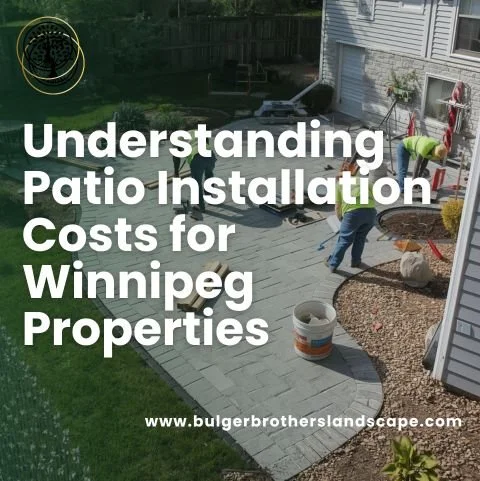
Outdoor living spaces transform properties from basic yards into functional entertainment areas, relaxation zones, and valuable extensions of indoor living environments. Property owners planning patio projects naturally wonder how much does patio installation cost Winnipeg before committing to investments that significantly impact both property value and lifestyle enjoyment. Patio costs vary dramatically based on materials, size, site preparation requirements, and design complexity—ranging from $3,000 for basic concrete patios to $25,000+ for elaborate natural stone installations with integrated features.
Bulger Brothers Landscape provides professional patio installation throughout Winnipeg, combining design expertise with construction knowledge ensuring outdoor spaces withstand Manitoba's demanding climate. Understanding patio pricing structures helps homeowners budget appropriately while making informed decisions about materials, sizes, and features matching both aesthetic goals and financial realities.
Key Takeaways
Basic concrete patios cost $10-$20 per square foot installed in Winnipeg
Interlocking pavers range $20-$35 per square foot for materials and installation
Natural stone patios represent premium options at $30-$50+ per square foot
Average 12x16 foot patios (192 square feet) cost $3,000-$9,500+ depending on materials and complexity
Site preparation, grading, and drainage work significantly impact total project costs
Design features like multiple levels, built-in seating, or fire pit integration increase expenses
Overview
This comprehensive guide explores patio installation costs across Winnipeg's residential market, helping property owners understand pricing factors and budget for outdoor living space projects. You'll discover cost breakdowns for different patio materials, learn how site conditions affect pricing, and understand what influences total project investments beyond basic square footage calculations.
We'll explain labor costs specific to Winnipeg installations, explore how design complexity affects pricing, and provide strategies for maximizing value regardless of budget. The guide covers cost comparisons between material options, discusses when DIY approaches work versus situations demanding professional installation, and outlines hidden costs that catch unprepared homeowners by surprise.
The FAQ section addresses common questions about patio longevity, maintenance costs, and determining appropriate budget levels. Bulger Brothers Landscape brings extensive hardscaping experience to Winnipeg properties, delivering quality patio installations that provide decades of reliable service through proper construction techniques and material selections suited to Manitoba's climate.
Patio Material Cost Comparisons
Concrete Patio Pricing
Poured concrete represents the most economical patio material, costing $10-$20 per square foot installed including basic site preparation, gravel base, concrete placement, and simple finishes. A standard 12x16 foot patio (192 square feet) costs approximately $2,000-$4,000 for basic concrete installation. This economical option delivers durable, long-lasting surfaces when properly constructed with appropriate reinforcement and drainage.
Concrete finish options affect pricing. Basic broom-finished concrete costs least, providing slip-resistant textured surfaces. Stamped concrete imitating stone, brick, or other patterns adds $15-$25 per square foot to base costs, creating more decorative appearances at lower prices than actual stone or pavers. Stained or colored concrete adds $2-$4 per square foot delivering custom appearances beyond standard gray.
Concrete's main advantage lies in upfront cost savings, though limitations include cracking potential from freeze-thaw cycles common in Winnipeg, limited repair options when damage occurs, and less flexibility for future modifications. Proper installation with control joints, adequate base preparation, and appropriate concrete mixes formulated for Manitoba's climate minimizes problems while delivering reliable long-term performance.
Decorative concrete borders or accent bands using different colors or patterns add visual interest at modest additional costs—typically $5-$10 per linear foot. These design elements break up large expanses of plain concrete creating more attractive surfaces without dramatically increasing total project costs.
Interlocking Paver Costs
Concrete interlocking pavers offer excellent value balancing durability, appearance, and cost. Standard pavers cost $20-$30 per square foot installed including base preparation, sand bedding, paver placement, and edge restraints. Premium paver styles with enhanced colors, textures, or larger formats range $25-$35 per square foot. A typical 12x16 foot paver patio costs $4,000-$6,500 depending on paver selection and site conditions.
Paver advantages include superior freeze-thaw performance compared to concrete (individual pavers move independently without cracking), easy repair capabilities (damaged pavers replace individually without affecting surrounding areas), and design flexibility through varied colors, patterns, and borders. These benefits justify higher costs compared to poured concrete for many homeowners.
Pattern complexity affects installation costs. Simple running bond patterns (pavers laid in offset rows) install efficiently, while intricate patterns like herringbone or circular designs require more time and skill commanding premium labor rates. Discuss pattern preferences during planning understanding how choices affect total costs.
Paver quality varies significantly between economy and premium products. Budget pavers might cost $2-$4 each, while high-end options reach $6-$10+ per unit. Quality differences include color consistency, dimensional accuracy, strength, and frost resistance. Manitoba's harsh climate demands quality pavers—cheap products crack, spall, or fade within years while premium pavers perform reliably for decades. Understanding what does spring clean up include and seasonal maintenance needs shows how quality materials reduce long-term property care requirements.
Natural Stone Patio Pricing
Natural stone delivers premium aesthetics and durability at highest price points. Flagstone patios cost $30-$50+ per square foot installed depending on stone type, thickness, and installation method. A 12x16 foot flagstone patio ranges $6,000-$10,000+ for quality installation. Natural stone's unique character, color variations, and authentic appearance justify premium pricing for homeowners prioritizing aesthetics.
Stone options include flagstone (irregular shapes fit like puzzles), cut stone (rectangular units resembling oversized pavers), and slabs (large format pieces covering substantial areas with minimal joints). Each type presents different installation challenges and pricing—flagstone requires skilled fitting, cut stone installs more like pavers, and slabs need equipment for placement.
Stone thickness affects costs—thin stones (1-2 inches) cost less than thick materials (2-4 inches), though thicker stones provide better stability and longevity. Installation methods also impact pricing. Dry-laid stone on compacted gravel bases costs less than mortared installations on concrete slabs. Winnipeg's freeze-thaw cycles favor dry-laid methods allowing independent stone movement without mortar cracking.
Limestone, sandstone, and granite each offer different characteristics and pricing. Limestone (including Tyndall stone popular in Manitoba) provides affordable natural stone at $25-$40 per square foot. Sandstone offers earth tones and textures at $30-$45 per square foot. Granite delivers exceptional durability and premium appearance at $40-$60+ per square foot. Stone selection balances aesthetic preferences, budget constraints, and performance requirements.
Alternative Patio Materials
Brick patios deliver classic appearances with excellent durability. Clay brick costs $20-$35 per square foot installed, comparable to quality pavers. Brick's traditional aesthetic suits certain architectural styles, though color options remain limited compared to concrete pavers. Proper brick selection for paving applications (not standard building brick) ensures appropriate strength and frost resistance.
Gravel or crushed stone patios represent budget options at $5-$12 per square foot including excavation, landscape fabric, and stone placement. These informal surfaces suit cottage properties, casual entertaining areas, or temporary solutions before permanent installations. Gravel requires periodic replenishment as material migrates or compacts, and doesn't provide the solid surfaces some homeowners prefer for furniture placement.
Porcelain pavers bring indoor tile aesthetics outdoors with exceptional durability and minimal maintenance. These premium products cost $30-$50+ per square foot installed. Porcelain's advantages include stain resistance, color permanence, and sophisticated appearances mimicking natural stone or wood. High cost limits adoption, though technology-focused homeowners appreciate low-maintenance characteristics and design versatility.
Composite decking materials increasingly appear in ground-level patio applications. While traditional decking requires elevated framing, newer systems allow ground-level installation at costs comparable to premium pavers—$25-$40 per square foot. Composite delivers wood aesthetics without maintenance demands, though performance in ground-contact applications remains less proven than traditional patio materials.
Factors Affecting Total Patio Installation Costs
Patio Size and Layout Complexity
Larger patios cost more in absolute terms but often achieve better per-square-foot pricing than small installations. A 100-square-foot patio might cost $25-$30 per square foot, while 300-square-foot installations might achieve $18-$22 per square foot as fixed costs spread across more area. Most contractors establish minimum project fees—often $2,500-$3,500—making very small patios relatively expensive per square foot.
Irregular shapes require more material waste and installation time compared to rectangular designs. Curved edges, circular patterns, or free-form layouts involve cutting more pavers or stones, precisely fitting irregular pieces, and generally slower installation. Simple rectangular or square patios install most efficiently translating to lower costs—perhaps 10-15% less than comparable curved designs.
Multiple levels or terraced patios addressing sloped properties increase costs through additional retaining walls, extra grading, and complex construction. Each level change might add $1,500-$3,000+ depending on height, length, and materials. Terraced designs create dramatic visual interest and functional outdoor spaces on challenging properties, though budget implications should be understood upfront.
Pattern intricacy affects labor costs even with identical materials. Herringbone paver patterns require 20-30% more installation time than running bond patterns. Decorative borders, medallions, or custom designs command premium pricing reflecting additional skill and time requirements. Discuss design preferences early understanding how aesthetic choices affect total costs.
Site Preparation Requirements
Excavation depth depends on existing grades, desired patio elevations, and base requirements. Standard excavation removing 10-12 inches of soil costs $2-$4 per square foot. Deeper excavation addressing poor drainage or substantial grade changes costs more. Rocky or heavily rooted sites requiring mechanical excavation add $3-$6 per square foot to standard preparation costs.
Base material quality critically affects long-term patio performance. Proper installations use 4-6 inches of compacted class 5 gravel or similar crushed stone providing stable, free-draining foundations. Quality base material costs $40-$60 per ton delivered (covering roughly 100 square feet at 4-inch depth). Skimping on base materials saves money initially but causes premature patio failure through settling, heaving, or drainage problems.
Poor soil conditions—clay, organic material, or unstable fill—require remediation before patio construction. Solutions might include deeper excavation removing unsuitable material, soil amendments improving stability, or engineered bases providing solid foundations. Problem soil remediation adds $500-$3,000+ depending on extent and required solutions. According to Environment and Climate Change Canada, Winnipeg's clay soils present specific challenges demanding proper construction techniques preventing heaving and settlement.
Grading ensures proper drainage directing water away from structures. Simple grading establishing appropriate slopes costs $200-$500 for typical patios. Complex grading addressing significant drainage problems, creating positive drainage where natural grades slope toward houses, or coordinating with other landscape features increases costs to $500-$1,500+. Proper drainage prevents water damage to both patios and adjacent structures justifying investment in correct grading.
Labor and Installation Costs
Professional installation labor represents 40-60% of total patio costs depending on materials and complexity. Concrete patio labor costs $5-$10 per square foot, paver installation runs $8-$15 per square foot, and natural stone labor reaches $12-$25+ per square foot reflecting skill requirements and time intensity.
Experienced installers command premium rates delivering superior results through proper techniques. Patio installation requires understanding base preparation, proper compaction, drainage management, and material-specific installation methods. Quality workmanship significantly affects long-term performance—poorly installed patios fail prematurely regardless of material quality. Cheap labor often signals inexperienced operators whose errors cost more long-term than initial savings deliver.
Seasonal pricing variations affect labor costs. Peak construction season (June-August) sees highest rates as contractor demand maxes out. Shoulder seasons (May, September-October) sometimes offer 10-15% discounts as contractors maintain crew employment between peak periods. Weather uncertainty during shoulder seasons creates risks—projects might experience delays—but cost savings attract budget-conscious homeowners willing to accept scheduling flexibility.
Crew size and project duration affect scheduling and potentially costs. Larger crews complete work faster minimizing property disruption but may cost slightly more. Smaller crews take longer but might offer modest savings. Most residential patios complete in 2-5 days depending on size and complexity. Discuss expected duration during planning ensuring timelines align with personal schedules and expectations.
Design Features and Enhancements
Built-in seating using patio materials creates integrated benches adding function and visual interest. Seat walls cost $75-$150 per linear foot depending on height, backing, and capping materials. A 10-foot seat wall adds $750-$1,500 to project costs while providing valuable seating reducing furniture needs.
Fire pit integration—whether simple gravel rings ($500-$1,000) or elaborate stone structures ($2,000-$5,000+)—extends patio season use into cooler months. Gas fire features require natural gas or propane line installation adding $500-$1,500 to basic fire pit costs. Fire features create focal points and gathering spaces justifying expenses for entertainment-focused homeowners.
Outdoor kitchen elements transform patios into comprehensive entertaining spaces. Built-in grills cost $2,000-$8,000+ depending on size and features. Stone or brick countertops add $100-$200 per linear foot. Storage cabinets, refrigerators, and sinks each add thousands to base patio costs. Complete outdoor kitchens easily reach $10,000-$30,000+ beyond basic patio expenses.
Pergolas, arbors, or shade structures create architectural interest while providing weather protection. Simple wood pergolas cost $2,500-$8,000 depending on size and lumber quality. Elaborate structures with electrical for lighting, decorative elements, and premium materials reach $8,000-$15,000+. While not technically patio components, these features often integrate into comprehensive outdoor living space projects. Understanding how much does it cost to have a landscape design helps homeowners budget for complete outdoor space planning including patios and complementary features.
Hidden and Additional Costs
Permit and Inspection Fees
Most Winnipeg patio installations require building permits ensuring code compliance. Permit fees typically range $100-$300 depending on project value and scope. Ground-level patios generally involve simpler approval processes than elevated decks, though requirements vary by specific property conditions and municipal regulations.
Engineered plans might be required for patios involving retaining walls over certain heights, significant grade changes, or properties with known soil issues. Engineering fees add $500-$2,000+ to project costs but ensure structural integrity and code compliance. Not all projects require engineering—discuss needs with contractors and building departments early in planning.
Inspection fees cover required municipal inspections verifying code compliance at various construction stages. These fees typically include in permit costs, though some municipalities charge separately. Plan for inspector access during construction—crew scheduling accommodates inspection requirements, and delays awaiting inspections might extend project timelines.
Unpermitted work creates risks—monetary fines if discovered, liability if failures cause damage or injury, and potential complications during property sales when unpermitted improvements surface. Savings from skipping permits rarely justify long-term risks. Professional contractors include permits in project scopes ensuring legal compliance protecting both themselves and homeowners.
Utility Location and Protection
Underground utility location through Manitoba's Click Before You Dig service is free but takes several business days. Plan ahead requesting location services before excavation begins. Failing to locate utilities risks dangerous utility strikes—gas line ruptures, electrical cable damage, or water main breaks creating emergencies and expensive repairs.
Utility conflicts discovered during location might complicate projects. Gas lines, electrical, water, or sewer running through planned patio areas require design modifications or specialized construction working around infrastructure. Sometimes utilities can be relocated at costs ranging $1,000-$5,000+ depending on utility type and relocation extent. Early utility location prevents last-minute surprises disrupting projects.
Tree root management protects valuable trees while allowing patio construction. Extensive roots near construction zones might require careful excavation, root pruning by arborists, or design modifications preserving critical root systems. Tree protection adds $200-$1,000+ depending on circumstances but prevents damage to landscape assets potentially worth thousands.
Irrigation system modifications address sprinkler lines or drip systems conflicting with patio areas. Lines might need rerouting, zone redesign, or complete system adjustments. Irrigation work adds $300-$1,500+ to project costs depending on modification extent. Deactivating zones serving areas becoming patios requires controller reprogramming and possible system rebalancing.
Access and Site Challenges
Limited access complicates material delivery and construction requiring manual material transport or specialized equipment. Restricted access sites—narrow gates, no side yard access—might add 10-20% to standard costs reflecting additional labor. Discuss access limitations during initial consultations ensuring contractors account for complications in quotes.
Difficult terrain—steep slopes, rocky soil, or wet areas—increases excavation and base preparation costs. Equipment might struggle in challenging conditions, or manual work might replace mechanical excavation. Problem sites add $500-$2,000+ to standard preparation costs depending on severity and required solutions.
Existing landscape removal—trees, shrubs, old patios, or structures—creates disposal costs and labor. Tree removal costs $300-$1,500+ per tree depending on size. Shrub removal runs $50-$200 per plant. Old patio demolition and disposal adds $2-$5 per square foot. Discuss existing conditions during planning ensuring removal costs include in overall budgets.
Winter construction limitations affect Winnipeg projects. Frozen ground prevents excavation, and cold temperatures affect material workability. Most patio construction occurs May through October. Off-season work using ground thawing equipment or heated enclosures commands substantial premiums—often 50-100% above summer rates. Plan installations during appropriate seasons avoiding premium emergency construction costs.
Long-Term Ownership Costs
Sealing requirements for certain patio materials create ongoing maintenance costs. Pavers benefit from periodic sealing every 3-5 years enhancing color and providing stain protection. Sealing costs $1-$3 per square foot. Concrete patios might need sealing every 2-3 years at similar rates. Natural stone sealing requirements vary by stone type—some benefit from treatment while others don't require protection.
Joint sand replenishment maintains paver stability. Wind and rain gradually remove sand from joints between pavers. Periodic sand replacement every 3-5 years costs $0.50-$1.50 per square foot maintaining proper paver function. Polymeric sand products last longer than standard sand reducing maintenance frequency.
Cleaning and stain removal preserve patio appearances. Pressure washing every 2-3 years removes organic growth, dirt, and stains at costs of $0.50-$1 per square foot for professional service or free for DIY with rented equipment. Stubborn stains might require specialized cleaners or treatments adding modest costs.
Winter maintenance affects patio longevity. Ice melt products damage certain materials—standard rock salt degrades concrete and some natural stones. Ice-melt-safe products cost more but prevent damage. Snow removal from patios using appropriate techniques prevents surface damage from metal shovels or aggressive equipment. Understanding what are some landscaping services helps homeowners coordinate patio care with comprehensive property maintenance.
Budgeting and Cost-Saving Strategies
Size Optimization for Budget
Start with minimum functional sizes then expand if budgets allow. A 10x12 foot patio (120 square feet) accommodates small table and chairs but feels cramped. A 12x16 foot space (192 square feet) comfortably fits dining sets with movement room. A 16x20 foot patio (320 square feet) provides substantial entertaining area with furniture and circulation zones. Determine minimum acceptable size then price accordingly rather than starting with dream sizes that exceed budgets.
Phased construction allows immediate use while deferring complete visions until finances permit. Perhaps build core patio first year, then add extensions, features, or enhancements later. Ensure initial construction uses compatible materials and considers future expansion in design preventing mismatched additions requiring expensive rework.
Simple shapes cost less than complex designs delivering functional outdoor spaces at reduced prices. Rectangular patios maximize usable space per dollar spent. Save decorative flourishes—curves, multiple levels, elaborate patterns—for areas providing greatest visual impact like entries or focal points visible from homes.
Strategic material selection balances aesthetics and budgets. Perhaps use premium materials in high-visibility areas complemented by economical options in less prominent zones. Paver borders around less expensive concrete centers create visual interest at modest cost increases. Mix material grades—standard pavers in field areas with premium accents—achieving attractive results within constraints.
Timing and Seasonal Considerations
Shoulder season scheduling (May, September-October) sometimes yields 10-15% savings as contractors maintain crews between peak summer months. Weather risks increase during these periods—unexpected rain or cold might delay projects—but savings attract flexible homeowners.
Off-season planning allows thorough design development, multiple contractor quotes, and permit processing without rushing. Winter and early spring planning secures preferred contractors for optimal construction windows. Last-minute summer requests often face 6-8 week waits or premium rush fees.
Bundle projects capturing economies of scale. Combining patio installation with other landscaping—retaining walls, walkways, plantings—allows material delivery consolidation and crew efficiency potentially reducing overall costs 10-20% compared to separate projects.
End-of-season deals sometimes materialize as contractors close books. October scheduling might find discounts as crews finish commitments before winter shutdown. However, weather risks increase substantially late season—projects might not complete before freeze-up requiring spring resumption.
Material Selection Strategies
Compare total lifecycle costs rather than just installation prices. Cheap concrete might cost $3,000 installed but require sealing ($600 every 2-3 years) and eventual replacement ($3,000+) after 15-20 years. Quality pavers costing $6,000 initially might perform 40+ years with minimal maintenance (sand replenishment $300 every 5 years) delivering better long-term value.
Standard material grades often perform as well as premium options at lower costs. Mid-grade pavers costing $3-$5 each deliver excellent performance compared to economy products ($2-$3 each prone to problems) without premium pricing ($6-$10+ each) providing marginal benefits. Discuss material tier options with contractors understanding performance differences justifying premium costs.
Local material sourcing reduces delivery charges. Winnipeg-area stone or Manitoba-produced pavers cost less than imported products. Transportation represents significant hardscape cost components—local materials deliver comparable quality at better prices through reduced shipping.
Remnant or clearance materials offer savings for flexible homeowners. Suppliers occasionally discount discontinued colors or odd-lot materials. Availability varies and might not fit all design visions, but open-minded homeowners can achieve substantial savings—sometimes 30-50%—accepting available rather than specified materials.
DIY Versus Professional Installation
Capable DIY homeowners can tackle small simple patios saving 40-60% on professional installation costs. However, DIY demands appropriate equipment (plate compactor rental $75-$100 daily, masonry saw $50-$75 daily), substantial physical labor, and skills ensuring proper construction. Mistakes cost more to correct than initial professional installation.
Hybrid approaches combining DIY base preparation with professional finishing sometimes reduce costs while ensuring quality. Homeowners might handle excavation, gravel placement, and initial compaction. Professionals then verify base quality and complete paver or stone installation ensuring proper techniques and warranties.
Large or complex patios typically justify professional installation. Equipment costs, learning curves, physical demands, and time investments often exceed cost savings particularly on projects exceeding 200-300 square feet. Professional crews complete typical residential patios in 2-5 days versus weeks of DIY weekend work.
Consider value of your time in cost calculations. Forty hours of DIY labor at $50/hour opportunity cost equals $2,000—substantial portion of professional installation fees. Factor time value, result quality expectations, physical capabilities, and enjoyment of construction work determining best approaches for your situation.
For professional patio installation delivering quality results throughout Winnipeg, Bulger Brothers Landscape combines design expertise with construction skills creating outdoor living spaces that enhance properties for decades. Our experienced team at 7 Leeward Pl, Winnipeg, MB R3X 1M6 understands Manitoba's climate demands and employs proper techniques ensuring patios withstand freeze-thaw cycles, drainage challenges, and daily use. Contact us at (204) 782-0313 to discuss your patio vision, receive detailed cost estimates, and explore design options matching your preferences and budget.
Conclusion
Understanding how much does patio installation cost Winnipeg enables property owners to budget appropriately for outdoor living space investments that significantly enhance lifestyle and property value. Costs vary dramatically based on material selection, project size, site conditions, and design complexity—ranging from economical concrete options to premium natural stone installations. Strategic planning balancing aesthetic goals with budget realities delivers functional, attractive patios serving families for decades.
Quality installation matters as much as material selection—proper base preparation, appropriate drainage, and skilled workmanship ensure patios withstand Manitoba's challenging freeze-thaw cycles and serve reliably through years of use. Professional installation delivers superior results justifying costs through longevity, performance, and peace of mind knowing outdoor investments rest on solid foundations.
Choose Bulger Brothers Landscape for patio installation combining creative design, quality materials, and expert construction—transforming your Winnipeg property's outdoor spaces into beautiful, functional areas you'll enjoy throughout all seasons for years to come.
FAQs
Q: What is the average cost of a patio in Winnipeg?
A: Average patio installation costs in Winnipeg range $5,000-$10,000 for typical residential projects depending on size, materials, and complexity. Basic concrete patios (12x16 feet) cost approximately $2,500-$4,000, interlocking paver patios range $4,500-$7,000, and natural stone installations reach $6,500-$10,000+ for similar sizes. Costs per square foot run $10-$20 for concrete, $20-$35 for pavers, and $30-$50+ for natural stone including installation. Design complexity, site conditions, and additional features significantly affect total investments. Request detailed quotes from multiple contractors comparing not just prices but material quality, installation techniques, and warranty coverage.
Q: Is concrete or pavers cheaper for patios?
A: Concrete patios cost less initially—$10-$20 per square foot versus $20-$35 for pavers. A 200-square-foot concrete patio costs approximately $2,500-$4,000 while comparable paver installation ranges $4,500-$7,000. However, lifecycle cost analysis sometimes favors pavers through superior freeze-thaw performance, easy repair capabilities (individual paver replacement versus concrete crack repairs), and longer functional lifespans. Concrete might need replacement after 15-20 years while quality pavers perform 40+ years. Consider both upfront costs and long-term value determining best material choices. Aesthetic preferences and property characteristics also influence decisions beyond pure cost comparisons.
Q: How much does a 12x12 patio cost?
A: A 12x12 foot patio (144 square feet) costs approximately $1,800-$3,000 for basic concrete, $3,200-$5,200 for interlocking pavers, and $4,500-$7,500 for natural stone including installation. These estimates assume standard site conditions with moderate excavation, proper base preparation, and straightforward rectangular layouts. Design complexity, difficult access, poor soil conditions, or integrated features increase costs. Many contractors establish minimum project fees—often $2,500-$3,500—meaning very small patios might not achieve proportional per-square-foot savings. Discuss project minimums during initial consultations understanding pricing structures affecting small installations.
Q: Do I need a permit to build a patio in Winnipeg?
A: Most ground-level patios in Winnipeg require building permits ensuring code compliance particularly for projects involving substantial excavation, retaining walls, or drainage modifications. Permit fees typically run $100-$300. Simple paver patios on existing grades might not require permits, though confirming with the City of Winnipeg planning department before construction prevents violations. Professional contractors familiar with local requirements guide permit processes including applications in project scopes. Unpermitted work creates risks—fines if discovered, liability concerns, and potential complications during property sales. Invest in proper permits protecting yourself legally and ensuring code-compliant construction.
Q: How long does patio installation take?
A: Professional patio installation typically requires 2-5 days for residential projects depending on size, materials, and complexity. Simple 150-square-foot concrete patios might complete in 2-3 days. Standard 200-300 square foot paver installations take 3-5 days. Large or complex projects with multiple levels, integrated features, or extensive site preparation extend to 5-10 days. Weather delays might extend timelines—rain prevents concrete work and affects base compaction. Discuss expected duration during planning understanding when properties will be usable. DIY projects take substantially longer—typically 2-4 weekends for capable homeowners tackling moderately sized patios.
Q: What is the cheapest patio option?
A: Poured concrete represents the most economical permanent patio material at $10-$20 per square foot installed. Gravel patios cost less ($5-$12 per square foot) but lack the solid surfaces and permanence concrete or pavers provide. Stamped or decorative concrete delivers upgraded aesthetics at $15-$25 per square foot—more than basic concrete but less than pavers or stone. DIY pallet wood or reclaimed materials create ultra-budget options though durability, safety, and appearance concerns limit these approaches to temporary or casual applications. Balance upfront savings against long-term performance, maintenance requirements, and aesthetic goals determining best economical options for your situation.
Q: How much does it cost to replace an existing patio?
A: Patio replacement costs include demolition and disposal of existing surfaces plus new installation. Demolition adds $2-$5 per square foot to standard installation costs depending on existing material thickness and base conditions. A 200-square-foot concrete patio replacement might cost $2,800-$5,000 total ($400-$1,000 demolition plus $2,400-$4,000 new concrete). Paver replacement over concrete might achieve savings if existing concrete serves as adequate base—perhaps $3,500-$6,000 versus $5,000-$7,500 for complete excavation and reconstruction. Discuss existing condition assessment determining whether bases can be preserved or require complete removal. Understanding when is the best time to install a fence and seasonal construction timing helps coordinate patio replacement with other property improvement projects.
Q: Are paver patios worth the extra cost?
A: Paver patios justify higher initial costs ($4,000-$7,000 for typical sizes versus $2,500-$4,000 for concrete) through superior performance in Winnipeg's climate, easier repair capabilities, design flexibility, and longer functional lifespans. Pavers move independently during freeze-thaw cycles without cracking unlike monolithic concrete. Damaged pavers replace individually without affecting surrounding areas. Color and pattern options exceed concrete possibilities. Quality pavers perform 40+ years while concrete typically lasts 15-20 years before requiring replacement. Consider total lifecycle costs, aesthetic preferences, and planned property tenure determining whether premium investments make sense. Most Winnipeg homeowners find paver benefits worth incremental costs.
Q: What affects patio installation costs most?
A: Material selection represents the single largest cost variable—concrete ($10-$20/sq ft), pavers ($20-$35/sq ft), or natural stone ($30-$50+/sq ft). Site preparation requirements substantially affect costs—extensive excavation, poor soil remediation, or drainage corrections add $500-$3,000+. Design complexity through multiple levels, curves, or intricate patterns increases costs 10-30% over simple rectangular layouts. Integrated features like fire pits, seating walls, or outdoor kitchens add $1,000-$10,000+ beyond base patio expenses. Project size influences per-square-foot costs—larger installations achieve better economies than minimal projects. Labor quality affects both initial costs and long-term performance—cheap installation often fails prematurely requiring expensive corrections.
Q: How can I save money on patio installation?
A: Save money through strategic material selection balancing aesthetics and budgets, simple rectangular designs installing most efficiently, appropriate sizing meeting needs without excess, shoulder season scheduling potentially capturing 10-15% discounts, bundling with other landscape projects achieving economies of scale, comparing multiple detailed quotes ensuring competitive pricing, considering DIY for small simple projects if capable, and choosing durable materials reducing long-term maintenance and replacement costs. Avoid savings through cheap materials, inadequate base preparation, or unqualified installation—these false economies create expensive problems requiring corrections exceeding initial savings. Focus cost reduction on smart design and timing choices rather than compromising quality fundamentals ensuring long-term performance.
Q: What is the best patio material for Winnipeg's climate?
A: Interlocking concrete pavers represent optimal patio materials for Winnipeg's freeze-thaw climate balancing performance, cost, and aesthetics. Quality pavers withstand harsh winters through independent movement preventing cracking. They offer easy repair, excellent durability, and design flexibility at moderate prices ($20-$35/sq ft). Natural stone provides premium performance and appearance but costs more ($30-$50+/sq ft). Concrete offers economy ($10-$20/sq ft) but risks cracking from temperature cycles without control joints and proper construction. Any material performs well with proper installation including adequate drainage, quality compacted bases, and appropriate installation techniques. Professional contractors experienced with Manitoba conditions deliver reliable results regardless of material selection through proven construction methods.