

Landscape Lighting Installation: The Winnipeg Cold Standard
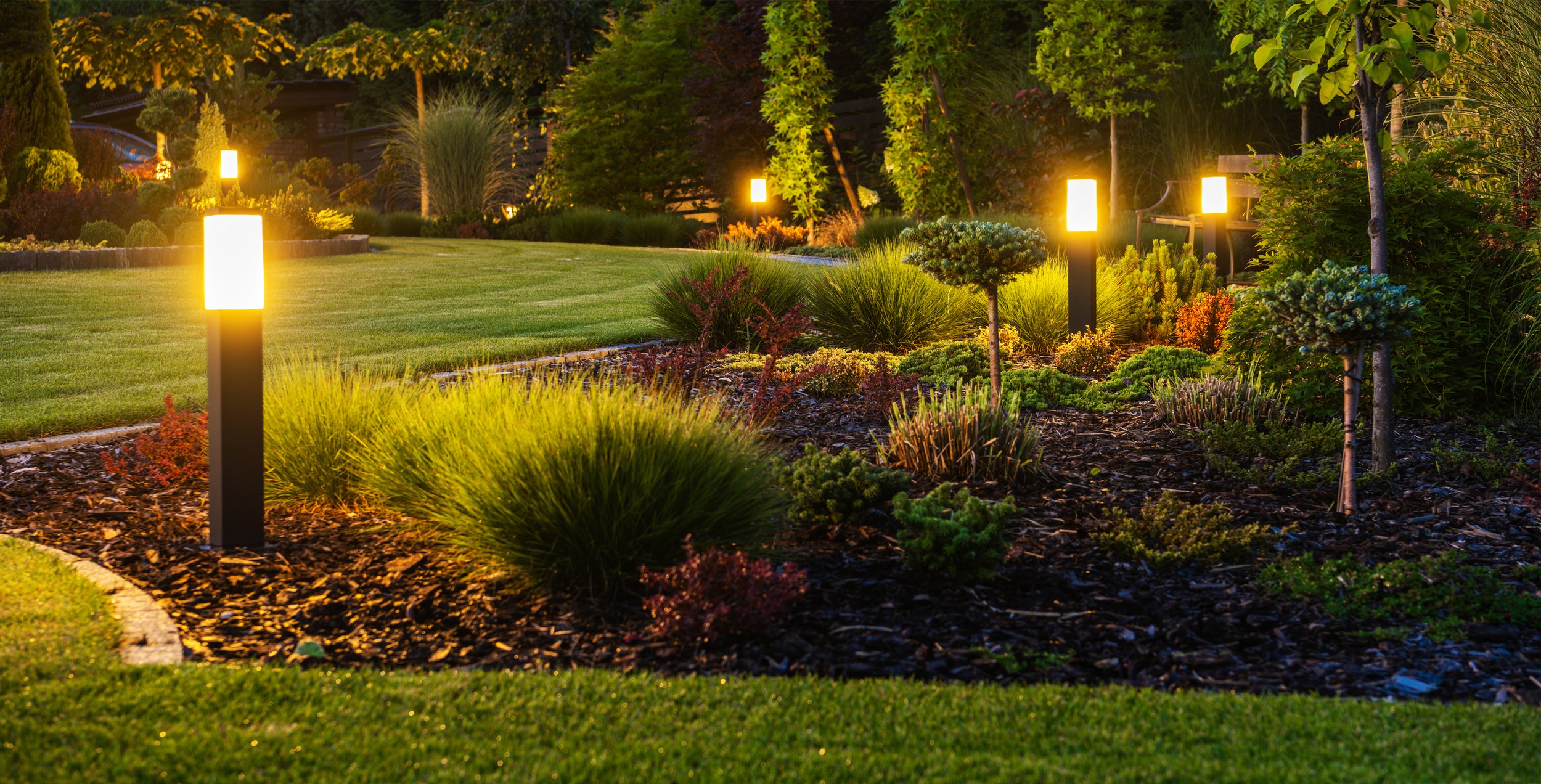
Landscape Lighting Installed to Generic Standards Fails in Winnipeg — Here's What the Local Standard Actually Looks Like
Landscape lighting installation guides written for general audiences describe wire burial at 6 to 8 inches, fixture selection based on IP waterproofing ratings, and transformer placement based on convenience. In Winnipeg, every one of those specifications needs to be rethought for a climate where frost penetrates deeply, temperatures reach -40°C, and the ground moves repeatedly through freeze-thaw cycling that tests anything installed in or near the surface.
The gap between generic landscape lighting installation standards and what Winnipeg's climate actually demands is visible every spring in properties where path lights have migrated out of their installed positions, where wire connections have been pulled apart by frost heave, and where LED driver failures in fixtures left out through winter have created a lighting system that works less reliably with every passing season.
Getting landscape lighting right in Winnipeg requires understanding the specific failure points the climate creates and addressing them before the first wire goes in the ground.
Key Takeaways
Wire burial depth for Winnipeg landscape lighting should reach 30 to 45 cm, significantly deeper than the 15 to 20 cm most guides specify
Fixture selection for Winnipeg requires cold-temperature operation ratings alongside IP waterproofing ratings
Path light staking in clay soil requires specific installation technique to maintain position through freeze-thaw cycling
Transformer placement in Winnipeg should account for cold-weather performance and protection from precipitation and temperature extremes
Seasonal management of certain fixture types extends system longevity significantly in Manitoba's climate
Bulger Brothers Landscape installs landscape lighting across Winnipeg with the cold-climate specifications that outdoor lighting in Manitoba requires
Overview: What Cold-Standard Landscape Lighting Installation Looks Like
This guide covers the specific installation standards that distinguish landscape lighting that performs reliably through Winnipeg winters from lighting that deteriorates progressively with each passing season. It addresses wire burial, fixture selection, path light installation, transformer management, and seasonal practices — all through the lens of what Winnipeg's climate specifically demands rather than what generic installation guides specify.
Bulger Brothers Landscape installs landscape lighting for Winnipeg residential and commercial properties, and the cold-climate specifications in this guide come from observing what fails and what holds through Manitoba winters across multiple installations.
Wire Burial: Why Depth Matters More in Winnipeg Than Anywhere
The most consequential difference between landscape lighting installation that works in Winnipeg and installation that gradually deteriorates is wire burial depth. This is the invisible decision that's made once at installation and that determines the system's behaviour through decades of frost cycling.
The generic standard: Most landscape lighting installation guides specify wire burial at 6 to 8 inches (15 to 20 cm). This depth keeps wire below typical soil disturbance from foot traffic and surface cultivation. In a climate without significant frost penetration, it's adequate.
The Winnipeg reality: Frost penetrates Winnipeg soil to depths that place 6 to 8 inch burial well within the active frost zone. Wire at this depth experiences the full force of annual freeze-thaw movement. Over multiple seasons, that movement accomplishes several things that reduce system performance:
Wire migrates toward the surface as frost cycles push it upward year after year. Wire that started at 7 inches may be at 3 or 4 inches five years later, vulnerable to surface damage from foot traffic, garden tools, and mowing.
Wire connections made at 6 to 8 inch depth experience the same frost movement as the wire itself. A connection that was mechanically sound at installation gets repeatedly stressed by movement that eventually works the connection apart, producing intermittent circuit failures that are frustrating to diagnose and locate.
Wire insulation experiences fatigue from repeated freeze-thaw flexing. Small cracks develop in the insulation at points where wire bends, particularly at transitions from buried horizontal runs to vertical rises toward fixtures. These cracks allow moisture infiltration that eventually produces short circuits.
The Winnipeg standard for wire burial: 30 to 45 cm (12 to 18 inches). At this depth, wire is substantially below the zone of significant frost movement in most Winnipeg soil conditions. The wire stays where it was installed, connections aren't repeatedly stressed by movement, and insulation fatigue is dramatically reduced.
The additional excavation depth adds cost to the installation. It also adds years to the system's reliable operating life that more than compensates for that cost.
Fixture Selection: Cold Temperature Ratings Are Not Optional
Every outdoor lighting fixture carries an IP rating indicating its waterproof protection level. What most specifications don't address is the fixture's cold-temperature operating range, and in Winnipeg's climate, this is equally important.
What happens to fixtures at -40°C: Lens materials crack from thermal contraction when they haven't been formulated for cold-temperature flexibility. Gaskets harden and lose their waterproofing effectiveness, allowing moisture infiltration during the melt-refreeze cycles that follow cold periods. LED drivers, the electronic components that convert AC power to the specific voltage and current LEDs require, can fail at temperatures below their design range in ways that often don't produce immediate failure but reduce driver longevity significantly.
The selection question to ask: What is the fixture's rated operating temperature range? For fixtures that will remain installed through Winnipeg winters — path lights, hardscape-mounted fixtures, tree uplights, and architectural fixtures on home exteriors — a cold-temperature rating of -40°C or lower is appropriate for Manitoba's climate. Fixtures rated to -20°C may experience problems during Winnipeg's coldest periods.
The seasonal removal alternative: For fixture types where cold-temperature ratings are difficult to obtain or where the fixture style is inherently vulnerable to cold-weather damage, seasonal removal is the management approach that protects the fixture investment. Decorative fixtures that would be damaged by the winter environment are removed in November and reinstalled in May. This adds annual labour cost but extends fixture life significantly for product types that aren't designed for winter installation.
Submersible fixtures for water features: This category requires special attention in Winnipeg. Submersible fixtures in water features that freeze solid through winter aren't simply cold — they're surrounded by expanding ice that applies pressure from all directions. Fixtures designed for submersible use aren't necessarily designed for freeze-in-ice conditions. Removing submersible fixtures in fall as part of water feature winterization protects them from this specific failure mode. For more on landscape lighting and water features projects in Winnipeg, that guide covers the combined installation picture including winterization requirements.
Path Light Installation: Keeping Lights Upright Through Freeze-Thaw Cycles
Path lights are the landscape lighting fixture type most visibly affected by poor installation technique in Winnipeg's climate. Lights that are installed correctly in October and progressively migrate out of vertical alignment through subsequent winters indicate an installation technique problem that correct approach prevents.
Why path lights move in Winnipeg: Path light stakes pushed into clay soil without specific installation attention create a friction fit between the stake and the surrounding soil. When frost forms in the soil adjacent to the stake and expands, it pushes the stake upward or laterally. When frost melts, the stake doesn't necessarily return to its original position — it stays where the thawing soil leaves it. Over multiple freeze-thaw cycles, this movement accumulates and stakes migrate from their installed positions.
What correct path light installation looks like in Winnipeg: Stakes driven or inserted to a depth that provides adequate resistance to frost heave movement, not simply pushed in to whatever depth the clay soil permits without excessive effort. For standard path light stakes, this typically means ensuring at least 20 to 25 cm of stake depth below grade, achieved with appropriate driving technique rather than hand pressure alone.
In particularly active frost heave locations — low spots that retain moisture, north-facing areas that freeze earlier and thaw later, areas adjacent to hard surfaces that concentrate frost movement — anchoring path lights with a buried concrete footing around the stake base is the technique that produces reliable long-term position maintenance.
Straight stake installation in clay soil: Clay soil's resistance means that stakes pushed into it at an angle, which often happens when installation goes quickly, don't settle back to vertical over time. They stay at whatever angle they were installed at and compound that angle as frost movement adds additional lean. Installing path light stakes plumb at installation — confirmed with a level rather than estimated by eye — matters more in clay soil than in sandier alternatives.
Transformer Installation: Cold-Weather Placement and Protection
The low-voltage transformer is the central control component of any outdoor lighting system, and its placement and protection significantly affect system reliability in Winnipeg's climate.
Temperature and transformer performance: Electronic components in transformers operate within temperature ranges that manufacturers specify. Winnipeg's winter temperatures aren't typically within the range that causes immediate transformer failure, but cold-weather operation near or below design minimums reduces component longevity over time. Transformers installed on protected walls — south or west-facing walls that receive more solar warming, or walls with any thermal mass adjacent to heated interior space — experience less severe cold-weather operation stress than those on fully exposed north-facing walls.
Precipitation protection: Transformers need protection from direct precipitation while maintaining adequate ventilation. A transformer installed under a protected eave or in a sheltered wall location stays drier than one installed on an exposed surface. In Winnipeg's climate, the freeze-refreeze cycle that water infiltration into transformer housings creates is more damaging than moisture alone.
The photocell consideration in Winnipeg: Most landscape lighting transformers include photocell sensors that activate the system at dusk and deactivate at dawn. Photocell sensors covered by snow or ice during winter provide incorrect light level readings that cause systems to activate at unexpected times or remain active through daylight hours. Photocell placement that minimizes snow accumulation on the sensor, or seasonal manual control settings that override the photocell during winter, addresses this minor but occasionally frustrating operational issue.
Timer backup for winter operation: For properties that want some lighting operation through winter months — pathway safety lighting, architectural lighting on the home's exterior — timer control that doesn't depend on ambient light sensing provides more reliable winter operation than photocell-only control.
Hardscape-Integrated Lighting: Planning Before the Concrete Goes Down
This is the installation category where the gap between getting it right and getting it wrong is most expensive to bridge after the fact.
Lighting integrated into patios, retaining walls, steps, and other hardscape features requires conduit to be installed during hardscape construction, before surfaces are finished. Retrofitting lighting into completed hardscape means either cutting into finished surfaces — expensive, disruptive, and visually compromising — or running visible surface conduit that undermines the clean appearance hardscape lighting is intended to create.
What planning for hardscape lighting looks like: During patio design and installation planning, identify every location where a fixture might be desired — stair risers, retaining wall faces, patio surface uplights, post cap lights — and run conduit to those locations during construction even if fixtures aren't being installed immediately. Empty conduit is inexpensive during construction and provides the pathway for fixture installation whenever the decision is made.
For Winnipeg specifically, conduit installed during patio or retaining wall construction needs to be buried at the same frost-depth standard as surface-run wire to avoid the same frost movement issues that affect shallower installations.
For a broader look at how hardscape installation integrates with lighting planning in Winnipeg, that guide covers the construction standards that apply to both the structural and electrical elements of outdoor installations.
The Value Case for Winnipeg Landscape Lighting
Landscape lighting installation in Winnipeg creates value in specific ways that are worth articulating clearly before making the investment decision.
Extending the evening season: Winnipeg's outdoor season is short enough that every usable hour matters. Landscape lighting extends the usable evening hours of a patio, garden, or outdoor living space without requiring any change in outdoor conditions. A patio that's enjoyable until 10 PM rather than until sunset delivers meaningfully more seasonal use.
Winter presence: Quality hardscape-mounted and architectural lighting remains active through winter months, maintaining the property's exterior presence during the dark months that are a significant portion of the year. A Winnipeg home with well-designed exterior lighting looks cared for and finished in January as well as July.
Property value contribution: At mid-range and higher price points, landscape lighting contributes to the premium outdoor living impression that buyers respond to. A property with thoughtfully designed and professionally installed lighting photographs better, shows better in evening viewings, and signals the overall quality of the outdoor space investment.
For context on how does landscaping add value to a home in Winnipeg specifically and how lighting fits within the overall outdoor value picture, that guide covers the research and return analysis.
Understanding landscape lighting in Winnipeg from a broader seasonal and design perspective gives homeowners the full picture for planning outdoor lighting that serves the property well across all twelve months.
When you're ready for landscape lighting installation that meets Winnipeg's cold-climate standards rather than generic guides that don't account for what Manitoba winters do to outdoor electrical systems, Bulger Brothers Landscape provides installation built around the local specifications that actually determine long-term performance. Located at 7 Leeward Pl, Winnipeg, MB R3X 1M6, the team brings cold-climate installation knowledge to every lighting project. Call (204) 782-0313 to discuss your landscape lighting installation and get a proposal that reflects what Winnipeg's climate actually requires.
Frequently Asked Questions About Landscape Lighting Installation
Q: How deep should landscape lighting wire be buried in Winnipeg?
A: 30 to 45 cm (12 to 18 inches) is the appropriate burial depth for Winnipeg's frost penetration conditions. Generic guides typically specify 15 to 20 cm, which places wire within the active frost zone and leads to wire migration, connection stress, and insulation fatigue over multiple freeze-thaw cycles. The additional depth at installation adds years to the system's reliable operating life.
Q: What fixture specifications matter most for Winnipeg landscape lighting?
A: Cold-temperature operating rating is as important as IP waterproofing rating for fixtures that will remain installed through Manitoba winters. Fixtures rated to -40°C handle Winnipeg's coldest periods correctly. Fixtures rated only to -20°C may experience lens cracking, gasket failure, and LED driver problems during extreme cold events.
Q: Why do path lights in Winnipeg often become unlevel after a few winters?
A: Frost heave movement in clay soil pushes path light stakes upward and laterally as the soil freezes and thaws repeatedly. Stakes not installed to adequate depth, or pushed in at a slight angle, migrate progressively out of position with each freeze-thaw cycle. Correct installation technique — adequate stake depth and confirmed-plumb installation — significantly reduces this movement over time.
Q: Should landscape lighting fixtures be removed for Winnipeg winters?
A: Fixtures rated for cold-temperature operation to -40°C can remain installed through Manitoba winters without seasonal removal. Fixture types that aren't rated for this temperature range, or submersible fixtures in water features that freeze solid, benefit from removal in fall and reinstallation in spring. The trade-off between removal labour and extended fixture life favours removal for vulnerable fixture types.
Q: When should hardscape lighting conduit be installed relative to patio construction?
A: During construction, before surfaces are finished. Conduit installation during patio or retaining wall construction is inexpensive and preserves the option to install fixtures at any point in the future. Retrofitting lighting conduit into completed hardscape is expensive, disruptive, and often visually compromising. Planning for lighting during hardscape design, even if fixtures aren't being installed immediately, is always the right approach.
Q: How does landscape lighting add value to a Winnipeg property?
A: Landscape lighting extends the usable evening hours of outdoor living spaces during Winnipeg's short but intensely valued summer season. It maintains the property's exterior presence through winter months that represent a significant portion of the year. At mid-range and higher price points, it contributes to the premium outdoor living impression that buyers respond to in listing photos and evening showings.
Q: What is the most common landscape lighting failure in Winnipeg?
A: Wire connection failures from frost movement are the most common cause of intermittent circuit problems in Winnipeg landscape lighting systems. Connections made at shallow burial depth experience repeated mechanical stress from freeze-thaw movement that eventually works them apart. Correct burial depth and waterproof connection splices that maintain mechanical integrity through movement are the installation practices that prevent this failure mode.
Q: How should the photocell sensor on a landscape lighting transformer be managed in Winnipeg winters?
A: Photocell sensors covered by snow or ice provide incorrect light readings that cause systems to operate unexpectedly. Placing the photocell where snow accumulation is minimized, or switching to timer-based control that overrides the photocell during winter months, addresses this minor but recurring operational issue for systems that remain active through winter.
Conclusion
Landscape lighting installation in Winnipeg that meets the cold standard — wire at 30 to 45 cm burial depth, fixtures rated for -40°C operation, path lights installed with frost-heave resistance in mind, and transformers placed for cold-weather protection — produces systems that perform reliably through multiple decades of Manitoba winters. Installation to generic standards produces systems that work well initially and deteriorate progressively as frost cycling reveals the gap between what was specified and what this climate requires. The specifications in this guide aren't premiums beyond basic installation — they're the baseline for outdoor electrical work that's actually appropriate for Winnipeg's conditions. Bulger Brothers Landscape installs to that baseline on every landscape lighting project across the city.