

What Nobody Tells You About Water Features in Winnipeg
The Information Gap Between What Water Features Look Like and How They Work in Manitoba
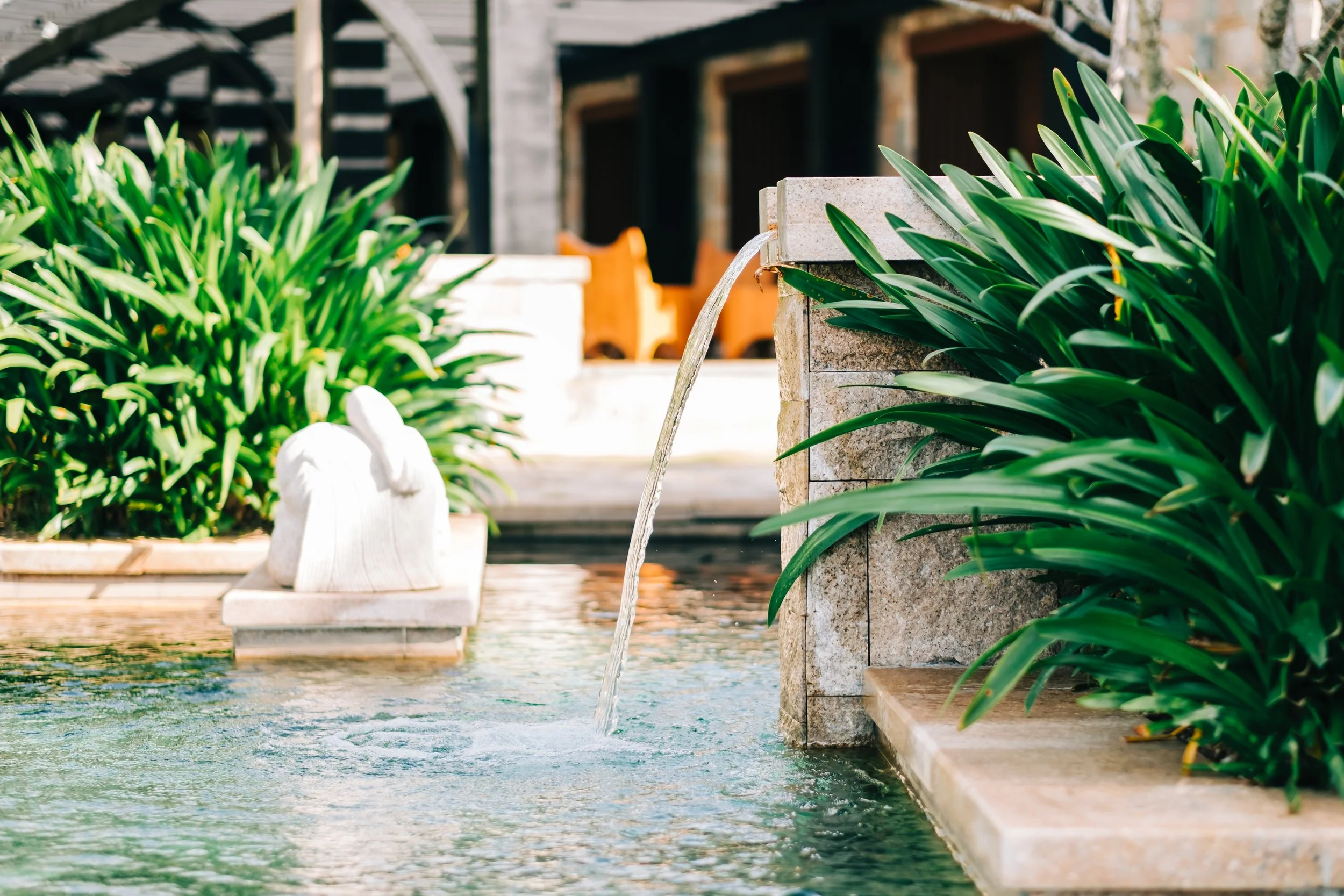
Search for water feature inspiration online and you'll find images of clear-running streams, moss-covered boulders, and ponds with waterlilies reflecting an evening sky. What those images don't show is what happens to each of those installations in November when the ground freezes, what the spring startup involves, or why the pump that worked beautifully in September needs replacing in May. In milder climates, a water feature is largely a seasonal maintenance consideration. In Winnipeg, it's a design and engineering challenge that requires upfront decisions most homeowners don't know to make until after something goes wrong.
The same honest assessment applies to landscape lighting projects. Getting these installations right in Manitoba requires understanding what freezes, what doesn't, what needs to come out every fall, and what can stay in the ground for decades if installed correctly the first time.
Key Takeaways
Water features in Winnipeg require specific winterization design from the start, not as an afterthought
Pondless water features are almost always the better choice in Manitoba over traditional ponds because they eliminate the most challenging winter management issues
Landscape lighting in Winnipeg requires burial depth appropriate for frost penetration and fixture selection rated for cold-climate performance
The combination of lighting and water features creates the most impactful evening outdoor spaces in Winnipeg's short but intensely valued summer season
Poor winterization of any water feature shortens component lifespan significantly and creates the repair cycle many Winnipeg homeowners experience
Bulger Brothers Landscape designs and installs landscape lighting and water features projects across Winnipeg with Manitoba's climate requirements built in from the start
Overview: Landscape Lighting and Water Features in Winnipeg's Climate
This guide addresses the specific information gap that exists between how landscape lighting and water features projects look in inspiration photography and how they actually function in Manitoba's climate. It covers what makes water features work long-term in Winnipeg, why certain designs perform better than others here specifically, what landscape lighting installation requires for freeze-thaw durability, and how these two elements combine to create the outdoor living spaces that Winnipeg homeowners get the most value from during the summer season.
Bulger Brothers Landscape installs landscape lighting and water features projects across Winnipeg, and the practical knowledge throughout this guide comes from local installation and seasonal maintenance experience.
What Nobody Tells You About Traditional Ponds in Winnipeg
Traditional ponds — excavated basins lined with rubber or concrete, filled with water, planted with aquatic plants, and potentially stocked with fish — are the water feature type that most homeowners picture when they imagine adding water to their yard. They're also the water feature type that creates the most problems in Winnipeg's climate.
The winter problem is ice. A traditional pond in Winnipeg freezes from the surface down through winter. The ice layer itself isn't the problem for most pond structures. The problem is what happens in spring when ice melts and refreezes repeatedly during the transition period, when freeze-thaw cycling creates pressure on the pond liner and the edges of the excavated basin, and when frost heave works against the decorative edging stones and any associated hardscape that surrounds the pond.
The spring startup problem follows. A traditional pond that survived winter in good condition still requires a full spring startup process: cleaning the accumulated debris from the bottom, restarting the pump and filtration, testing water chemistry, replanting or dividing aquatic plants, and if fish are present, slowly reacclimating them as water temperatures rise. For Winnipeg homeowners who specifically want low-maintenance outdoor features, traditional ponds often deliver the opposite.
The algae management reality. Winnipeg's warm July and August temperatures combined with high summer sunlight create excellent conditions for algae growth in open-water ponds. Algae management through water treatment, UV clarifiers, and plant competition is an ongoing summer maintenance task that many homeowners don't anticipate when planning their pond installation.
None of this means traditional ponds can't work in Winnipeg. They can, and there are beautiful, well-maintained examples throughout the city. But they work for homeowners who genuinely enjoy pond management as part of their outdoor hobby, not for homeowners who want a water feature that runs itself.
Why Pondless Water Features Are the Better Default Choice in Winnipeg
Pondless water features, also called pondless waterfalls or disappearing water features, use a buried reservoir rather than an open water surface. Water is pumped from the buried reservoir up through a stream course or waterfall structure and returns to the reservoir through the stones and gravel of the feature base. At any given time, there's no significant open water surface — the water either flows visibly through the feature or sits invisibly in the buried reservoir.
The winterization advantage is significant. Because there's no open water surface to freeze problematically, pondless features are dramatically easier to winterize in Winnipeg. The standard process involves removing the pump in October, draining the reservoir to prevent ice expansion damage, and covering the feature opening. Spring startup is comparably simple: reinstall the pump, refill the reservoir, and start the system. The entire process takes a few hours in each direction, compared to the multi-day spring startup a traditional pond requires.
The maintenance advantage is equally real. No fish to manage. No water chemistry to balance. No aquatic plant division schedule. The primary ongoing maintenance is keeping the feature clean of leaf debris through fall and running the pump through summer. This maintenance profile suits the majority of Winnipeg homeowners who want the sound and visual appeal of moving water without a significant ongoing management commitment.
The design flexibility advantage. Pondless features can be designed at almost any scale, from a small bubbling boulder feature in a compact urban yard to a multi-tier waterfall feature with a substantial stream course in a larger property. The buried reservoir can be sized to the feature's flow requirements without the space demands of an open pond. In a Winnipeg yard where outdoor living space is precious and the season is short, this space efficiency matters.
The safety advantage. A pondless feature has no significant open water accumulation that creates drowning risk. For families with young children, this eliminates a safety concern that traditional ponds create.
For a full look at water features and landscape lighting services available for Winnipeg properties, that overview covers the full range of water feature and lighting installation options.
What Nobody Tells You About Water Feature Pumps in Winnipeg
The pump is the component that makes any water feature work, and it's also the component most consistently shortened in lifespan by incorrect winterization or incorrect operation practices in Winnipeg's climate.
Pumps left running in a system that's beginning to freeze in fall are at risk. As water in a feature's stream course begins to freeze in the outer sections, ice can redirect flow in ways that expose pump components or trap ice around the impeller. Running a water feature pump through freeze events is a reliable way to damage the pump.
Pumps stored incorrectly over winter fail prematurely. A pump removed from the water and stored in a cold garage where it freezes solid through winter experiences ice expansion in any water trapped in its housing, which damages seals and impeller components. Correct pump storage involves cleaning the pump, drying it as completely as possible, and storing it in a location where it won't freeze — a heated space or an insulated container.
The pump sizing question affects Winnipeg features specifically. A pump sized for the minimum required flow rate on a warm summer day has less reserve capacity than one sized with margin above minimum requirements. In Winnipeg's shoulder season conditions, when debris is higher in fall and temperatures are dropping, having that reserve pump capacity helps the feature maintain correct function through the full operating season.
What Landscape Lighting Projects Require in Winnipeg
The lighting side of landscape lighting and water features projects has its own Winnipeg-specific requirements that milder-climate guides don't address.
Wire burial depth matters for frost protection. Landscape lighting wire buried at 15 to 20 cm, which is the minimum specified in most installation guides, is within Winnipeg's frost zone. Wire buried at this depth gets moved by frost activity, which over multiple years can cause wire to migrate toward the surface, pull connections loose, or create stress fractures in wire insulation at points where movement is concentrated. Professional landscape lighting installation in Winnipeg buries wire at 30 to 45 cm to keep it below the zone of significant frost movement.
Fixture selection for cold-climate performance. Landscape lighting fixtures have operating temperature ratings that vary by product. Fixtures rated for operation in temperatures down to -40°C handle Winnipeg winters in an installed state. Fixtures with narrower temperature ranges may experience lens cracking, seal failure, or LED driver failure during cold events. Product selection should reference cold-weather performance ratings alongside the more commonly advertised IP waterproof ratings.
Transformer placement and frost protection. The low-voltage transformer that powers a landscape lighting system should be installed in a location protected from direct precipitation and ideally on the warm side of a wall or structure rather than on the fully exposed north-facing side that gets the most temperature stress. The transformer housing and its connections are the most vulnerable electrical components in an outdoor lighting system to cold-weather failure.
Path lighting heaving. Path lights installed on short stakes in soil that freezes and thaws repeatedly will migrate over multiple seasons. The stake depth and installation method affects how long path lights stay upright and aligned. Installing path lights on stakes driven to adequate depth in the soil, not just pushed in by hand, significantly improves their stability through Winnipeg's freeze-thaw cycling.
The Evening Season: Why Lighting and Water Features Together Create the Most Valuable Outdoor Spaces
The most compelling case for combining landscape lighting and water features projects in Winnipeg comes from understanding how short the season actually is and how lighting extends the usable hours of that season.
Winnipeg's summer evenings are genuinely beautiful. The combination of northern latitude long days, warm temperatures through June, July, and August, and the value homeowners place on outdoor time after a long winter creates a specific hunger for evening outdoor living that lighting directly enables. A patio that's comfortable and used until 10 PM through summer adds meaningful hours to the season's outdoor living total compared to one that goes dark at sunset.
Water features at night create a sensory experience that daytime use doesn't match. The sound of moving water carries differently in the quieter evening hours. Submersible lighting in a waterfall or stream feature transforms the water's appearance, creating illuminated movement that's distinctly different from the daytime feature. The combination of sound and illuminated movement in an evening garden setting delivers an experience that's disproportionately impactful relative to the installation cost.
The Winnipeg argument for lighting investment is specific. A homeowner in a milder climate with a ten-month outdoor season can enjoy evening outdoor spaces for 300 nights a year. A Winnipeg homeowner with a five-month season gets perhaps 100 evenings of comfortable outdoor use. Lighting that makes those 100 evenings fully usable is proportionally more valuable per installation dollar than the same lighting in a climate where the season is twice as long.
Design Principles for Combined Lighting and Water Feature Projects
When landscape lighting and water features projects are planned together rather than added sequentially, the combined result is better than either element alone.
Lighting a water feature requires thinking about the light source direction. Light aimed at a waterfall from below the water surface (submersible fixture) creates the most dramatic effect. Light aimed at a water feature from above (above-water fixture) creates glare on the water surface rather than illuminating its movement. Understanding this principle before the water feature is installed means the lighting design can be integrated into the feature rather than retrofitted around it.
The sound of water and the presence of light at the garden perimeter creates a defined outdoor room. A patio with landscape lighting defining its edges and a water feature providing ambient sound feels like a room in a way that a patio without these elements doesn't. This enclosed, defined quality is exactly what makes outdoor living spaces feel worth spending time in, particularly in Winnipeg where the evenings can be cool enough that the thermal comfort of an enclosed-feeling space matters.
Lighting the path from the house to the outdoor living area matters as much as lighting the area itself. A beautiful patio with water feature that requires navigating an unlighted path from the back door to reach it gets used less than one where the path is safely illuminated. The complete lighting picture includes the arrival sequence, not just the destination.
For a broader look at outdoor living spaces that combine fire pits, lighting, and hardscapes for Winnipeg properties, that guide covers the full outdoor living picture with all the elements that extend seasonal use.
Understanding landscape lighting in Winnipeg specifically — what products perform in this climate and what installation standards apply — gives homeowners the technical foundation for evaluating lighting proposals.
When you're ready to plan landscape lighting and water features projects for your Winnipeg property with someone who understands what Manitoba winters require, Bulger Brothers Landscape provides design and installation services that build winterization and durability into every project from the start. Located at 7 Leeward Pl, Winnipeg, MB R3X 1M6, the team can assess your specific property and recommend the water feature type, lighting design, and installation standards that will perform correctly through every Manitoba season. Call (204) 782-0313 to schedule your consultation.
Frequently Asked Questions About Landscape Lighting and Water Features Projects
Q: What type of water feature works best in Winnipeg's climate?
A: Pondless water features are the best default choice for most Winnipeg homeowners. They winterize more easily than traditional ponds, require significantly less ongoing maintenance, have no safety concerns from open water, and deliver the same sound and visual appeal that makes water features valuable. Traditional ponds work well for homeowners who enjoy pond management as an activity, but require more investment in both time and winterization planning.
Q: How do you winterize a water feature in Winnipeg?
A: For pondless features: remove the pump in October before hard freeze, drain the reservoir to prevent ice expansion damage, and cover the feature opening. For traditional ponds: remove debris, install a pond de-icer or aerator to maintain an opening in the ice for gas exchange, and if fish are present, ensure the pond is deep enough that the bottom water stays above freezing. Store all pumps in a heated space over winter to prevent freeze damage.
Q: How deep should landscape lighting wire be buried in Winnipeg?
A: Professional installation in Winnipeg buries landscape lighting wire at 30 to 45 cm, significantly deeper than the 15 to 20 cm minimum specified in most installation guides. This depth keeps wire below the zone of significant frost movement, preventing migration toward the surface and stress fractures at connection points that shallow burial produces over multiple freeze-thaw cycles.
Q: Can landscape lighting fixtures handle Winnipeg winters?
A: Quality fixtures rated for operation down to -40°C handle Winnipeg winters correctly when installed. Products with narrower operating temperature ranges may experience lens cracking, seal failure, or LED driver failure during cold events. Cold-weather performance rating is a specification to confirm alongside IP waterproofing ratings when selecting outdoor lighting products for Manitoba installations.
Q: Does landscape lighting add value to a Winnipeg property?
A: Yes. Landscape lighting extends the usable evening hours of an already short outdoor season, photographs well for real estate listings, adds security value, and contributes to the finished, premium quality impression that buyers at mid-range and above price points respond to. The proportional value of lighting investment is high in Winnipeg because the short season concentrates the value of every usable outdoor hour.
Q: What is the typical cost of a pondless water feature in Winnipeg?
A: Small decorative pondless features run $3,000 to $6,000 installed. Mid-size features with a defined stream course and waterfall run $6,000 to $12,000. Larger, more elaborate features with substantial rock work and stream length run $12,000 to $25,000 or more. Integration with surrounding hardscape and lighting adds to the total.
Q: Can water features and landscape lighting be added to an existing patio?
A: Yes, though planning them during original patio installation produces better results and lower total cost. Adding a water feature to an existing patio may require adjusting the surrounding landscape and potentially the patio edge. Adding lighting to an existing patio requires wire burial, which involves excavation adjacent to the completed patio surface. Both are achievable retrofits that cost somewhat more than original installation planning would have.
Q: How long does a water feature pump last in Winnipeg with correct winterization?
A: Quality submersible pumps correctly removed, cleaned, and stored in a heated space over winter typically last 5 to 10 years in normal operation. Pumps left in freezing systems or stored in cold spaces where they freeze solid may fail within one to three seasons. Winterization practice is the primary determinant of pump lifespan in Winnipeg's climate.
Conclusion
Landscape lighting and water features projects in Winnipeg require knowing what the images in the inspiration catalogue don't show: what happens in November, what the spring startup involves, and what the design decisions made at installation determine for the next 15 years of ownership. Pondless water features are almost always the right choice in Manitoba because they solve the most significant winterization challenges that traditional ponds create. Landscape lighting requires wire depth, fixture selection, and installation practices calibrated to frost penetration rather than waterproofing alone. And the combination of illuminated water movement and defined evening outdoor space creates a summer experience that's disproportionately valuable in a city where the outdoor season is short enough that every evening matters. Bulger Brothers Landscape builds these projects with Manitoba's realities designed in from the start.