

Snow Removal in Winnipeg – Residential & Commercial Winter Services
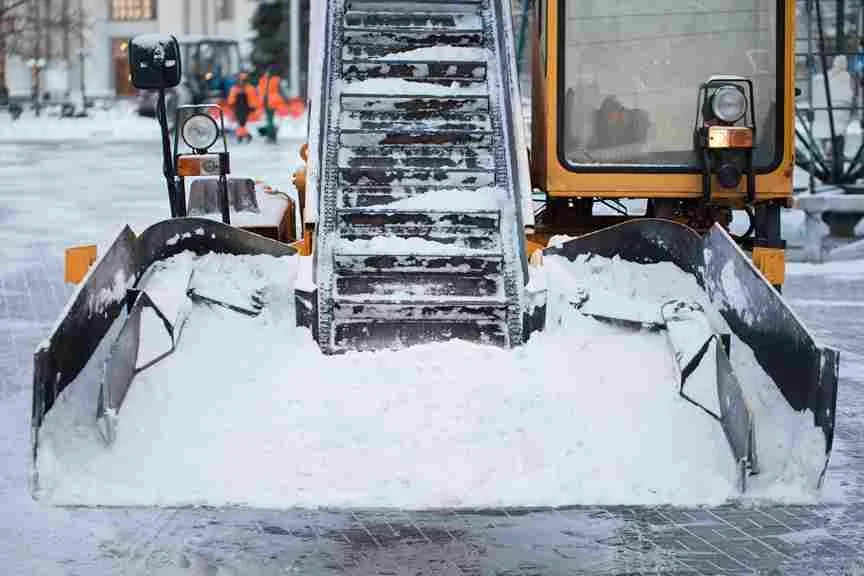
Managing Snow in Winnipeg Is Not Optional — It Is Operational
Winter in Winnipeg is not a background condition that property owners work around. It is a primary operational reality that determines whether residential driveways are accessible before the morning commute, whether commercial parking lots remain safe for customers and employees, and whether the surfaces that everyone in the city uses every day from November through April are managed consistently or left to the freeze-thaw compaction cycle that turns uncleared snow into something significantly harder and more dangerous.
Snow removal in Winnipeg spans a full range of services that residential and commercial property owners need to understand clearly before the season begins. From seasonal contract structures and trigger depth decisions to ice control, parking lot sanding, and spring sand cleanup, the choices made in September shape how every snowfall event from October through April gets handled. In established neighbourhoods like River Heights and across the commercial corridors of Transcona and St. Vital, the difference between a well-managed winter property and a frustrating one comes down to those pre-season decisions more than almost anything else.
This guide covers the full scope of professional snow removal in Winnipeg, explaining what residential and commercial services actually include, how the two service types differ, what each costs, how contracts work, and what property owners should look for and confirm before committing to a provider. Bulger Brothers Landscape delivers residential and commercial snow removal across Winnipeg with route structures built for response efficiency, service scopes that address complete property coverage, and seasonal contracts backed by the local expertise that comes from managing Winnipeg properties through some of Canada's most demanding winter conditions.
Key Takeaways
Winnipeg averages over 110 centimetres of annual snowfall across 65 to 70 events, enough frequency and volume that seasonal contracts consistently outperform reactive on-demand service for most properties
Residential and commercial snow removal carry different liability profiles, service requirements, equipment needs, and contract structures
Ice control and snow clearing are complementary services that work best when coordinated under the same provider through the full season
Trigger depth, response time, and documented service records are the three contract elements that matter most for both safety and liability protection
Quality snow removal providers in Winnipeg fill their route capacity before the season begins, making September the right time to book
Spring sand cleanup completes the winter property management cycle after the snow season ends, restoring surfaces and drainage for warmer months
Overview
This guide covers professional snow removal in Winnipeg across all its components, from the residential driveway clearing and walkway service that homeowners need through the commercial parking lot management, accessible route maintenance, and liability documentation that commercial property managers require. It also covers the complementary services, including ice control, parking lot sanding, and spring cleanup, that complete a full-cycle winter property management program for Winnipeg properties. Bulger Brothers Landscape provides the full range of residential and commercial snow clearing services across Winnipeg, backed by seasonal contracts built around each property's specific operational requirements through a Manitoba winter.
Understanding What Winnipeg Winters Actually Deliver
Effective snow removal planning starts with understanding what Winnipeg's winter actually involves, because the specific character of Manitoba's snowfall and temperature patterns directly shapes what service approaches work and what falls short.
Winnipeg averages approximately 114 centimetres of annual snowfall distributed across a season running from October through April. The city typically experiences 65 to 70 discrete snowfall events per season, ranging from light dustings of 2 to 3 cm through major storms that deposit 20 to 30 cm or more in a single event. That frequency creates a service demand pattern that rewards systematic seasonal programs over reactive on-demand responses. A property owner managing snow removal reactively is initiating service requests 35 to 50 times per season, in overnight events, weekday morning storms, and weekend accumulations that arrive without regard for schedule or convenience.
Winnipeg's temperature patterns create specific ice management challenges that property owners relying on standard rock salt alone encounter every January and February. Rock salt loses effectiveness below approximately minus 9 degrees, a threshold Winnipeg falls below for extended periods through the core winter months. Professional snow removal programs in Winnipeg use calcium chloride and sand as the primary winter surface management products during cold periods, matching product to temperature conditions rather than applying rock salt regardless of whether it is actually working.
The freeze-thaw cycle that occurs repeatedly throughout the season, particularly in November and December and again in February and March, creates compacted multi-layer ice conditions that are significantly harder to manage than fresh snow. Each cycle deposits a new layer of ice on existing accumulation, building surfaces that require mechanical clearing and appropriate ice control products to address effectively. This cycling is why timing matters so much in professional snow removal: service that arrives before fresh snow has been compacted by foot or vehicle traffic into bonded ice requires less effort, less product, and less time than service that responds after compaction has already occurred.
The windrow deposited by city plows across residential driveways and commercial property entrances after street clearing is one of the most consistently underestimated aspects of Winnipeg snow removal. It consists of the densest, most compacted material on the property, often mixed with road sand and debris, and it arrives after the driveway has already been cleared, requiring a second service pass. Whether windrow clearing is included in a snow removal contract or explicitly excluded is one of the most important scope questions to resolve before signing. For a detailed explanation of how windrows form and what a contract should say about managing them, the windrow snow removal guide on the Bulger Brothers blog covers the topic in full.
Residential Snow Removal in Winnipeg: What Homeowners Need to Know
Residential snow removal in Winnipeg serves the homeowner's fundamental need: a driveway that can be used before the morning commute, walkways that are safe for family members and visitors, and a property that remains accessible and hazard-free through the full Manitoba winter season.
What Residential Snow Removal Covers
A complete residential snow removal program in Winnipeg addresses the full property rather than just the driveway. The driveway is the primary service area, cleared down to the pavement surface on every visit rather than leaving a packed layer behind that compounds between events. Front walkway and entrance clearing is the most liability-relevant pedestrian surface on any residential property and should be included as a standard service component rather than an optional add-on. Step clearing, secondary walkways to back entrances and outbuildings, and the public sidewalk adjacent to the property are additional areas that a complete residential service program addresses.
City of Winnipeg bylaws require homeowners to clear the public sidewalk adjacent to their property within a defined timeframe after snowfall. Including sidewalk clearing in a residential snow removal contract addresses that obligation without requiring the homeowner to monitor and manage it independently after every event. Windrow clearing, as discussed above, should be explicitly confirmed as an included service in the contract rather than assumed to be covered.
Sanding or ice control product application after every clearing visit is the component of residential snow removal that makes cleared surfaces genuinely safe in Winnipeg's freeze-thaw climate. A driveway cleared of snow but not treated for traction can become a sheet of nearly invisible ice within hours as overnight temperatures drop. Confirm that sanding is included as a standard post-clearing step in any residential snow removal contract before signing.
Seasonal Contracts vs On-Demand Service for Winnipeg Homeowners
The choice between a seasonal contract and on-demand service is one of the first and most consequential decisions Winnipeg homeowners make when organising winter property management.
A seasonal flat-rate contract covers the property for the full winter at a fixed fee, with service activating automatically when snowfall reaches the agreed trigger depth. The homeowner pays the same amount regardless of how many events occur, transferring weather risk to the service provider. In a heavy winter, seasonal contract clients receive significantly more service value than their contract cost. In a mild year, the provider benefits. Over multiple seasons, the pricing structure rewards seasonal contract holders because Winnipeg delivers more snowfall in most years than a per-visit comparison at typical on-demand rates would favour.
Beyond the financial structure, seasonal contracts deliver priority service. Contract clients are on established routes that activate as soon as trigger conditions are met, without competing with on-demand requests for available service capacity. During major Winnipeg storm events when every property in the city needs clearing simultaneously, that priority is the difference between a cleared driveway by 7 am and one cleared sometime the following afternoon.
On-demand service charges per visit at rates typically 40 to 60 percent higher than the equivalent per-event cost under a seasonal contract. It makes genuine sense for homeowners who spend significant portions of winter away from the property, who handle light events themselves and want professional service only for major accumulations, or who are in a first season at the property and not yet ready to commit to a seasonal relationship.
For most Winnipeg homeowners with regular daily schedules and households that depend on consistent driveway access, a seasonal contract delivers better value and more reliable service than on-demand arrangements can structurally provide. For a detailed comparison of both models including contract term guidance and what to look for in each, the residential snow removal seasonal contracts guide on the Bulger Brothers blog covers both approaches in depth.
What Residential Snow Removal Costs in Winnipeg in 2026
For most standard Winnipeg residential properties in 2026, complete seasonal flat-rate contracts that include driveway clearing, windrow removal, walkway and step service, and sanding after every visit range from $400 to $900 for the full season. Properties with larger driveways, tighter trigger depths, faster response windows, or additional service areas fall toward the higher end. Per-visit on-demand pricing typically runs $40 to $100 per event for a standard residential property.
For detailed pricing context and a full breakdown of what drives cost differences between properties and contractors in Winnipeg, the residential snow removal cost guide on the Bulger Brothers blog provides comprehensive 2026 benchmarks.
What to Look for in a Residential Snow Removal Provider
Route presence in the neighbourhood, clear trigger depth and response time commitments in writing, explicit windrow policy, sanding inclusion confirmation, and references from residential clients in the area are the five factors that most reliably predict service quality for a Winnipeg residential property. A provider who answers direct questions about these elements clearly and specifically during the quoting process is demonstrating the same operational standards they bring to service delivery through winter.
Commercial Snow Removal in Winnipeg: What Property Managers Need to Know
Commercial snow removal in Winnipeg operates under fundamentally different requirements than residential service. Larger surface areas, lower trigger depth requirements, faster response time standards, commercial-scale equipment, and the legal liability context that makes documented professional service a business necessity rather than a convenience all distinguish commercial from residential snow removal.
The Liability Framework for Commercial Properties in Winnipeg
Manitoba's Occupiers' Liability Act places a positive duty of care on commercial property occupiers to take reasonable steps to ensure their premises are reasonably safe for visitors. In winter conditions, meeting that duty requires a systematic, professional snow and ice management program with documented service records, not reactive treatment when hazardous conditions become visually obvious.
The difference between a documented professional commercial snow removal program and an informal arrangement becomes clear when slip-and-fall liability claims arise. Courts assess whether the property occupier took reasonable steps, whether those steps were systematic and documented, and whether the hazardous condition was addressed within a reasonable timeframe after it developed. Timestamped service records generated by professional snow removal providers are the documented evidence that answers those questions favourably on the property owner's behalf.
Commercial snow removal in Winnipeg is properly understood as part of the liability management portfolio for any business. The cost of a single slip-and-fall claim, including legal costs, insurance implications, and potential settlement, routinely exceeds the cost of an entire season of professional snow clearing service. That context makes the investment straightforward for any commercial property with meaningful pedestrian traffic. For a comprehensive overview of how commercial snow clearing protects Winnipeg businesses from liability exposure while keeping properties operationally safe, the commercial snow clearing liability guide on the Bulger Brothers blog covers the topic in full.
What Commercial Snow Removal Covers in Winnipeg
Commercial properties require snow removal coverage across multiple surface types that each present distinct clearing challenges. Parking lots and drive aisles are the primary surface and require commercial-scale equipment appropriate to the lot size. Building entrances and approach walkways carry the highest liability concentration and require first-priority treatment in commercial clearing programs. Pedestrian walkways between buildings and around property perimeters need full-width coverage, not just a central path. Loading docks and service areas generate persistent ice conditions from door openings, vehicle traffic, and drainage geometry that require specific attention. Accessible parking stalls, ramps, and routes require priority maintenance for both general liability and regulatory compliance under provincial accessibility standards.
A complete commercial snow clearing program addresses all of these surfaces as a coordinated property management program rather than treating parking lot clearing as the primary service and everything else as supplementary. For more detail on what professional commercial snow clearing involves at different property scales, the commercial snow clearing service page on the Bulger Brothers website outlines the full scope of what Winnipeg commercial clients receive under professional seasonal contracts.
Commercial Snow Removal Contract Structure
Commercial contracts define service terms with greater specificity than residential contracts. Trigger depths for commercial properties typically run between 2.5 and 5 cm. Response time commitments should be specified in hours, with standard commercial response windows of 2 to 4 hours for most Winnipeg commercial properties and tighter commitments for medical, retail, or emergency-access properties. Service documentation including timestamped visit logs should be generated after every clearing event. Snow stacking zones should be designated in advance so cleared snow does not reduce accessible parking or create sightline hazards. Haul-away provisions should be addressed for properties where perimeter accumulation limits available parking mid-season.
Seasonal flat-rate contracts consistently provide better value and more reliable service priority for Winnipeg commercial properties than per-event billing, for the same reasons they do on the residential side, compounded by the more significant operational and liability consequences of service gaps at the commercial scale. For a full breakdown of commercial snow removal costs in Winnipeg and what each price range reflects in terms of service scope and contractor quality, the commercial snow removal cost guide on the Bulger Brothers blog provides detailed 2026 benchmarks across the full range of Winnipeg commercial property types.
Parking Lot Sanding: The Traction Component of Winnipeg Winter Property Management
Sanding is the traction management component of a complete snow removal program in Winnipeg, providing the grip that de-icing products alone cannot deliver at the city's lowest temperatures and maintaining safe surfaces between clearing events when refreezing creates ice hazards on previously cleared pavement.
Sand provides traction by creating a rough textured layer on top of ice or compacted snow, improving friction for both pedestrian foot traffic and vehicle tire contact at all temperatures. Unlike chemical de-icing products, sand works when temperatures fall below minus 15 and minus 20, the range where Winnipeg regularly operates during January and February and where rock salt and many chemical products stop being effective.
Professional parking lot sanding programs apply sand using truck-mounted spreaders that distribute material evenly across large surface areas at calibrated rates, monitor surface conditions between events for traction degradation that requires reapplication, and coordinate sanding visits with clearing events so cleared surfaces are treated before overnight refreezing creates hazardous conditions.
For commercial properties where high pedestrian traffic makes traction management a constant winter safety priority, and for residential properties where walkway and step safety through the full freeze-thaw season matters, parking lot sanding is not an optional add-on to the snow clearing program. It is the service that makes clearing effective from a safety perspective rather than simply from a visual cleanliness perspective.
Ice Control: The Safety Layer That Snow Removal Alone Does Not Provide
Snow removal clears accumulation. Ice control manages the hazard that remains after clearing, including the compacted ice beneath fresh snow, the refreezing of cleared wet pavement during post-storm temperature drops, and the black ice that forms during freeze-thaw cycling between events. A complete winter property management program addresses both.
The most effective ice control approach is anti-icing, applying product before a freezing event to prevent ice from bonding to the pavement surface. Pre-treatment with liquid calcium chloride or brine solution before a forecasted freezing rain event or overnight temperature drop prevents the ice bonding that makes subsequent removal significantly more difficult and product-intensive. Professional ice control programs use weather monitoring to identify anti-icing opportunities and apply product proactively, defaulting to reactive de-icing only when event timing does not permit pre-treatment.
Product selection must match temperature conditions to be effective. Calcium chloride handles active melting in conditions as low as approximately minus 29 degrees. Sand provides all-temperature traction management during the coldest sustained cold periods. Magnesium chloride works at moderate temperatures where a less aggressive product is appropriate. Rock salt, the default for many homeowners and budget-oriented providers, stops working during Winnipeg's coldest and most dangerous winter periods. Professional programs match product to conditions rather than applying the same material regardless of temperature.
Spring Sand Cleanup: Completing the Winter Property Management Cycle
Every grain of sand applied through winter for traction management must be removed from property surfaces in spring. Sand remaining on pavement after thaw creates traction hazards for cyclists, clogs catch basins and drainage infrastructure, deposits at lawn and garden edges along pavement perimeters, and tracks into buildings from every visitor and employee who crosses the surface.
Professional spring sand cleanup removes accumulated sand from parking lots, driveways, and walkways using mechanical sweepers, restoring surfaces to their operational condition and clearing drainage infrastructure before spring rain events compound the problems that blocked catch basins create. Coordinating spring sand cleanup with broader spring landscape restoration work returns the full outdoor property to seasonal readiness efficiently rather than leaving winter residue in place while other spring work proceeds around it.
For Winnipeg property owners who want to understand what the full spring cleanup process involves and how sand removal fits into the spring property restoration program, the spring clean up service page on the Bulger Brothers website outlines the complete range of spring services available to residential and commercial clients across Winnipeg.
Booking Snow Removal in Winnipeg: Timing and What to Confirm Before Signing
The single most consequential action Winnipeg property owners can take to secure reliable snow removal is booking early, before the season begins, before route capacity fills, and before the stress of an early October snowfall makes the search urgent.
Quality residential and commercial snow removal providers in Winnipeg fill their route capacity between September and mid-October every year. The providers with the strongest reputations, most professional equipment, and most reliable service histories are typically fully committed before the first significant snowfall arrives. Booking in September gives property owners access to the full field of quality providers, time to review contract terms carefully without time pressure, and the ability to confirm insurance coverage and ask detailed scope questions before committing.
Before signing any residential or commercial snow removal agreement in Winnipeg, confirm the following in writing: the trigger depth that activates service, the maximum response time window after the trigger is reached, the specific surfaces included in the service scope with no assumptions, whether sanding is included as a standard component or priced separately, the windrow policy and response timeline for windrow clearing, what service documentation is generated and how it is accessed, and what the communication process is during major storm events when response times may extend beyond the standard window.
For a complete overview of how snow removal works from the contractor's operational perspective and why these contract terms matter in practice, the how snow removal works guide on the Bulger Brothers blog covers the full operational picture for Winnipeg residential and commercial properties.
When you are ready to secure professional snow removal in Winnipeg for the 2026 season, Bulger Brothers Landscape is here to help. Located at 7 Leeward Pl, Winnipeg, MB R3X 1M6 and reachable at (204) 782-0313, the team provides residential and commercial snow removal, parking lot sanding, ice control, and spring sand cleanup for Winnipeg properties of all types, with seasonal contracts built around each property's specific winter management requirements. Contact them today to discuss your property and confirm your 2026 seasonal plan before route capacity fills for the season.
Frequently Asked Questions About Snow Removal in Winnipeg
When should I book snow removal in Winnipeg for the upcoming season?
September is the ideal month to book both residential and commercial snow removal in Winnipeg. Quality providers fill their route capacity before the season begins, and waiting until October or November typically means the most reliable operators are fully committed. Booking in September provides access to the best contractors, more competitive seasonal pricing, and the ability to review contract terms carefully before committing.
How much does snow removal cost in Winnipeg in 2026?
Residential seasonal contracts range from $400 to $900 for most standard properties depending on driveway size, trigger depth, and service scope. Commercial seasonal contracts range from $2,500 for small properties to $30,000 or more for large commercial campuses. Per-visit on-demand pricing runs $40 to $100 for residential properties and $150 to $600 for commercial properties per event.
What is the difference between residential and commercial snow removal in Winnipeg?
Commercial snow removal involves larger surface areas, lower trigger depths, faster response time requirements, commercial-scale equipment, service documentation for liability purposes, and the legal accountability framework of Manitoba's Occupiers' Liability Act. The liability stakes, service complexity, and contract specificity are all significantly higher at the commercial scale than for standard residential service.
Does snow removal in Winnipeg include ice control and sanding?
It depends on the contract, and this is one of the most important questions to clarify before signing. Some snow removal contracts include sanding as a standard post-clearing step. Others treat it as a separate service billed per application. For any Winnipeg property where pedestrian safety through the full freeze-thaw season matters, ice control should be explicitly included in the contract rather than assumed or arranged informally after each event.
What is a windrow and is it included in snow removal contracts in Winnipeg?
A windrow is the ridge of heavy, compacted snow that city street plows deposit across residential driveways and commercial property entrances after clearing the road. It is often the densest and most difficult material on the property to clear. Some snow removal contracts include windrow clearing as a standard service. Others exclude it or treat it as a separate charge. Confirming windrow policy explicitly before signing is essential to avoid one of the most common service frustrations in Winnipeg winter property management.
How often will my property be cleared under a seasonal snow removal contract in Winnipeg?
Service frequency depends on your trigger depth and the season's actual snowfall pattern. A 5 cm trigger in a typical Winnipeg winter of 65 to 70 snowfall events produces 35 to 50 service visits across the season. Light events below the trigger depth are not addressed under standard contracts. Understanding trigger depth and what it means for realistic service frequency is one of the most important parts of setting accurate expectations before the season begins.
Is spring sand cleanup part of a snow removal service in Winnipeg?
Spring sand cleanup is typically arranged as a separate service at the end of the snow removal season, either as a standalone service or as part of a broader spring property restoration program. The sand applied through winter for traction management accumulates on pavement and must be removed in spring to prevent drainage problems, traction hazards, and surface damage. Coordinating spring cleanup with your snow removal provider is the most efficient approach to restoring the full property for warmer months.
What should I confirm before signing a snow removal contract in Winnipeg?
Confirm the trigger depth that activates service, the maximum response time window after the trigger is reached, the specific surfaces included in the scope, whether sanding is standard or an add-on, the windrow policy and timeline for clearing, the service documentation process, and the communication protocol during major storm events. Any contract that leaves these elements vague or unaddressed creates the conditions for service gaps and disputes once winter is underway.
Conclusion
Snow removal in Winnipeg spans the full range of winter property management services that residential and commercial property owners need to keep their properties safe, accessible, and properly maintained through a season that runs nearly half the year. Getting it right means choosing the service model that fits the property, securing a contractor whose contract terms and operational capacity match the requirements, and making those decisions in September rather than in response to the first storm.
The homeowners and commercial property managers whose Winnipeg properties stay consistently clear and safe through every winter event are not managing it differently than anyone else. They made good pre-season decisions that pay off every morning from November through April. Bulger Brothers Landscape is ready to deliver professional snow removal for residential and commercial Winnipeg properties with the local expertise, professional equipment, and reliable service structure that Manitoba winters demand. Reach out today and get your property covered before the 2026 season begins.