

Boulder Landscape Installation: The Complete Guide
Why Winnipeg Homeowners Are Investing in Boulder Landscape Installation
Few outdoor upgrades make as immediate and lasting a visual impact as a well-placed boulder. Homeowners in Tuxedo and St. Vital are increasingly turning to boulder landscape installation as a way to add structure, character, and durability to their outdoor spaces. Large natural stones anchor garden beds, define property edges, redirect drainage, and give yards a sense of permanence that planted materials simply cannot match.
But there's more to a successful boulder installation than dropping rocks into the ground and calling it done. Stone placement, soil preparation, weight logistics, and design integration all require careful planning and hands-on experience. This guide walks through everything Winnipeg homeowners need to know before moving forward with a boulder landscape project.
Key Takeaways
Boulder landscape installation adds structural permanence and natural character that improves yard aesthetics and long-term property value
Proper placement requires site assessment, drainage planning, and equipment capable of handling significant stone weight
Boulders serve multiple functions: retaining walls, garden edging, drainage control, focal points, and slope stabilization
Costs in Winnipeg typically range from $500 for small accent placements to $15,000+ for full rock garden or retaining wall installations
Winnipeg's freeze-thaw cycles affect boulder setting depth and base preparation requirements significantly
Professional installation ensures boulders are set correctly and won't shift, lean, or sink over time
Overview
This guide covers boulder landscape installation from initial planning through project completion. Topics include the boulder types commonly available in Manitoba, the most popular functional and decorative applications, realistic cost ranges for Winnipeg projects, and what separates a professional installation from a DIY attempt. Whether you're looking to solve a drainage problem with natural stone, stabilize a slope, or add visual weight to a garden space, this guide gives you the information to plan your project with confidence.
Bulger Brothers Landscape has completed boulder landscape projects across Winnipeg, working with homeowners who want installations that look natural, perform correctly, and hold up through Manitoba's demanding seasons year after year.
What Is Boulder Landscape Installation?
Boulder landscape installation refers to the professional placement of large natural stones within a residential or commercial outdoor space. Unlike smaller decorative rock or gravel, boulders are substantial individual stones — typically ranging from 50 kilograms to several hundred kilograms — that require machinery to move and specific knowledge to place effectively.
The installation process involves far more than choosing stones and setting them down. Site preparation, grading, drainage planning, and precise placement angles all affect how boulders perform over time. A boulder placed without considering soil composition or frost movement will shift, lean, or sink during Winnipeg's spring thaw, undermining both the appearance and the structural function of the installation.
Professionally executed rock bed and boulder installation accounts for all of these factors from the planning stage, ensuring the result looks intentional and holds its position through every season.
Types of Boulders Used in Winnipeg Landscaping
The stone type you choose significantly affects the visual character of your installation and how well it weathers in Manitoba's climate.
Fieldstone and Glacial Erratic
Fieldstone and glacial erratics are the most common natural boulders found across Manitoba's landscape. These rounded, weathered stones have an organic, natural appearance that blends seamlessly into residential gardens and naturalized yard designs. They're widely available through local suppliers and are well-suited to Winnipeg's climate, having already spent thousands of years in it.
Granite Boulders
Granite boulders offer a more refined, dramatic appearance with visible mineral flecks and stronger color variation. They work well as focal point stones in formal garden designs and hold up exceptionally well in freeze-thaw conditions due to their density and low porosity. Granite typically costs more than fieldstone but delivers a distinct visual impact that many homeowners consider worth the premium.
Limestone and Sedimentary Stone
Limestone boulders are available in warmer buff and cream tones that complement prairie-style planting schemes beautifully. They're more porous than granite, which means they can accumulate mineral deposits and weather visually over time. Some homeowners find this aged character appealing; others prefer to avoid it. Discussing your aesthetic preferences with your landscaper before committing to a stone type saves costly changes later.
Popular Applications for Boulder Landscape Installation
Retaining Walls and Slope Stabilization
One of the most functional applications for boulder landscape installation is slope retention. Stacked or partially embedded boulders create natural-looking retaining structures that hold soil on sloped lots without requiring the formal construction of concrete or interlock block walls.
Boulder retaining walls are particularly popular on Winnipeg properties where level changes between the street and the yard create erosion or drainage problems. A well-planned boulder retaining wall installation solves a structural landscape problem while adding significant visual character at the same time. For properties with more complex retention needs, our overview of professional retaining wall options covers the full range of available solutions.
Garden Bed Edging and Definition
Boulders used as garden bed edging create a clear, durable boundary between planting areas and lawn. Unlike timber edging that rots or plastic edging that shifts, natural stone stays in place and improves in appearance as it weathers naturally over years of use. A series of medium-sized boulders spaced along the perimeter of a garden bed adds natural texture, prevents lawn encroachment, and requires essentially no ongoing maintenance.
This application pairs particularly well with professionally installed mulch beds that benefit from a defined edge to keep mulch contained through heavy rainfall and wind.
Focal Point and Feature Boulders
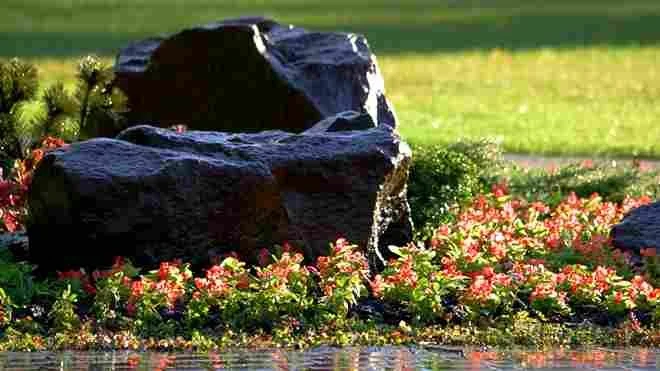
Single large boulders placed intentionally as landscape focal points are a staple of natural garden design. A well-chosen stone positioned at a garden corner, beside a pathway, or at the base of a mature tree adds immediate visual weight and a sense of permanence that planted materials take years to achieve.
Feature boulders work particularly well in low-maintenance landscape designs where ground cover plants, ornamental grasses, or decorative gravel surround the stone. The contrast between the rough, organic texture of natural rock and the fine texture of surrounding plantings creates visual interest across all four seasons — including Winnipeg's long winters when most plants are dormant and the stone becomes the garden's primary feature.
Drainage and Erosion Control
Boulders are an effective and visually appealing tool for managing water flow across a yard. Placed along natural drainage paths or around downspout outlets, large stones slow the velocity of water runoff and prevent soil erosion at the points where water concentrates. This application is especially relevant on Winnipeg properties with clay-heavy soil that sheds water rather than absorbing it after heavy rain or rapid snowmelt.
For properties with more significant drainage challenges, boulder placement is often part of a broader solution that includes grading or subsurface drainage work. Our drainage services team can assess whether boulder placement alone addresses your drainage issue or whether additional measures are needed to fully resolve the problem.
Rock and Boulder Gardens
Full rock garden installations combine boulders of varying sizes with smaller stone, gravel, and drought-tolerant or alpine plant species to create a cohesive naturalized garden space. These installations are particularly well-suited to Winnipeg's Zone 3 conditions because the plant palette draws from species that naturally thrive in rocky, well-drained environments with cold winters.
A professionally designed rock garden requires intentional planning around how boulders are grouped, which sizes anchor the overall design, and how plant selection complements the stone rather than competing with it visually. Working with a team experienced in garden design in Winnipeg ensures the plantings and stone create a unified, purposeful result.
Planning Your Boulder Landscape Installation
Site Assessment
A thorough site assessment before any boulders are ordered or moved is essential. The assessment covers soil composition, existing drainage patterns, slope angles, proximity to foundations or utility lines, and access routes for equipment. Boulders are heavy — a single medium-sized stone can weigh 200 to 500 kilograms — and moving them into position requires machinery that needs a clear, stable path to the installation site.
Properties with limited access, soft ground, overhead obstacles such as power lines, or dense tree canopies require specific equipment choices and placement strategies. A professional installer accounts for all of these factors before the first stone leaves the supplier's yard.
Grading and Base Preparation
For boulder landscape installation projects where stones serve a structural function — retaining walls or slope stabilization — proper grading and base preparation are non-negotiable. Boulders placed on unprepared soil or without adequate depth will shift or sink during spring thaw. In Winnipeg's climate, frost depth reaches approximately 1.2 to 1.5 meters, and any installation that doesn't account for frost movement will create problems within the first few seasons.
Yard grading work completed prior to boulder placement ensures the ground beneath the stones is properly prepared and that water drains away from the installation rather than pooling beneath it and accelerating frost heave.
Design and Stone Selection
Stone selection should be driven by the scale of the installation, the visual style of the property, and the surrounding plantings or hardscaping. An isolated feature boulder needs to be large enough to hold visual weight on its own. A series of edging stones needs consistency in color, texture, and approximate size to read as intentional rather than randomly collected.
Your landscaper should help you select stones from supplier stock that work within your design, budget, and the practical requirements of your site. Viewing stones in person before committing is always worthwhile, since color, texture, and character vary significantly even within the same stone type.
What Does Boulder Landscape Installation Cost in Winnipeg?
Cost varies widely depending on stone type, quantity, size, site access conditions, and whether additional work such as grading or drainage is required alongside the stone placement. General cost ranges for Winnipeg projects include:
Accent boulder placement (1 to 3 feature stones): $500 to $2,000+, depending on stone size and site access.
Garden bed edging with boulders: $1,500 to $5,000+, depending on linear footage and stone type selected.
Boulder retaining wall (small to mid-size): $3,000 to $10,000+, depending on wall height, length, and engineering requirements.
Full rock garden installation: $5,000 to $15,000+, depending on scope, stone variety, and plant selection.
For a broader perspective on what hardscaping projects cost in Winnipeg, our guide on hardscaping costs and pricing provides useful context across different project types. Getting a current site-specific quote from a local installer gives you the most accurate budget picture, as stone prices and availability shift seasonally.
Professional vs. DIY Boulder Installation: What's at Stake
Moving and placing boulders is one of the most physically demanding and technically specific tasks in residential landscaping. Beyond the obvious safety risk of working with very heavy stone without proper equipment, DIY boulder installations consistently produce two types of problems that end up costing more to correct than professional installation would have cost upfront.
The first is placement errors: boulders set at the wrong angle, insufficient depth, or without adequate base preparation shift, sink, or tip over time. A boulder retaining wall built without the correct inward lean will push outward under soil pressure and eventually fail, requiring full reconstruction.
The second is aesthetic inconsistency: stones that look randomly dropped rather than intentionally placed because the spacing, sizing, and grouping weren't planned with a designer's eye. Natural-looking boulder landscape installation requires a counterintuitive amount of deliberate planning. The most successful installations look effortless precisely because someone made careful decisions about every stone's position, angle, and relationship to the stones around it.
Professional installation from a team with the right equipment, design experience, and knowledge of Winnipeg's specific soil and climate conditions protects your investment and produces a result that adds genuine, lasting value to your property.
Bulger Brothers Landscape, located at 7 Leeward Pl, Winnipeg, MB R3X 1M6, specializes in boulder and rock bed installations for residential and commercial properties across Winnipeg. If you're ready to add natural stone to your outdoor space, call (204) 782-0313 to schedule a site assessment and discuss your project with a team that knows how to make boulders look like they've always belonged there.
Frequently Asked Questions about Boulder Landscape Installation
Q: How deep do boulders need to be set for a Winnipeg installation?
A: For decorative accent boulders, burying approximately one-third of the stone's height creates a natural, grounded look and prevents tipping. For structural applications like retaining walls, depth requirements depend on wall height, soil conditions, and frost depth. A professional site assessment determines the correct setting depth for your specific project and soil conditions.
Q: What size boulder works best as a landscape focal point?
A: A focal point boulder should be large enough to hold visual weight relative to the surrounding space. A stone with a visible height of 60 to 90 centimeters works well in most residential settings. Smaller stones tend to read as garden bed material rather than anchoring features. Your landscaper can help you select a size appropriate for your specific yard proportions and design goals.
Q: Will boulder landscape installation damage my existing lawn or garden?
A: Moving boulders with equipment will impact the area along the access route. A professional installer plans equipment paths to minimize damage and can resod or repair affected areas after the installation is complete. Communicating clearly about existing plantings you want to protect ensures they're accounted for in the plan before work begins.
Q: Can boulders help solve drainage problems on my Winnipeg property?
A: Yes. Boulders placed at downspout outlets, along drainage swales, or around low-lying areas slow water velocity, prevent erosion, and redirect flow away from problem zones. For more significant drainage issues, boulder placement is often combined with grading or subsurface drainage work to create a complete, lasting solution.
Q: How long does a boulder landscape installation take to complete?
A: A simple accent installation of one to three boulders can typically be completed in a half-day to full day. Larger projects such as rock gardens or boulder retaining walls may take two to five days depending on scope, site access conditions, and whether grading or drainage work is included in the project.
Q: Do boulders require maintenance after installation?
A: Very little. Natural stone may develop moss or lichen growth over time, which many homeowners find adds to the character of the installation. If you prefer a cleaner appearance, periodic rinsing with water is sufficient. Unlike timber edging or planted borders, boulders require no seasonal upkeep and don't need replacing as they age.
Q: Is boulder landscape installation worth the investment for a Winnipeg property?
A: For most homeowners, yes. Natural stone installations add visual permanence and curb appeal that planted-only designs can't replicate, particularly through Winnipeg's long winters when most plants are dormant. Boulders don't die, don't require seasonal care, and don't need replacement. A well-executed boulder installation holds its character and value for decades with virtually no additional cost.
Conclusion
Boulder landscape installation is one of the most impactful and durable upgrades a Winnipeg homeowner can make to their outdoor space. Whether the goal is solving a practical problem like slope erosion or poor drainage, defining garden spaces with natural stone edging, or adding a strong visual anchor to a yard that needs a focal point, boulders deliver results that plants and lightweight materials simply cannot replicate.
The difference between a boulder installation that looks like it belongs and one that looks like an afterthought comes down to planning, stone selection, and professional execution. Getting those three elements right from the start produces a result that improves your property for decades, holds up through every freeze-thaw cycle Manitoba delivers, and requires almost nothing from you once the work is done.