

What We've Learned Running a Lawn Care Company in Winnipeg
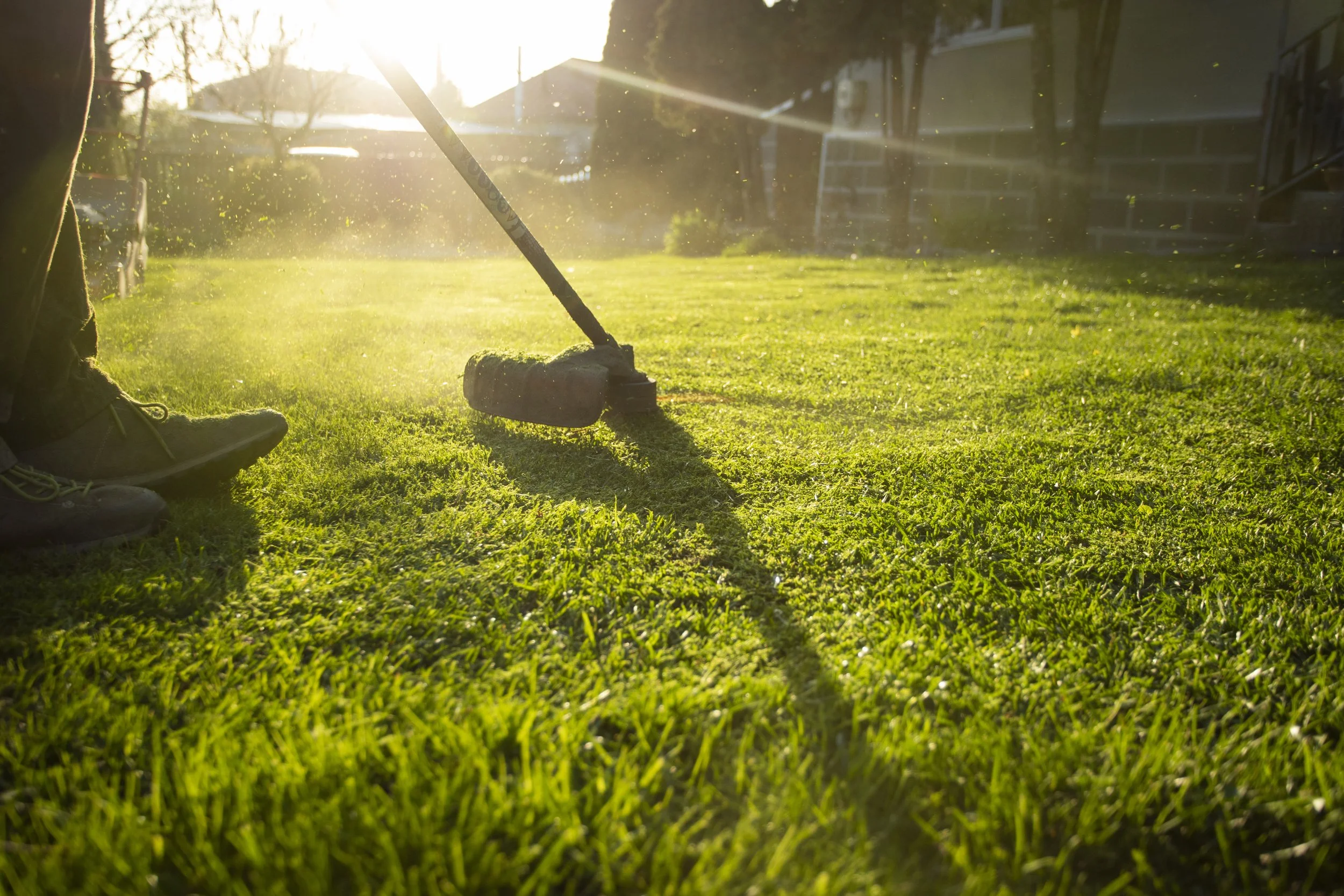
The Lawn Care Lessons That Only Come From Working in This Climate for Years
Every spring in Winnipeg, homeowners start calling lawn care companies, and every spring the same patterns repeat. Some homeowners get excellent results and wonder why they didn't hire professional help sooner. Others get mediocre results, feel they overpaid, and start looking for a better option by June. The difference between those two outcomes almost never comes down to the size of the company or the price of the service. It comes down to whether the company actually understands what Winnipeg lawns need and when they need it.
This is what we've learned running lawn care in Winnipeg through multiple seasons: what works here is specific, the timing matters more than most companies communicate, and the homeowners who get the best results are the ones who understand what they're actually paying for before the first service visit.
Key Takeaways
Winnipeg's compressed growing season and clay-heavy soil create specific lawn care requirements that generic national programs don't address correctly
Timing of each service is as important as the service itself in a five-month growing window
Aeration is more important in Winnipeg than in most Canadian markets due to clay soil compaction
The best lawn care company near you in Winnipeg is identified by local knowledge and seasonal program structure, not by advertising volume
Seasonal contracts deliver better value and better results than per-visit bookings for most Winnipeg homeowners
Bulger Brothers Landscape provides professional lawn care across Winnipeg with programs built around Manitoba's specific growing conditions
Overview: What Quality Lawn Care Actually Looks Like in Winnipeg
Looking for the best lawn care company near you is a search most Winnipeg homeowners conduct in late April or early May when the snow has just cleared and the yard looks its worst. This guide approaches that search from the other direction: explaining what good lawn care in Winnipeg actually involves so you can evaluate any company against what you now know the work should look like.
Bulger Brothers Landscape has maintained lawns across Winnipeg through multiple growing seasons, and the lessons in this guide come from that accumulated local experience rather than general lawn care principles that don't account for Zone 3 conditions.
What We Learned About Timing First
The first and most consistently important lesson from running lawn care in Winnipeg is that timing drives outcomes more than almost any other variable. A fertilizer application done at the right point in the season produces dramatically better results than the same product applied two weeks early or two weeks late. An aeration done when soil is in the right condition accomplishes what it's meant to accomplish. The same service done when soil is too wet or too dry produces a fraction of the benefit.
Spring fertilization timing is the most commonly mishandled service we observe from companies rushing to start the season. Fertilizing before soil temperatures have reached the threshold where grass roots are actively growing delivers minimal benefit because the grass isn't metabolically prepared to use the nutrient load effectively. Worse, early fertilization can encourage top growth that outpaces root development, leaving the lawn looking lush on the surface while developing a shallow root system that struggles through July and August dry periods.
In Winnipeg, soil temperatures typically reach the threshold for effective spring fertilization in mid to late May, not early May when some companies apply their first round simply because it fits their billing cycle. A company that adjusts its spring fertilization timing based on actual soil temperature readings is doing the work correctly. One applying on a fixed calendar date regardless of conditions is prioritizing scheduling efficiency over agronomic results.
Aeration timing follows a similar logic. Late summer to early fall, typically late August through September, is the optimal aeration window for Winnipeg's cool-season grasses. This timing allows the grass to recover and fill the aeration cores during the active growing period before dormancy, while soil temperatures are still warm enough to support root development. Companies that offer spring-only aeration, or that aerate whenever it fits their route without considering where the lawn is in its seasonal cycle, are delivering a service with less value than it should carry.
What We Learned About Clay Soil
Running lawn care in Winnipeg means learning clay soil management whether you plan to or not, because it's the dominant soil condition across most of the city and it affects almost every service in a lawn care program.
Clay compacts readily. A lawn that looked healthy in May can be compacted and struggling by July after normal foot traffic, equipment passes, and the weight of snowfall the previous winter. Compacted clay restricts water infiltration, reduces air movement to roots, and limits root penetration depth. A lawn maintained on compacted clay without regular aeration is a lawn being maintained on a foundation that's working against it.
Annual aeration isn't optional in Winnipeg. We've observed the difference over multiple seasons between lawns that receive consistent annual aeration and those that don't. The difference in density, colour, and drought resilience is visible and significant. A lawn care company that offers aeration only when a homeowner specifically requests it, rather than building it into every seasonal program as a standard component, is treating an essential Manitoba lawn care service as an optional add-on.
Thatch management connects to clay compaction. Thatch, the layer of organic material between the soil surface and the grass blades, develops more problematically on clay soils because the slower decomposition rate of clay-impacted soil allows thatch to accumulate faster than the microbial activity can process it. A seasonal program that includes assessment of thatch depth and dethatching when warranted is addressing the lawn's actual condition rather than applying a fixed service template regardless of what the lawn needs.
What We Learned About Mowing
Mowing is the lawn care service most homeowners think about least and that has some of the most consistent impact on lawn health. The wrong mowing height and frequency causes more preventable lawn stress in Winnipeg than almost any other single practice.
Cutting too short is the most common mowing mistake. Winnipeg's cool-season grasses, primarily Kentucky bluegrass and fescue blends, thrive at a maintained height of 2.5 to 3.5 inches. Cutting below this height removes too much leaf blade, exposing the soil to direct sun that increases moisture loss and creates conditions where weed seeds germinate more readily.
Many homeowners prefer shorter-looking grass because it reminds them of a golf course or a sports field. Those surfaces are maintained with intensive programs specifically designed to support grass at abnormally short heights. A residential lawn cut short without that supporting program responds with increased stress, reduced drought tolerance, and greater weed pressure through July and August.
The one-third rule matters. Never remove more than one-third of the grass blade in a single mowing. A lawn allowed to grow to 5 inches before being cut to 2.5 inches in one pass is experiencing more stress than the same lawn cut from 3.5 to 2.5 inches on a consistent schedule. The frequency of mowing needs to match the growth rate rather than a fixed weekly or bi-weekly calendar.
Sharp blades are a quality indicator. A mower with a dull blade tears grass rather than cutting it cleanly. Torn grass blades have ragged tips that brown and create entry points for disease. A lawn care company that maintains sharp blades on their equipment is producing cleaner cuts with less stress than one running dull blades because sharpening adds time and cost to equipment maintenance.
What We Learned About Weed Management
Weeds in a Winnipeg lawn are almost always a symptom rather than a root cause. A dense, healthy lawn maintained at the correct height with adequate moisture and nutrition crowds out most weed competition naturally. The lawns with significant weed pressure are almost always lawns with one or more underlying conditions that created opportunity for weed establishment.
Bare patches invite weeds. Any area of bare or thin grass is a weed germination opportunity. The most effective weed management in Winnipeg is overseeding bare and thin areas with appropriate grass varieties before weeds fill them. A lawn care program that includes overseeding assessment as part of its fall service prevents the weed establishment that chemical treatment alone doesn't sustainably address.
Pre-emergent timing matters in Winnipeg. For homeowners managing crabgrass or annual weed pressure, pre-emergent herbicide timing is critical. Applications need to happen before soil temperatures reach the germination threshold for target weeds, which in Winnipeg typically falls in late April to early May. A company applying pre-emergents on a schedule that doesn't reference soil temperature readings is likely missing the optimal window in years with early or late springs.
What We Learned About What Homeowners Actually Want
Running lawn care in Winnipeg teaches you what matters to homeowners in this market, and it's usually different from what lawn care marketing emphasizes.
Reliability matters more than claims about product quality. Homeowners who've dealt with lawn care companies that show up inconsistently, skip visits during busy periods, or communicate poorly learn quickly that a reliable company that shows up when it says it will is more valuable than a company with impressive marketing and inconsistent execution. The lawn doesn't benefit from a fertilizer that was supposed to be applied in May but didn't happen until July.
Communication about what was done and why builds trust. The best client relationships in lawn care come from homeowners who understand what each service accomplishes and why it's scheduled when it is. A company that explains its seasonal program in terms of what each service does for the lawn at that specific point in the season builds a client who understands the value they're receiving. A company that just shows up, does the work, and invoices builds a client who evaluates the relationship purely on price.
Problems need to be identified proactively. A crew that notices the early signs of grub damage, an emerging drainage problem in a corner of the lawn, or a thatch layer that's reached the point of affecting performance and communicates that to the homeowner is providing a service beyond the work on their schedule. A crew that completes their task and leaves without observation or communication is providing a commodity service that any company can match.
For homeowners evaluating providers, understanding what to look for in the best lawn care company in Winnipeg gives additional evaluation criteria beyond the lessons in this guide.
What We Learned About Seasonal Program Structure
The difference between a lawn care company that delivers consistent results and one that delivers inconsistent results is often visible in how they structure their seasonal program.
A seasonal program built around Winnipeg's growing season looks specific: spring cleanup and first assessment in late April or early May as conditions allow, first fertilization in mid-May when soil temperatures support it, regular mowing on a frequency that matches actual growth rates, mid-season assessment for any emerging issues, fall aeration and overseeding in August or September, and fall fertilization before dormancy.
A seasonal program built around billing convenience looks different: fixed calendar dates regardless of conditions, services bundled to minimize site visits, standard templates applied without property-specific assessment, and communication that focuses on what was done rather than why.
The question to ask any lawn care company you're evaluating is how they determine the timing for each service in their seasonal program. An answer that references soil temperature, growth rate observation, and property-specific conditions is describing an agronomically sound program. An answer that describes fixed calendar dates is describing a logistics-optimized program that may or may not align with what your lawn actually needs when it needs it.
Understanding how much lawn care costs per month in Winnipeg alongside this program structure context helps homeowners evaluate whether the pricing they're seeing reflects genuine professional service or a minimal-intervention program priced to be competitive without delivering equivalent value.
What to Ask Before Hiring
Based on what we've learned, these are the questions that most reliably identify lawn care companies worth hiring in Winnipeg:
How do you determine timing for spring fertilization? Listen for soil temperature references. A calendar date answer is a flag.
Is aeration included in your standard seasonal program, or is it an add-on? Aeration should be standard in Winnipeg. An add-on framing means some clients won't get it and their lawns will reflect that over time.
What mowing height do you maintain for Winnipeg's cool-season grass? The right answer is 2.5 to 3.5 inches. Significantly shorter describes a practice that stresses Manitoba lawns.
How do you handle communication about issues observed during service visits? A company with a system for proactive communication about observed problems is providing more value than one that completes the task and leaves.
Do you have references from Winnipeg properties maintained over multiple seasons? Multi-season references reveal whether the program delivers consistent improvement or just maintains the status quo.
Bulger Brothers Landscape provides lawn care programs across Winnipeg built around the timing, soil, and climate knowledge that this guide describes. Located at 7 Leeward Pl, Winnipeg, MB R3X 1M6, the team welcomes every question listed above and can describe the reasoning behind every element of the seasonal program. Call (204) 782-0313 to discuss your lawn's specific conditions and get a seasonal program proposal built around what Winnipeg lawns actually need.
Frequently Asked Questions About Best Lawn Care Company Near You
Q: How do I find the best lawn care company near you in Winnipeg?
A: Ask specific questions about service timing, aeration inclusion, mowing height standards, and communication practices. A company that answers these with Winnipeg-specific reasoning demonstrates local expertise. Request multi-season references from Winnipeg properties and ask those clients whether the program delivered improvement over time.
Q: What should a Winnipeg lawn care seasonal program include?
A: Spring cleanup and assessment, soil-temperature-timed fertilization, regular mowing at correct heights, annual core aeration, fall overseeding assessment and treatment, fall fertilization before dormancy, and proactive communication about observed lawn health issues. Programs that don't include aeration as a standard component are missing a critical Manitoba-specific service.
Q: Why does mowing height matter so much in Winnipeg?
A: Cutting Winnipeg's cool-season grasses below 2.5 inches removes too much leaf blade, increases drought stress, and creates conditions where weeds establish more readily. The July and August dry periods that most Winnipeg lawns experience are significantly harder on lawns maintained at incorrect cutting heights than on those maintained at 2.5 to 3.5 inches.
Q: How important is aeration for Winnipeg lawns specifically?
A: Very important. Clay soil compacts readily under foot traffic and winter snow loads, restricting water infiltration, air movement, and root depth. Annual core aeration addresses this compaction and is arguably more important in Winnipeg's clay soil conditions than in markets with naturally looser, better-draining soil. A lawn care company that doesn't build aeration into its standard Winnipeg program is omitting a critical service.
Q: Is a seasonal contract better than per-visit lawn care in Winnipeg?
A: For most homeowners, yes. Seasonal contracts ensure timing-sensitive services happen when they should rather than when a booking can be arranged. They also typically deliver better total value per service than per-visit pricing. The consistency of a seasonal relationship also enables the proactive observation and communication that makes professional lawn care more valuable than simply cutting and fertilizing on a schedule.
Q: What causes most lawn problems in Winnipeg?
A: Clay soil compaction, incorrect mowing height, poorly timed fertilization, and inadequate moisture through dry mid-summer periods account for the majority of Winnipeg lawn health problems we encounter. Most of these are addressable through a well-structured seasonal program rather than reactive treatment after problems become visible.
Q: How early in the season should lawn care start in Winnipeg?
A: Spring cleanup can begin as soon as conditions allow the ground to firm enough for equipment without causing compaction damage, typically late April or early May depending on the year. Active lawn care services including fertilization should wait for soil temperatures to reach appropriate thresholds, which in Winnipeg typically falls in mid to late May rather than early May.
Q: What's the best time to aerate a Winnipeg lawn?
A: Late August through September is the optimal window for Winnipeg's cool-season grasses. This timing allows recovery during the active growing period before dormancy while soil temperatures remain warm enough to support root development. Fall aeration paired with overseeding produces the best results for lawns with thin or bare areas.
Conclusion
Finding the best lawn care company near you in Winnipeg means finding one that understands what Winnipeg lawns specifically need, when they need it, and why. Timing-adjusted fertilization, clay soil management through annual aeration, correct mowing heights, and proactive communication about observed conditions are the practices that separate lawn care that genuinely improves a property over multiple seasons from lawn care that simply maintains the status quo at whatever condition the lawn started in. The lessons in this guide come from actual Winnipeg seasons, not from generic lawn care principles that apply equally everywhere. Bulger Brothers Landscape builds its seasonal programs around exactly this local knowledge, season after season.