

Commercial Snow Clearing Equipment: Essential Guide for Winnipeg Businesses
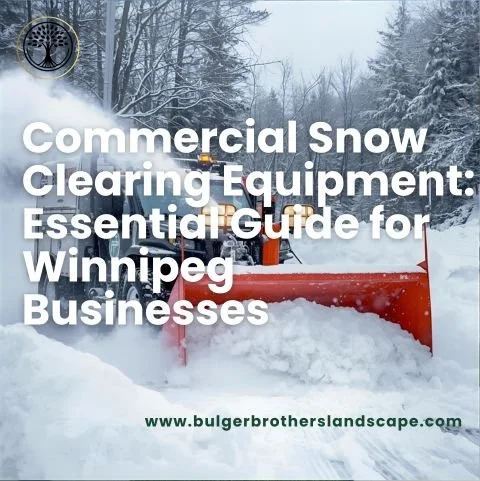
The Equipment a Snow Clearing Provider Uses Determines Whether They Can Actually Meet Commercial Demands in Winnipeg
A commercial property manager in Winnipeg signs a snow clearing contract based on a competitive quote and confident assurances about reliable service. The first major overnight accumulation event arrives, and by 9 AM the parking lot still has three inches of snow and the walkways are untouched. The provider is there — one truck with a residential-scale plow, working through a commercial lot that's three times the capacity their equipment can realistically manage in the response window the contract promised.
Commercial snow clearing equipment isn't a background detail. It's the physical capacity that determines whether a service provider can actually deliver what commercial property management requires. A provider with the right equipment can meet commercial response windows during Winnipeg's most demanding accumulation events. A provider with inadequate equipment makes commitments they physically can't keep when conditions are most challenging.
Key Takeaways
The equipment a commercial snow clearing provider operates directly determines whether they can meet response window commitments during significant accumulation events
Front-end loaders, commercial truck-mounted plows, and skid steers each serve specific commercial clearing functions that residential-scale equipment can't replicate
Equipment capacity relative to the clearing area is the primary factor that determines whether commercial response windows are achievable
Walk-behind and hand-clearing equipment addresses the pedestrian zones that machine equipment can't safely access
Ice management equipment is a distinct category from snow clearing equipment, and both are required for complete commercial winter maintenance
Bulger Brothers Landscape operates commercial-grade equipment across Winnipeg for both residential and commercial winter maintenance programs
Overview: Equipment Categories in Commercial Snow Clearing
This guide covers the major equipment categories used in commercial snow clearing in Winnipeg, what each category does and which property types it serves, how equipment capacity relates to clearing area and response window achievement, and what property managers should understand about equipment when evaluating winter service proposals.
Bulger Brothers Landscape operates commercial snow clearing equipment across Winnipeg for both commercial and residential winter clients, and the equipment framework in this guide reflects current professional winter maintenance standards.
Front-End Loaders: The Backbone of Large Commercial Clearing
Front-end loaders are the highest-capacity equipment category in commercial snow clearing operations and the machines that make large commercial parking lot clearing achievable within commercial response windows.
What front-end loaders do in commercial clearing: A loader uses its large bucket to push significant snow volume efficiently across open parking areas, consolidate snow from multiple push runs into manageable piles, and move consolidated snow to designated storage areas at the property's perimeter or to removal trucks when snow volumes exceed available storage capacity.
The clearing rate of a front-end loader is substantially higher than truck-mounted plows. A large commercial loader can clear snow from a significant parking area in the time it takes a truck-mounted plow to complete the same area in multiple passes. For large commercial lots — major retail plazas, office complex parking structures, institutional properties, industrial facilities — loader capacity is what makes pre-business-hour clearing achievable after overnight accumulation events.
When front-end loaders are the right equipment: Properties with parking lots above approximately 50 to 75 stalls, where total clearing area requires more capacity than truck-mounted plows provide within commercial response windows. Properties where snow volume regularly requires relocation rather than just peripheral stacking. Properties where snow piles from earlier events have reduced perimeter storage capacity and active snow management requires moving accumulated piles.
What property managers should ask about loaders: Whether the provider's loader capacity is appropriate for the specific clearing area. Whether the loader is owned or rented, which affects availability during simultaneous demand events when multiple properties require clearing. Whether the loader operator has commercial clearing experience rather than general construction equipment experience — commercial clearing technique affects parking surface protection and snow placement in ways that matter across a full season.
Commercial Truck-Mounted Plows: The Standard Commercial Clearing Platform
Truck-mounted plows on commercial-grade trucks are the most common commercial snow clearing equipment in Winnipeg and the standard platform for most mid-size commercial property clearing.
Commercial vs. residential truck-mounted plows: Commercial truck-mounted plow setups use heavier-duty trucks, larger plow blades, and more robust hydraulic systems than the residential plow trucks that serve driveways and smaller private lots. The blade width, weight, and hydraulic response that commercial setups provide makes them significantly more capable and more durable in commercial applications than residential configurations.
The distinction matters because property managers evaluating service proposals can't assess truck-mounted plow capability from the street. A truck is a truck visually. The commercial-grade specification of the equipment determines whether it's appropriate for the service being proposed.
What commercial truck-mounted plows do best: Commercial lots of 20 to 60 stalls, parking areas with defined lanes and geometry that plowing passes can address efficiently, service access routes and loading dock approaches, and properties where multiple plow trucks working simultaneously can address the full clearing scope within response windows.
The multi-truck advantage: Commercial snow clearing providers with multiple plow trucks can address properties with multiple access points simultaneously, can assign dedicated truck coverage to their most demanding commercial accounts during peak events, and have backup capacity when primary equipment has mechanical problems. Single-truck operations have none of these redundancy advantages.
Blade type and edge selection: Commercial plow blades are available in straight, V-plow, and expandable wing configurations that address different clearing geometries. V-plow configurations are particularly effective in Winnipeg's deep accumulation events because they can cut through heavy snow volumes that straight blades push inefficiently. Rubber cutting edges protect paving surfaces better than steel edges but require more frequent replacement — a maintenance investment that professional operations maintain and informal operators sometimes defer.
Skid Steers: Versatile Mid-Scale Commercial Equipment
Skid steers with snow clearing attachments fill an important role in commercial clearing operations between the scale of truck-mounted plows and full loaders.
What makes skid steers valuable in commercial clearing: Their tight turning radius allows clearing in areas where full loaders and truck-mounted plows can't manoeuvre effectively — between parked equipment in service yards, in tighter parking configurations, along narrow service lanes, and in commercial areas with significant fixed infrastructure. Skid steer bucket attachments can also push and move snow volumes beyond what hand clearing can address in confined areas.
Skid steer attachment options for commercial clearing: Push boxes extend the effective clearing width of the skid steer significantly, making them efficient on larger open areas despite the machine's compact size. Auger-style snow attachments handle deep consolidated snow. Angle blade attachments provide directional clearing control in tight areas.
When skid steers are the right primary equipment: Properties with significant clearing area but constrained access or complex geometry that larger equipment can't navigate. Service yards and loading areas with fixed infrastructure. Mid-size commercial lots where a skid steer's clearing rate is adequate within the response window but a full loader would be over-specified.
Walk-Behind and Hand Clearing Equipment: Addressing Pedestrian Zones
Walk-behind snow blowers and hand shovelling equipment address the pedestrian zones of commercial properties that machine equipment can't access without creating surface or infrastructure damage risk.
Building entrances and vestibule approaches: The areas immediately adjacent to commercial building entrances — where customer foot traffic is most concentrated and where surface damage from plow equipment would be most consequential — require walk-behind or hand clearing. These areas receive the most intensive ice treatment after clearing because of their foot traffic concentration and slip-and-fall risk.
Accessible routes and curb ramps: The accessible routes connecting accessible parking zones to building entrances, and the curb ramps at accessible parking, must be cleared to conditions that allow safe use by individuals with mobility limitations. Machine clearing alone rarely achieves the standard these areas require, and walk-behind or hand clearing finishes the accessible route scope that machine clearing begins.
Walkway networks: Commercial properties with extensive walkway networks between buildings, connecting parking structures to facilities, or within campus-style developments require dedicated walkway clearing capacity. Walk-behind blowers sized for walkway widths clear these surfaces efficiently while avoiding the surface damage that machine clearing creates on narrow pedestrian paths.
The staffing implication: Walk-behind and hand clearing requires crew members rather than equipment operators. Commercial snow clearing providers who have only equipment operators and no clearing crew members can't fully address the pedestrian zones of commercial properties. Complete commercial clearing capacity includes both equipment and people.
Salt and Sand Spreading Equipment: The Ice Management Side
Complete commercial snow clearing equipment includes the spreading equipment that applies sand, salt, or sand-salt mixture for ice management — a distinct service from snow clearing that addresses the conditions clearing alone doesn't resolve.
Tailgate and hopper spreaders for trucks: Mounted behind commercial clearing trucks, these spreaders apply material to vehicle travel surfaces as the truck moves through the cleared area. This approach efficiently covers parking lot surfaces with traction material after clearing and during ice formation events between clearing visits.
Walk-behind spreaders for pedestrian zones: Walk-behind broadcast spreaders and handheld spreaders address walkways, entrance approaches, and pedestrian zones where truck-mounted spreading can't reach without creating application control problems.
Liquid de-icing application equipment: Anti-icing programs that apply liquid treatment before ice formation to prevent the strong bond between ice and pavement use liquid application equipment distinct from granular spreaders. Providers offering proactive anti-icing programs have this equipment category as part of their winter service fleet.
For a detailed look at parking lot sanding services in Winnipeg and how ice management programs work alongside commercial snow clearing, that overview covers the ice management picture in detail.
Equipment Maintenance: What It Reveals About Provider Quality
The maintenance condition of a commercial snow clearing provider's equipment is one of the most reliable indicators of their operational professionalism — and one that property managers rarely think to ask about.
Why equipment maintenance matters for commercial clearing: Commercial snow clearing equipment operates in the most demanding conditions of the year during the periods when failure is most consequential. An equipment breakdown during a major overnight accumulation event, when multiple commercial properties need clearing before business hours, is a service failure that directly affects business operations and customer access. Providers whose equipment is well-maintained experience fewer mid-season breakdowns and can meet their service commitments more consistently than those who defer maintenance.
What to ask about equipment maintenance: Whether the provider performs scheduled pre-season maintenance before the clearing season begins. Whether they have service relationships with equipment dealers who can provide emergency repair during the season. Whether they maintain parts inventory for common failure items — hydraulic hoses, plow edges, spreader components — that can be replaced quickly when failures occur rather than waiting for parts delivery.
The backup equipment question: Even well-maintained equipment fails. Providers who have backup equipment available — a second plow truck, a rental relationship with an equipment provider who can mobilize quickly — can continue serving commercial clients during primary equipment failures. Providers with single-unit operations and no backup have genuine service gaps when primary equipment is unavailable.
How to Evaluate Equipment Capacity Against Property Requirements
Property managers can evaluate whether a prospective commercial snow clearing provider's equipment is appropriate for their property by asking specific questions that connect equipment capacity to clearing area and response window requirements.
The clearing area and equipment match question: Ask the provider specifically what equipment they propose to use for your property and why that equipment is appropriate for the clearing area. A provider who proposes one residential-scale plow truck for a 100-stall commercial lot is proposing equipment that can't meet commercial response windows during significant accumulation events. A provider who proposes a loader for a 20-stall lot is over-specifying in a way that affects pricing but not service quality.
The multi-property clearing sequence question: Ask how many commercial properties the provider serves and how they sequence clearing during simultaneous demand events when all commercial clients need clearing in the same response window. A provider with adequate equipment for their individual properties but inadequate total fleet capacity for simultaneous clearing across all their accounts will fail commercial response windows during the events that most test capacity.
The winter 2025/26 availability question: Equipment that exists but is committed to other clients during peak demand periods isn't available for your property. Asking specifically about fleet availability and allocation during peak winter events reveals whether the capacity being proposed is genuinely dedicated to your property's response window or shared across more accounts than the fleet can serve simultaneously.
For complete context on commercial snow clearing services in Winnipeg including service program structures and what professional commercial clearing involves operationally, that overview covers the full commercial winter maintenance picture.
Understanding snow clearing levels for commercial buildings in Winnipeg gives property managers the service standard framework for evaluating whether equipment proposals are appropriate for their specific occupancy type and service level requirement.
When you're evaluating commercial snow clearing providers for your Winnipeg property, Bulger Brothers Landscape operates commercial-grade equipment appropriate for the full range of commercial clearing requirements across the city. Located at 7 Leeward Pl, Winnipeg, MB R3X 1M6, the team welcomes specific questions about equipment capacity, fleet composition, and how equipment matches proposed commercial service standards. Call (204) 782-0313 to discuss your commercial property's winter maintenance requirements.
Frequently Asked Questions About Commercial Snow Clearing Equipment
What equipment does professional commercial snow clearing in Winnipeg use?
Front-end loaders for large commercial parking lots, commercial truck-mounted plows for mid-size commercial properties and access routes, skid steers for constrained commercial areas and service yards, walk-behind snow blowers and hand clearing for pedestrian zones, and salt and sand spreaders for ice management. Complete commercial clearing operations use combinations of these equipment categories calibrated to each property's clearing requirements.
What is the difference between commercial and residential snow clearing equipment?
Commercial clearing equipment is larger-scale, higher-capacity, and more durably specified than residential alternatives. Commercial truck-mounted plows use heavier trucks, larger blades, and more robust hydraulic systems. Front-end loaders have no residential equivalent. The scale difference means residential equipment can't meet commercial clearing volumes within commercial response windows during significant accumulation events.
How does equipment capacity affect commercial response windows?
Equipment capacity determines the rate at which snow volume can be cleared from a given area. Insufficient equipment capacity relative to clearing area means response windows can't be met during significant accumulation events regardless of how motivated the crew is. A residential-scale plow truck clearing a large commercial lot will always finish later than what commercial response windows require.
Should I ask a commercial snow clearing provider about their equipment before signing?
Yes. Ask specifically what equipment will be used for your property, why that equipment is appropriate for your clearing area, how many commercial properties they serve with their total fleet, and whether they have backup equipment when primary units have mechanical problems. These questions reveal whether the provider has physical capacity to meet their commercial commitments.
What is the role of walk-behind equipment in commercial snow clearing?
Walk-behind snow blowers and hand clearing equipment address building entrances, accessible routes, pedestrian walkways, and other areas where machine equipment can't operate without surface damage risk. Complete commercial snow clearing requires both machine capacity for large surfaces and manual crew capacity for pedestrian zones — providers with only equipment operators and no clearing crews can't fully address commercial pedestrian zone requirements.
Does ice management require different equipment than snow clearing?
Yes. Ice management uses salt and sand spreaders — truck-mounted hoppers for parking lot surfaces and walk-behind spreaders for pedestrian zones — that are distinct from snow clearing equipment. Liquid anti-icing application uses separate sprayer equipment. Complete commercial winter maintenance providers operate both snow clearing and ice management equipment, not just plowing capacity.
What maintenance should commercial snow clearing equipment receive?
Scheduled pre-season maintenance before the clearing season begins, including hydraulic system service, cutting edge inspection and replacement, electrical system checks, and engine service. In-season maintenance of common failure components. Emergency repair relationships with equipment dealers or parts suppliers who can provide rapid response when mid-season failures occur. Equipment maintenance quality directly affects in-season reliability.
Is equipment ownership or rental better for commercial snow clearing providers?
Owned equipment is generally preferable for dedicated commercial clients because it ensures availability during peak demand periods when rental equipment may be committed to other users. Providers who rely heavily on rented equipment for commercial clearing capacity may have availability constraints during simultaneous demand events when multiple clients need clearing in the same window.
Conclusion
Commercial snow clearing equipment is the physical foundation that determines whether a service provider can actually meet commercial property management requirements during Winnipeg's most demanding winter events. Front-end loaders, commercial truck-mounted plows, skid steers, walk-behind equipment, and ice management spreaders each serve specific functions in complete commercial winter maintenance, and the combination of equipment a provider operates determines the clearing capacity they can deliver against commercial response window commitments. Property managers who ask specific questions about equipment capacity before signing commercial snow clearing contracts make better decisions than those who take service commitments at face value without understanding the physical capacity behind them. Bulger Brothers Landscape operates the commercial-grade equipment that professional winter maintenance in Winnipeg requires, for every property type and every accumulation event the Manitoba winter produces.